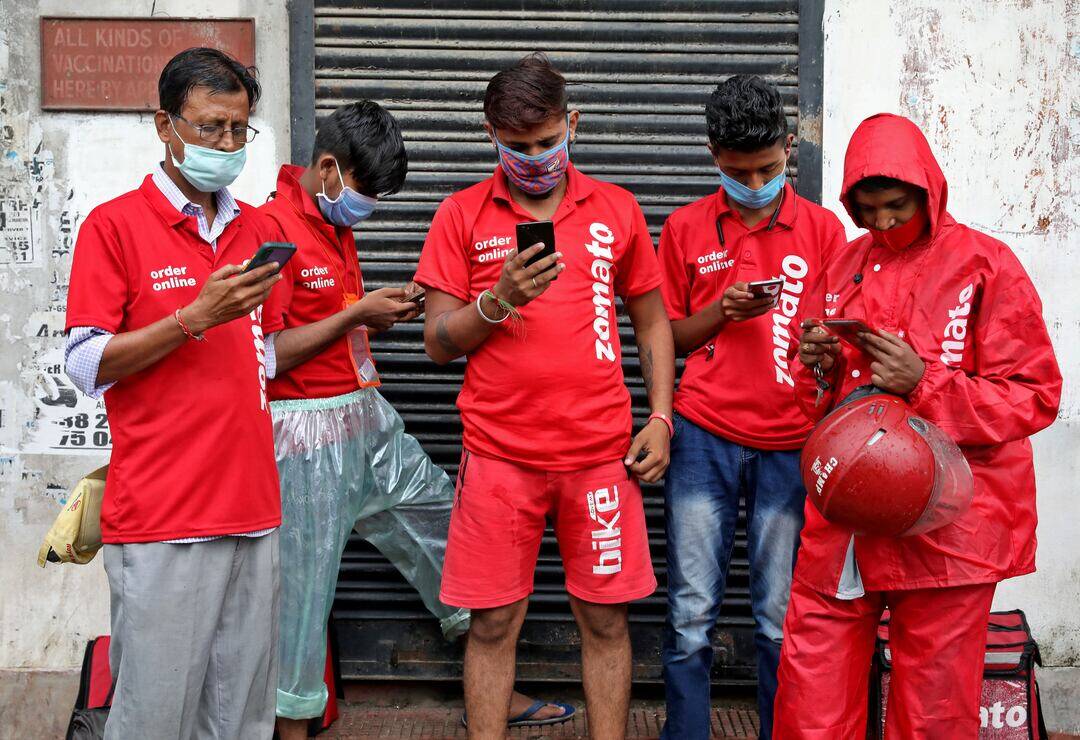
Deepinder claims issue with gig economy is it exposed class divide, says ‘We tip awkwardly’
The gig economy has been a topic of discussion for quite some time now, with many debating its pros and cons. While some see it as a way to provide flexible work opportunities for millions of people, others criticize it for perpetuating exploitation and inequality. Recently, billionaire Deepinder Goyal, the founder of Zomato, weighed in on the issue, offering a unique perspective on the problem with the gig economy. According to Goyal, the issue with the gig economy is not its inherent nature, but rather the fact that it exposes the prevailing class divide in our society.
In a recent statement, Goyal claimed that the gig economy has brought to light the existing class divide by ensuring that workers are seen by the consuming class. He noted that in the past, the poor were often hidden away, and their struggles were not visible to the general public. However, with the rise of the gig economy, this is no longer the case. “Suddenly, the poor aren’t hidden away,” Goyal said. “Now, every doorbell is a reminder of systemic inequality.” This statement highlights the fact that the gig economy has made the struggles of the working class more visible, and this visibility is what makes people uncomfortable.
Goyal’s statement is a stark reminder of the fact that the gig economy is not just about economics; it’s also about confronting our own guilt and biases. When we see a delivery person or a ride-hailing driver, we are reminded of the systemic inequality that exists in our society. We are forced to confront the fact that there are people who are struggling to make ends meet, and that we, as consumers, are contributing to their exploitation. This confrontation with our own guilt is what makes us uncomfortable, and it’s what leads us to tip awkwardly.
The phenomenon of tipping is an interesting one. On the one hand, it’s a way for us to show appreciation for the services we receive. On the other hand, it’s also a way for us to assuage our own guilt. When we tip, we are, in a way, trying to make up for the fact that the person providing the service is not being paid a living wage. We are trying to compensate for the fact that the gig economy is perpetuating inequality, and that we, as consumers, are benefiting from it. As Goyal so aptly put it, “We tip awkwardly…because inequality is no longer abstract.” This statement highlights the fact that our actions, including our tipping habits, are a reflection of our own biases and guilt.
The gig economy has been criticized for perpetuating exploitation and inequality. Many workers in the gig economy are not paid a living wage, and they lack access to basic benefits like health insurance and paid time off. This exploitation is perpetuated by the fact that many companies in the gig economy classify their workers as independent contractors, rather than employees. This classification allows companies to avoid paying benefits and minimum wage, and it leaves workers vulnerable to exploitation.
However, the issue with the gig economy goes beyond just economics. It’s also about the social and cultural implications of this type of work. The gig economy has created a new class of workers who are precarious, insecure, and invisible. These workers are often forced to work long hours for low pay, and they lack access to basic rights and benefits. This has created a sense of unease and discomfort among consumers, who are forced to confront the fact that their convenience is coming at the expense of someone else’s well-being.
The fact that the gig economy has exposed the class divide in our society is a double-edged sword. On the one hand, it has created a sense of awareness and discomfort among consumers, which could potentially lead to change. On the other hand, it has also created a sense of unease and guilt, which could lead to further exploitation and inequality. As Goyal noted, the fact that we tip awkwardly is a reflection of our own biases and guilt. It’s a reminder that we need to confront our own role in perpetuating inequality, and that we need to work towards creating a more just and equitable society.
In conclusion, the issue with the gig economy is not its inherent nature, but rather the fact that it exposes the prevailing class divide in our society. As Deepinder Goyal so aptly put it, “We tip awkwardly…because inequality is no longer abstract.” This statement highlights the fact that our actions, including our tipping habits, are a reflection of our own biases and guilt. It’s a reminder that we need to confront our own role in perpetuating inequality, and that we need to work towards creating a more just and equitable society. As we move forward, it’s essential that we prioritize the well-being and dignity of all workers, regardless of their classification or occupation.
News source: https://x.com/deepigoyal/status/2007030873711927381
About the Author