Deepinder claims issue with gig economy is it exposed class divide, says ‘We tip awkwardly’
The gig economy has been a topic of discussion for quite some time now, with many arguing about its pros and cons. While some see it as a convenient and flexible way to earn a living, others criticize it for perpetuating inequality and exploiting workers. Recently, billionaire Deepinder Goyal weighed in on the issue, offering a unique perspective on the problem with the gig economy. According to Goyal, the issue with the gig economy is not its economic model, but rather the fact that it has exposed the prevailing class divide in our society.
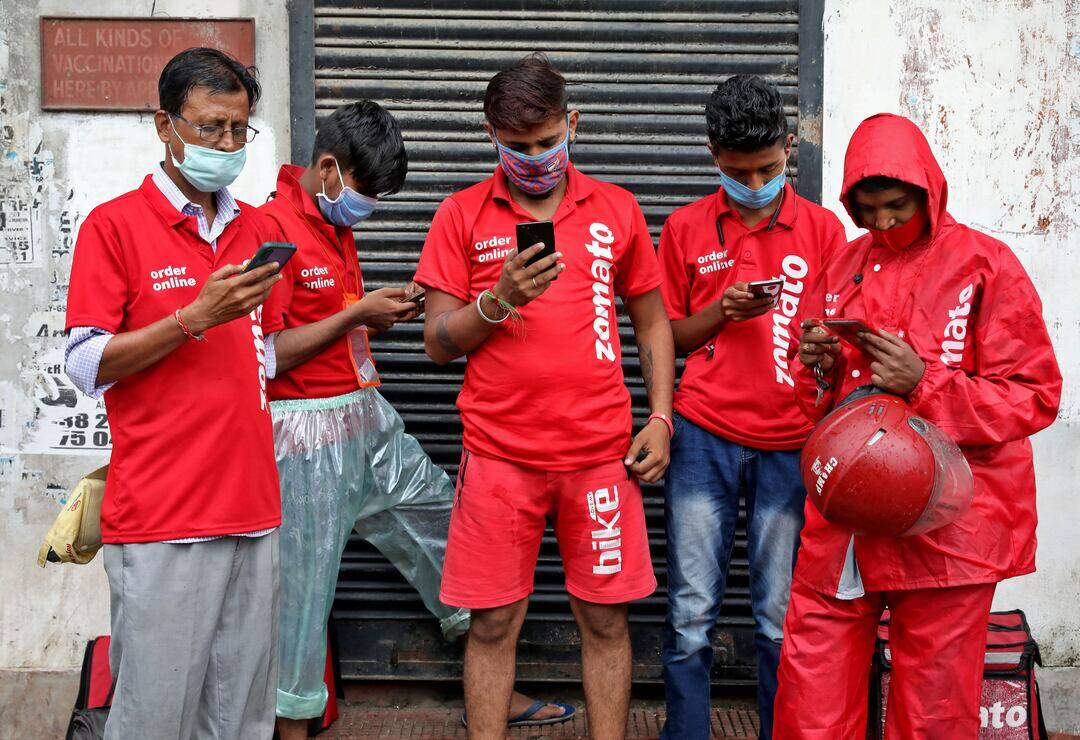
Goyal claimed that the gig economy has brought to light the stark contrast between the rich and the poor, making it impossible to ignore the systemic inequality that exists in our society. “Suddenly, poor aren’t hidden away,” he said. “Now, every doorbell is a reminder of systemic inequality.” This statement highlights the fact that the gig economy has made the poor and marginalized sections of society more visible, forcing the consuming class to confront the reality of economic inequality.
The gig economy has indeed made it possible for people to hire workers for various tasks, such as food delivery, household chores, and transportation, at the touch of a button. However, this convenience comes at a cost, as workers are often paid minimum wages and are denied basic benefits and job security. The fact that these workers are now more visible, interacting with the consuming class on a daily basis, has made it difficult for people to ignore the inequality that exists.
Goyal’s statement also highlights the emotional response that people have when confronted with this inequality. “We aren’t just debating economics, we’re confronting guilt,” he said. This guilt is evident in the way people tip workers, often awkwardly, as a way of trying to make up for the low wages they are paid. “We tip awkwardly…because inequality is no longer abstract,” Goyal said. This tipping culture has become a way for people to assuage their guilt, but it does not address the root cause of the problem.
The issue of tipping is a complex one, as it creates a power dynamic between the consumer and the worker. On the one hand, tipping can be seen as a way of showing appreciation for good service, but on the other hand, it can also be seen as a way of perpetuating inequality. By tipping, consumers are essentially acknowledging that the worker is not being paid a fair wage, and that they need to supplement their income with tips. This can create a sense of dependence on the consumer, rather than on a fair and living wage.
Goyal’s statement also raises questions about the role of technology in perpetuating inequality. The gig economy is often hailed as a technological innovation that has disrupted traditional industries and created new opportunities for workers. However, it has also been criticized for perpetuating exploitation and inequality. The fact that technology has made it possible for people to hire workers at the touch of a button has created a sense of convenience and disposability, where workers are seen as mere commodities rather than human beings.
In conclusion, Deepinder Goyal’s statement highlights the complex issues surrounding the gig economy and its impact on society. The fact that the gig economy has exposed the class divide and made inequality more visible is a stark reminder of the need for systemic change. Rather than just debating the economics of the gig economy, we need to confront the guilt and inequality that it perpetuates. We need to create a more equitable society, where workers are paid a fair and living wage, and are treated with dignity and respect.
As we move forward, it is essential to consider the impact of the gig economy on our society and to work towards creating a more just and equitable system. This requires a fundamental shift in the way we think about work and workers, and a recognition of the inherent value and dignity of every human being. Only then can we create a society that is truly just and equitable for all.
Source: https://x.com/deepigoyal/status/2007030873711927381
About the Author