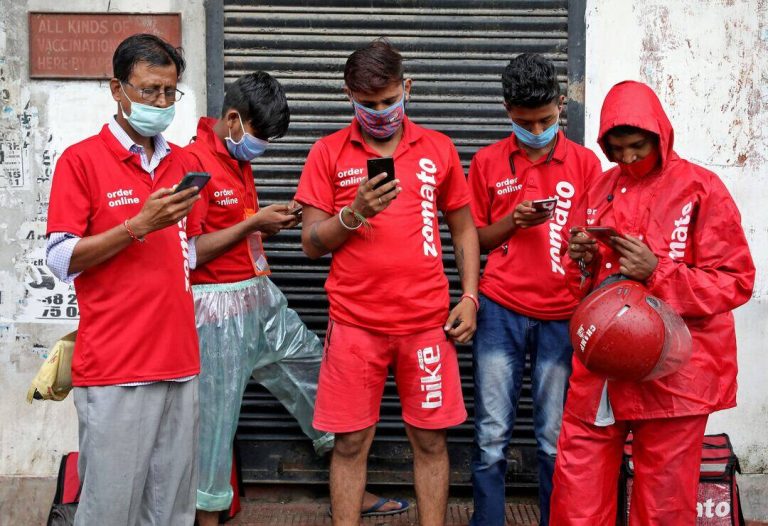
Deepinder claims issue with gig economy is it exposed class divide, says ‘We tip awkwardly’
The gig economy has been a topic of discussion for many years, with many people weighing in on its pros and cons. While some see it as a convenient and flexible way to make a living, others criticize it for perpetuating inequality and exploiting workers. Recently, billionaire Deepinder Goyal shared his thoughts on the matter, claiming that the problem with the gig economy is not its inherent structure, but rather the fact that it has exposed the prevailing class divide in our society.
According to Goyal, the gig economy has brought to light the systemic inequality that has long existed in our world. He notes that in the past, the poor and working class were often hidden away from the consuming class, making it easier for those with more privilege to ignore the issue. However, with the rise of the gig economy, this is no longer the case. Suddenly, the poor and working class are visible, and their presence is a constant reminder of the inequality that exists.
Goyal points out that every time we order food or have a package delivered, we are confronted with the reality of systemic inequality. The person delivering our food or package is often a worker who is struggling to make ends meet, and this can be a stark reminder of the class divide that exists. As Goyal puts it, “Suddenly, the poor aren’t hidden away…Now, every doorbell is a reminder of systemic inequality.”
This exposure of class divide has led to a sense of guilt and awkwardness among the consuming class. We are no longer able to ignore the issue of inequality, and this can be uncomfortable. As Goyal notes, “We aren’t just debating economics, we’re confronting guilt…We tip awkwardly…because inequality is no longer abstract.” The act of tipping has become a way for us to try to alleviate our guilt, but it is often a superficial solution that does not address the root cause of the problem.
The issue of inequality is complex and multifaceted, and it cannot be solved simply by tipping our delivery workers or giving them a few extra dollars. Rather, it requires a fundamental shift in the way we think about work and the economy. We need to start valuing the work of all individuals, regardless of their profession or socioeconomic status. We need to recognize that everyone deserves a living wage and access to basic necessities like healthcare and education.
The gig economy has highlighted the need for a more equitable and just society. It has shown us that the old way of doing things is no longer sustainable, and that we need to find new and innovative solutions to the problems of inequality and exploitation. As Goyal notes, the gig economy has brought the issue of class divide to the forefront, and it is up to us to address it.
In conclusion, the issue with the gig economy is not the economy itself, but rather the fact that it has exposed the prevailing class divide in our society. As Deepinder Goyal so aptly puts it, “We tip awkwardly…because inequality is no longer abstract.” We can no longer ignore the issue of inequality, and we must start working towards a more equitable and just society. This will require a fundamental shift in the way we think about work and the economy, but it is a necessary step towards creating a better world for all.
Source: https://x.com/deepigoyal/status/2007030873711927381
About the Author