Deepinder claims issue with gig economy is it exposed class divide, says ‘We tip awkwardly’
The gig economy has been a subject of debate for several years now, with many experts and critics weighing in on its pros and cons. While some argue that it has created new opportunities for workers and increased flexibility, others claim that it has perpetuated exploitation and worsened working conditions. Recently, billionaire Deepinder Goyal, the founder of Zomato, a popular food delivery company, shared his thoughts on the gig economy, highlighting a critical issue that has been overlooked by many.
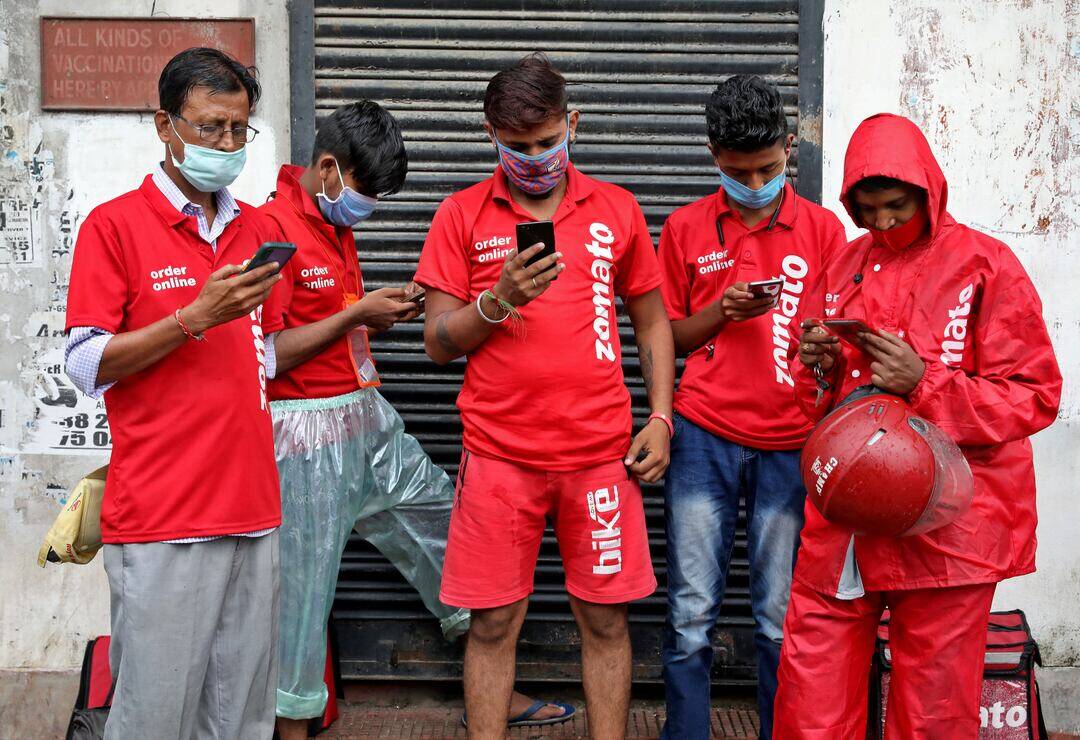
According to Goyal, the problem with the gig economy is not its inherent structure or the way it operates, but rather the fact that it has exposed the prevailing class divide in our society. By ensuring that workers are seen by the consuming class, the gig economy has brought to light the systemic inequality that exists in our world. As Goyal put it, “Suddenly, poor aren’t hidden away…Now, every doorbell is a reminder of systemic inequality.”
This statement is particularly poignant, as it highlights the way in which the gig economy has forced us to confront the harsh realities of poverty and inequality. In the past, many of us were able to ignore or overlook the struggles of the working class, but with the rise of the gig economy, we are now constantly reminded of the existence of a large underclass of workers who are struggling to make ends meet.
Goyal’s comments also touch on the psychological impact of this exposure, noting that “We aren’t just debating economics, we’re confronting guilt.” This is a crucial point, as the gig economy has forced us to confront our own complicity in perpetuating inequality. By seeing the workers who deliver our food, drive our taxis, and clean our homes, we are reminded of the human cost of our convenience and the fact that our lifestyles are often built on the backs of underpaid and overworked individuals.
One of the most striking aspects of Goyal’s statement is his observation that “We tip awkwardly…because inequality is no longer abstract.” This comment highlights the way in which the gig economy has made inequality a tangible and personal issue, rather than just a distant concept. When we encounter a worker who is struggling to make ends meet, we are forced to confront our own role in perpetuating that inequality, and this can be a deeply uncomfortable experience.
The phenomenon of awkward tipping is a perfect example of this. When we encounter a worker who is clearly struggling, we may feel a sense of guilt or obligation to tip them more generously. However, this can also be a way of alleviating our own guilt, rather than addressing the underlying issues of inequality. By tipping awkwardly, we are able to temporarily assuage our consciences, without necessarily confronting the systemic problems that have created the inequality in the first place.
Goyal’s comments have sparked a lively debate about the gig economy and its impact on society. While some have praised his honesty and willingness to confront the tough issues, others have criticized him for oversimplifying the problems of the gig economy. However, regardless of where one stands on the issue, it is clear that the gig economy has forced us to confront some uncomfortable truths about our society and our role in perpetuating inequality.
As we move forward, it is essential that we take Goyal’s comments to heart and begin to address the systemic issues that have created the class divide. This will require a fundamental transformation of our economic systems and a willingness to confront the harsh realities of poverty and inequality. It will not be an easy task, but it is one that is essential if we are to create a more just and equitable society.
In conclusion, Deepinder Goyal’s comments on the gig economy have highlighted a critical issue that has been overlooked by many. By exposing the prevailing class divide in our society, the gig economy has forced us to confront our own complicity in perpetuating inequality. As we move forward, it is essential that we take these comments to heart and begin to address the systemic issues that have created the class divide. Only by confronting the harsh realities of poverty and inequality can we hope to create a more just and equitable society.
News source: https://x.com/deepigoyal/status/2007030873711927381
About the Author