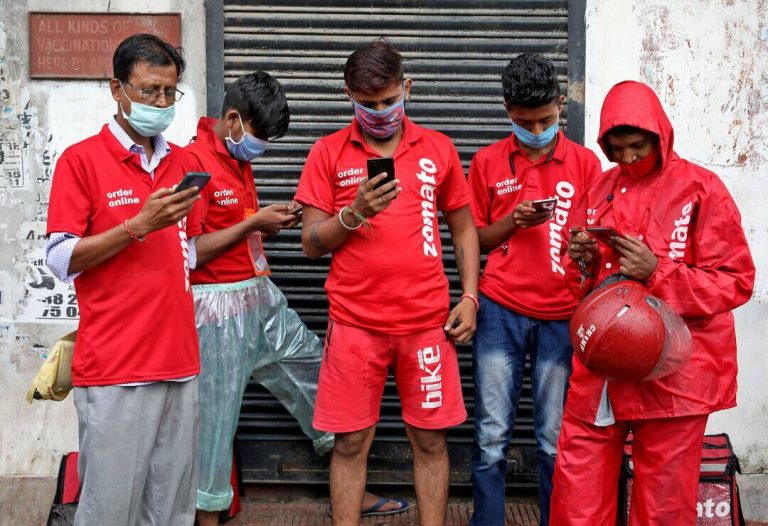
Deepinder claims issue with gig economy is it exposed class divide, says ‘We tip awkwardly’
The gig economy has been a topic of discussion for many years, with proponents arguing that it provides flexibility and opportunities for workers, while critics argue that it perpetuates inequality and exploitation. Recently, billionaire Deepinder Goyal weighed in on the issue, claiming that the problem with the gig economy is not its inherent structure, but rather the fact that it has brought the prevailing class divide to light. According to Goyal, the gig economy has made it impossible to ignore the systemic inequality that exists in our society, and this is what makes people uncomfortable.
Goyal’s comments were made in a recent post, where he stated, “Suddenly, the poor aren’t hidden away…Now, every doorbell is a reminder of systemic inequality.” He argued that the gig economy has made it possible for people from different socio-economic backgrounds to interact with each other in a way that was not possible before. With the rise of food delivery and ride-hailing apps, people from all walks of life are now interacting with each other on a daily basis, and this has brought the class divide to the forefront.
Goyal’s statement highlights the fact that the gig economy has made it impossible to ignore the fact that there are people who are struggling to make ends meet, and that these people are often the ones who are providing services to those who are more affluent. This has created a sense of discomfort and guilt among many people, who are forced to confront the reality of systemic inequality. As Goyal put it, “We aren’t just debating economics, we’re confronting guilt…We tip awkwardly…because inequality is no longer abstract.”
The fact that the gig economy has exposed the class divide is not a new phenomenon. Many critics have argued that the gig economy perpetuates inequality by creating a system where workers are treated as independent contractors, rather than employees. This means that they are not entitled to the same benefits and protections as employees, and are often forced to work long hours for low pay. The gig economy has also been criticized for creating a system where workers are pitted against each other, with companies using algorithms to determine who gets to work and who doesn’t.
However, Goyal’s comments suggest that the problem with the gig economy goes beyond these issues. He argues that the gig economy has brought the class divide to the forefront, and that this is what makes people uncomfortable. By making it possible for people from different socio-economic backgrounds to interact with each other, the gig economy has created a sense of discomfort and guilt among many people.
This discomfort and guilt are evident in the way that people tip workers in the gig economy. As Goyal noted, “We tip awkwardly…because inequality is no longer abstract.” Tipping has become a way for people to try to make up for the fact that workers in the gig economy are often underpaid and undervalued. However, tipping is also a way of perpetuating the class divide, as it creates a system where workers are forced to rely on the charity of others in order to make a living wage.
The fact that the gig economy has exposed the class divide is a complex issue, and one that requires a nuanced solution. While some people may argue that the gig economy is a necessary evil, others may argue that it is a system that perpetuates inequality and exploitation. However, one thing is clear: the gig economy has brought the class divide to the forefront, and it is up to us to confront this reality and work towards creating a more equitable society.
In conclusion, Deepinder Goyal’s comments highlight the fact that the gig economy has exposed the class divide in our society. By making it possible for people from different socio-economic backgrounds to interact with each other, the gig economy has created a sense of discomfort and guilt among many people. As Goyal noted, “We tip awkwardly…because inequality is no longer abstract.” The fact that the gig economy has brought the class divide to the forefront is a complex issue, and one that requires a nuanced solution. However, by acknowledging the reality of systemic inequality, we can begin to work towards creating a more equitable society.
News source: https://x.com/deepigoyal/status/2007030873711927381
About the Author