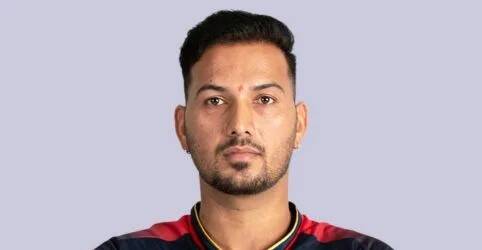
Cricketer Rajan Kumar, who was part of RCB in IPL 2024, fails dope test
The world of cricket has been marred by another doping scandal, with Uttarakhand left-arm fast bowler Rajan Kumar being the latest player to fail a dope test. According to reports, the National Anti-Doping Agency (NADA) has imposed a provisional suspension on Rajan, who was part of the Royal Challengers Bangalore (RCB) squad in the Indian Premier League (IPL) 2024. The news has sent shockwaves through the cricketing community, with many fans and experts expressing disappointment and concern over the prevalence of doping in the sport.
Rajan, who has been a promising young talent in Indian cricket, tested positive for Drostanolone, Metenolone, and Clomiphene anabolic steroids. These substances are banned by the World Anti-Doping Agency (WADA) and are considered performance-enhancing drugs. The test was conducted during a recent tournament, and the results have been confirmed by NADA.
The 24-year-old cricketer has been a regular feature in the domestic circuit, representing Uttarakhand in various tournaments. He has also been a part of the RCB squad in the IPL, although he did not get many opportunities to play. However, his performance in the Syed Mushtaq Ali Trophy 2025 was impressive, as he took 13 wickets and helped his team reach the quarterfinals.
The news of Rajan’s doping scandal has raised questions about the effectiveness of the anti-doping measures in Indian cricket. While NADA has been working to prevent doping in sports, there have been several instances of cricketers testing positive for banned substances in recent years. This has led to concerns about the culture of doping in Indian cricket and the need for more stringent measures to prevent it.
The provisional suspension imposed on Rajan means that he will not be able to participate in any cricketing activities until the case is resolved. The BCCI and NADA will conduct a thorough investigation into the matter, and Rajan will have the opportunity to present his case and defend himself. If found guilty, he could face a lengthy ban from the sport, which could jeopardize his career.
The doping scandal involving Rajan has also raised questions about the role of the IPL teams in preventing doping. While the IPL has a robust anti-doping program in place, there have been instances of players testing positive for banned substances despite being part of the league. This has led to concerns about the effectiveness of the anti-doping measures in the IPL and the need for more stringent testing and monitoring.
In recent years, there have been several instances of cricketers testing positive for banned substances. In 2020, Indian cricketer Prithvi Shaw was suspended for eight months after testing positive for a banned substance. In 2019, Sri Lankan cricketer Lasith Malinga was fined and suspended for three months after testing positive for a banned substance.
The doping scandal involving Rajan is a reminder that doping is a serious issue in cricket and that more needs to be done to prevent it. The BCCI and NADA must work together to strengthen the anti-doping measures in Indian cricket and ensure that players are aware of the risks and consequences of doping. The IPL teams must also take a more proactive approach to preventing doping and ensure that their players are aware of the rules and regulations.
In conclusion, the doping scandal involving Rajan Kumar is a disappointing and concerning development for Indian cricket. The provisional suspension imposed on him is a reminder that doping will not be tolerated in the sport, and that players who test positive for banned substances will face serious consequences. As the investigation into the matter continues, it is hoped that the BCCI and NADA will take a strong stance against doping and work to prevent such incidents in the future.
News Source: https://x.com/kushansarkar/status/2008197106234991093
About the Author