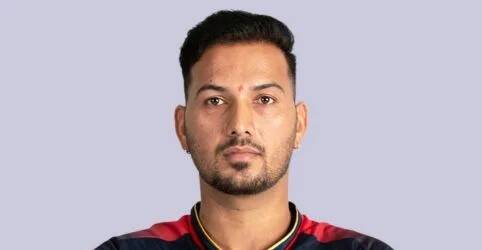
Cricketer Rajan Kumar, who was part of RCB in IPL 2024, fails dope test
The world of cricket has been shaken once again by a doping scandal, with Uttarakhand left-arm fast bowler Rajan Kumar being the latest player to fall foul of the anti-doping regulations. According to reports, Rajan Kumar has failed a dope test, following which the National Anti-Doping Agency (NADA) has imposed a provisional suspension on him. This news has sent shockwaves through the cricketing community, with fans and pundits alike expressing their disappointment and frustration.
Rajan Kumar, who was part of the Royal Challengers Bangalore (RCB) squad in the Indian Premier League (IPL) 2024, tested positive for Drostanolone, Metenolone, and Clomiphene anabolic steroids. These substances are banned by the World Anti-Doping Agency (WADA) and are considered performance-enhancing drugs. The news of Rajan Kumar’s failed dope test has raised questions about the effectiveness of the anti-doping measures in place in Indian cricket.
Rajan Kumar’s rise to prominence in the cricketing world was nothing short of meteoric. He made a name for himself in the domestic circuit, particularly in the Syed Mushtaq Ali Trophy 2025, where he took 13 wickets and helped his team put up impressive performances. His talent and potential caught the attention of the RCB team management, who signed him up for the IPL 2024 season. However, it now seems that his career has been put in jeopardy by his decision to use banned substances.
The use of performance-enhancing drugs is a serious issue in sports, and cricket is no exception. The pressure to perform and the lure of success can sometimes lead players to take shortcuts, but the consequences of such actions can be severe. Not only can doping lead to bans and fines, but it can also damage a player’s reputation and career prospects.
The NADA has been proactive in its efforts to curb doping in Indian sports, and the imposition of a provisional suspension on Rajan Kumar is a testament to its commitment to clean sports. However, the fact that a player like Rajan Kumar, who was part of a high-profile team like RCB, was able to evade detection for so long raises questions about the effectiveness of the anti-doping measures in place.
The IPL, in particular, has been plagued by doping scandals in the past, with several players being caught using banned substances. The league’s anti-doping program is designed to detect and prevent doping, but it seems that there are still loopholes that need to be addressed. The BCCI and the NADA need to work together to strengthen the anti-doping measures in place and ensure that players are held accountable for their actions.
Rajan Kumar’s failed dope test is a reminder that doping is a serious issue in cricket, and it needs to be addressed urgently. The cricketing community needs to come together to promote clean sports and ensure that players are aware of the risks and consequences of doping. The fans, too, have a role to play in this, by supporting players who play the game with integrity and fairness.
In conclusion, the news of Rajan Kumar’s failed dope test is a setback for Indian cricket, and it highlights the need for stronger anti-doping measures in place. The NADA’s imposition of a provisional suspension on Rajan Kumar is a step in the right direction, but more needs to be done to prevent such incidents in the future. As the cricketing community grapples with this issue, one thing is clear: doping has no place in the sport, and players who engage in such activities must be held accountable.
News Source: https://x.com/kushansarkar/status/2008197106234991093
About the Author