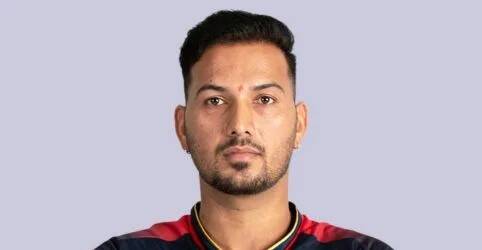
Cricketer Rajan Kumar, who was part of RCB in IPL 2024, fails dope test
The world of cricket has been shaken once again by a doping scandal, this time involving Uttarakhand left-arm fast bowler Rajan Kumar. According to recent reports, Rajan has failed a dope test, leading to a provisional suspension imposed by the National Anti-Doping Agency (NADA). The young cricketer, who was part of the Royal Challengers Bangalore (RCB) squad in the Indian Premier League (IPL) 2024, tested positive for Drostanolone, Metenolone, and Clomiphene anabolic steroids.
The news has sent shockwaves through the cricketing community, with many fans and experts expressing disappointment and concern over the rising instances of doping in the sport. Rajan, who had shown promise with his impressive performances in domestic cricket, had taken 13 wickets in the Syed Mushtaq Ali Trophy 2025. His suspension has not only raised questions about his future in the sport but also highlighted the need for stricter anti-doping measures in Indian cricket.
The use of performance-enhancing substances is a serious offense in sports, and cricket is no exception. The International Cricket Council (ICC) and the Board of Control for Cricket in India (BCCI) have strict anti-doping policies in place, which include regular testing and penalties for those found guilty. In this case, Rajan’s positive test for anabolic steroids has resulted in a provisional suspension, which means he will be barred from participating in any cricketing activities until the final decision is made.
The National Anti-Doping Agency (NADA) is responsible for enforcing anti-doping rules in India, and it has been actively involved in testing cricketers and other athletes for performance-enhancing substances. NADA’s efforts have led to the detection of several doping cases in recent years, including those involving high-profile cricketers. While the agency’s work is crucial in maintaining the integrity of sports, it also highlights the need for more education and awareness about the dangers of doping.
Rajan’s case is a classic example of how doping can ruin a promising career. The young cricketer had shown tremendous potential in domestic cricket, and his selection in the RCB squad for IPL 2024 was seen as a major breakthrough. However, his decision to use performance-enhancing substances has put his career in jeopardy, and it remains to be seen whether he will be able to recover from this setback.
The IPL, which is one of the most popular and competitive T20 leagues in the world, has a zero-tolerance policy towards doping. The league’s anti-doping rules are strict, and any player found guilty of doping faces severe penalties, including suspension and fines. The BCCI, which governs Indian cricket, also has a strict anti-doping policy in place, which includes regular testing and education programs for players.
In recent years, there have been several instances of cricketers being banned for doping offenses. These cases have not only damaged the reputation of the sport but also raised concerns about the effectiveness of anti-doping measures in Indian cricket. While the BCCI and NADA have taken steps to strengthen anti-doping policies, more needs to be done to prevent doping and protect the integrity of the sport.
As the cricketing community grapples with the issue of doping, it is essential to remember that the use of performance-enhancing substances is not only against the rules but also harmful to the health and well-being of athletes. Cricketers, like other athletes, are role models, and their actions have a significant impact on young fans and aspiring players. It is, therefore, crucial for cricketers to prioritize fair play and sportsmanship over personal gain and short-term success.
In conclusion, the news of Rajan Kumar’s doping offense is a sobering reminder of the challenges facing Indian cricket. While the sport has made significant progress in recent years, the issue of doping remains a major concern. As the cricketing community looks to the future, it is essential to prioritize fair play, sportsmanship, and the well-being of athletes. The BCCI, NADA, and other stakeholders must work together to strengthen anti-doping measures and prevent such incidents from occurring in the future.
News Source: https://x.com/kushansarkar/status/2008197106234991093
About the Author