B’desh not same as Pakistan: Ex-BCCI official on Mustafizur issue
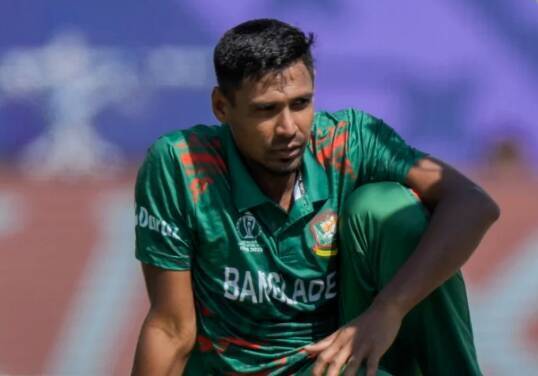
The Indian Premier League (IPL) has been at the center of controversy in recent days, with the Board of Control for Cricket in India (BCCI) directing the Kolkata Knight Riders (KKR) to release Bangladesh’s Mustafizur Rahman from their IPL 2026 squad. This decision has sparked a heated debate, with many questioning the fairness and reasoning behind it. A former BCCI official has now weighed in on the issue, criticizing the directive and arguing that Bangladesh should not be treated in the same manner as Pakistan.
The controversy began when the BCCI asked KKR to release Mustafizur Rahman, citing the recent violence against Hindus in Bangladesh. The BCCI’s decision was seen as a response to the attacks, which were widely condemned by the Indian government and other organizations. However, the former BCCI official has argued that this decision is unfair and misguided, pointing out that Bangladesh is not the same as Pakistan and should not be treated as an enemy nation.
The official’s comments are significant, given the context of the upcoming T20 World Cup, which India will host and where Bangladesh will be one of the participating teams. The official questioned the fairness of the decision, asking how India can expect to host Bangladesh in the tournament while also asking the KKR to release Mustafizur Rahman from their squad. This inconsistency has raised eyebrows, with many wondering why the BCCI is adopting such a hardline stance against Bangladesh.
The former BCCI official also made a crucial point about the nature of the violence in Bangladesh, stating that “what happened in Bangladesh was wrong, but those were mobs…such elements exist everywhere.” This comment highlights the fact that the violence against Hindus in Bangladesh was perpetrated by extremist groups, rather than the government or the majority of the population. The official’s argument is that Bangladesh should not be penalized for the actions of a few rogue elements, and that the BCCI’s decision is an overreaction.
The controversy surrounding Mustafizur Rahman’s release has also raised questions about the BCCI’s role in international cricket. The BCCI is one of the most powerful cricket boards in the world, and its decisions can have far-reaching consequences for the sport. In this case, the decision to ask KKR to release Mustafizur Rahman has been seen as an attempt to exert pressure on the Bangladesh government to take action against the perpetrators of the violence.
However, the former BCCI official’s comments suggest that this approach may be counterproductive. By treating Bangladesh as an enemy nation, the BCCI may be creating unnecessary tension and hostility between the two countries. Instead, the official argues that the BCCI should be working to promote cricketing ties between India and Bangladesh, rather than trying to dictate terms to the Bangladesh government.
The issue of Mustafizur Rahman’s release has also sparked a debate about the role of sports in politics. While sports are often seen as a way to bring people together and promote international understanding, they can also be used as a tool for political leverage. In this case, the BCCI’s decision to ask KKR to release Mustafizur Rahman has been seen as a political statement, rather than a purely cricketing decision.
As the controversy continues to unfold, it remains to be seen how the BCCI will respond to the criticism. The former BCCI official’s comments have added a new dimension to the debate, highlighting the need for a more nuanced approach to the issue. By recognizing that Bangladesh is not the same as Pakistan, and that the violence against Hindus was perpetrated by extremist groups, the BCCI may be able to find a more constructive way forward.
In conclusion, the controversy surrounding Mustafizur Rahman’s release has highlighted the complex and often fraught relationship between sports and politics. While the BCCI’s decision may have been motivated by a desire to respond to the violence against Hindus in Bangladesh, it has been criticized for being heavy-handed and unfair. The former BCCI official’s comments have added a valuable perspective to the debate, emphasizing the need for a more nuanced approach that recognizes the differences between Bangladesh and Pakistan. As the T20 World Cup approaches, it remains to be seen how the BCCI will navigate this complex issue, and whether they will find a way to promote cricketing ties between India and Bangladesh.
About the Author