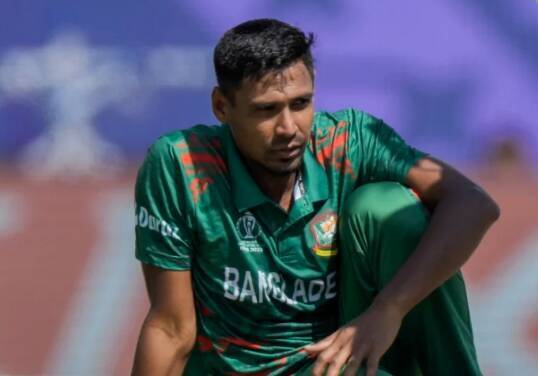
B’desh not same as Pakistan: Ex-BCCI official on Mustafizur issue
The Indian Premier League (IPL) has been at the forefront of Indian cricket for over a decade, providing a platform for talented cricketers from around the world to showcase their skills. However, a recent directive from the Board of Control for Cricket in India (BCCI) has sparked controversy, with an ex-BCCI official criticizing the decision to ask the Kolkata Knight Riders (KKR) to release Bangladesh’s Mustafizur Rahman from their IPL 2026 squad.
The issue stems from the recent unrest in Bangladesh, where violence and protests broke out in response to the visit of an Indian government official. The BCCI, in response to the situation, asked KKR to release Mustafizur from their squad, citing concerns over his safety and the potential for backlash against him. However, the ex-BCCI official has questioned the fairness of this decision, arguing that Bangladesh is not the same as Pakistan and should not be treated as an enemy nation.
The official’s comments come at a time when India is set to host Bangladesh in the T20 World Cup, raising questions about the consistency of the BCCI’s approach to cricketing relations with Bangladesh. “What happened in Bangladesh was wrong, but those were mobs…such elements exist everywhere,” the official added, highlighting the need for a more nuanced approach to the situation.
The ex-BCCI official’s criticism of the directive is not just about the treatment of Mustafizur, but also about the broader implications of the BCCI’s decision. By asking KKR to release Mustafizur, the BCCI is essentially implying that Bangladesh is a hostile nation, which is not the case. Bangladesh and India have a long-standing cricketing relationship, with the two teams having played numerous matches against each other over the years.
Furthermore, the BCCI’s decision sets a problematic precedent for the treatment of cricketers from other countries. If the BCCI can ask KKR to release Mustafizur due to concerns over his safety, what stops them from taking similar action against cricketers from other countries that may be experiencing unrest or turmoil? The ex-BCCI official’s comments highlight the need for a more thoughtful and consistent approach to cricketing relations with other nations.
The IPL has always been a platform that celebrates the diversity of cricket, bringing together talented cricketers from around the world to compete against each other. The BCCI’s decision to ask KKR to release Mustafizur undermines this spirit of inclusivity and fair play, and raises questions about the board’s commitment to promoting cricket as a unifying force.
In addition, the ex-BCCI official’s comments also highlight the need for a more nuanced understanding of the situation in Bangladesh. While the violence and protests that broke out in response to the Indian government official’s visit were certainly troubling, they do not define the entire nation. Bangladesh has a rich cricketing culture, and its cricketers have always been welcomed with open arms in India.
As the T20 World Cup approaches, the BCCI’s decision to ask KKR to release Mustafizur has sparked a heated debate about the fairness and consistency of the board’s approach to cricketing relations with Bangladesh. The ex-BCCI official’s criticism of the directive is a timely reminder that cricket is a sport that transcends national boundaries, and that the BCCI should prioritize the principles of fair play and inclusivity in its decision-making.
In conclusion, the BCCI’s decision to ask KKR to release Mustafizur Rahman from their IPL 2026 squad is a misguided one, and undermines the spirit of inclusivity and fair play that the IPL embodies. The ex-BCCI official’s comments are a timely reminder that Bangladesh is not the same as Pakistan, and should not be treated as an enemy nation. As the T20 World Cup approaches, the BCCI should reconsider its decision and prioritize the principles of fair play and inclusivity that have always defined the IPL.
About the Author