What is causing the delay in India’s Samudrayaan mission?
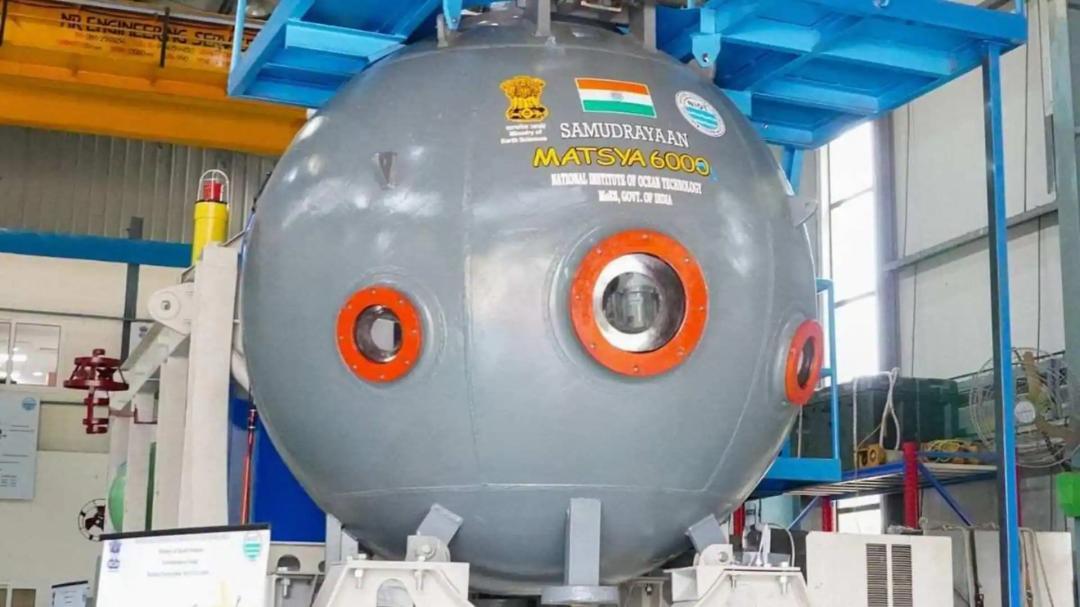
India’s ambitious Samudrayaan mission, aimed at sending a manned submersible to a depth of 6,000 meters underwater, has been delayed due to unforeseen circumstances. The mission, led by the National Institute of Ocean Technology (NIOT), has been facing a roadblock due to the late delivery of a critical component from France. The syntactic foam cladding, essential for the submersible’s buoyancy, has not been delivered on time, causing a significant delay in the project.
The Samudrayaan mission is a pioneering effort by India to explore the ocean floor, collect samples, and pave the way for deep-sea mining. The mission is expected to provide valuable insights into the Earth’s oceanic crust, uncover new species, and open up new avenues for mineral extraction. The submersible, designed to withstand the immense pressure of the deep sea, is being built by the NIOT in collaboration with several other organizations.
The syntactic foam cladding, which is being imported from France, is a critical component of the submersible’s design. The foam cladding provides the necessary buoyancy to the submersible, allowing it to dive to great depths and return to the surface safely. Without this component, the submersible cannot operate effectively, and the mission cannot proceed as planned.
The delay in the delivery of the syntactic foam cladding has pushed back the testing schedule of the submersible. Initially, the tests were expected to be conducted by the end of this year. However, with the delay in the delivery of the critical component, the tests are now expected to be conducted by April next year. The delay has caused a significant setback to the mission, and the team is working tirelessly to get the project back on track.
The Samudrayaan mission is a complex and challenging project that requires careful planning and execution. The mission involves several stages, including the design and development of the submersible, the testing and validation of the vehicle, and the actual dive to the ocean floor. The mission also requires the development of specialized equipment, such as the syntactic foam cladding, which is not readily available in India.
The delay in the Samudrayaan mission has raised concerns about the project’s timeline and budget. The mission is expected to cost several hundred crores, and any delay can result in significant cost overruns. The project’s timeline is also critical, as the mission is expected to provide valuable insights into the Earth’s oceanic crust and uncover new species. Any delay can result in lost opportunities for scientific discovery and exploration.
Despite the delay, the NIOT and its partners are working hard to get the project back on track. The team is working closely with the French supplier to expedite the delivery of the syntactic foam cladding. The team is also working on other aspects of the mission, including the development of the submersible’s life support system and the design of the ocean floor sampling equipment.
The Samudrayaan mission is a significant milestone in India’s oceanic research and exploration efforts. The mission is expected to provide valuable insights into the Earth’s oceanic crust and uncover new species. The mission is also expected to pave the way for deep-sea mining, which can provide a new source of minerals and resources for the country.
In conclusion, the delay in the Samudrayaan mission is a setback, but it is not a showstopper. The team is working hard to get the project back on track, and the mission is expected to proceed as planned. The Samudrayaan mission is a complex and challenging project that requires careful planning and execution. With the support of the government and the scientific community, the mission is expected to succeed and provide valuable insights into the Earth’s oceanic crust.
The delay in the Samudrayaan mission is a reminder of the challenges and complexities involved in deep-sea exploration. The mission requires careful planning, precise execution, and the development of specialized equipment. The delay has also highlighted the importance of international collaboration and the need for reliable suppliers.
As the Samudrayaan mission moves forward, it is expected to provide valuable insights into the Earth’s oceanic crust and uncover new species. The mission is also expected to pave the way for deep-sea mining, which can provide a new source of minerals and resources for the country. With the support of the government and the scientific community, the Samudrayaan mission is expected to succeed and make a significant contribution to our understanding of the ocean and its resources.
News source: https://www.newsbytesapp.com/news/science/samudrayaan-mission-delayed-due-to-late-delivery-of-french-foam/story
About the Author