What is causing the delay in India’s Samudrayaan mission?
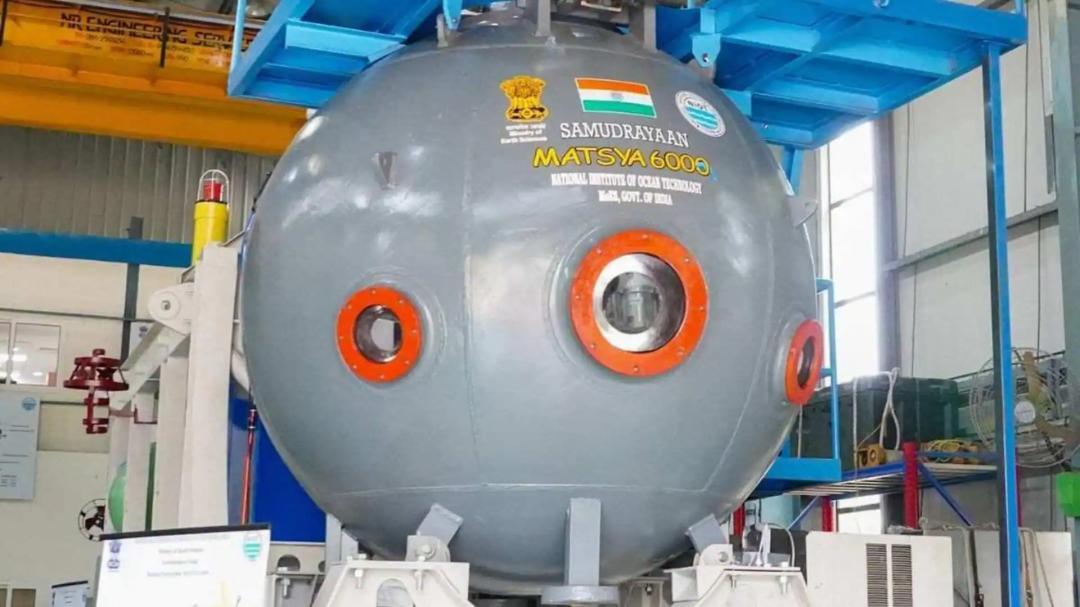
The Indian government’s ambitious Samudrayaan mission, aimed at sending a manned submersible to a depth of 6,000 meters underwater, has hit a roadblock. The mission, led by the National Institute of Ocean Technology (NIOT), has been delayed due to the late delivery of a critical component from France. The component in question is syntactic foam cladding, a vital material required for the submersible’s buoyancy. The delay has pushed back the testing schedule, with trials now expected to commence by April next year.
The Samudrayaan mission is a significant undertaking for India, with the objective of exploring the ocean floor, collecting samples, and paving the way for deep-sea mining. The mission is expected to provide valuable insights into the country’s oceanic resources and help identify potential areas for mining. The submersible, designed to withstand the immense pressure at depths of 6,000 meters, will be capable of carrying a crew of three scientists and will be equipped with advanced instruments for sampling and data collection.
The delay in the delivery of the syntactic foam cladding from France has been attributed to unforeseen circumstances. The material is a critical component of the submersible’s design, providing the necessary buoyancy to ensure the vessel’s stability and safety at extreme depths. Without the syntactic foam cladding, the submersible would be unable to maintain its buoyancy, rendering it inoperable.
The NIOT, the lead agency responsible for the Samudrayaan mission, has been working closely with the French supplier to expedite the delivery of the syntactic foam cladding. However, the delay has resulted in a significant setback for the mission, with the testing schedule now pushed back by several months.
The Samudrayaan mission is a complex and challenging undertaking, requiring the collaboration of multiple agencies and stakeholders. The mission involves the development of a deep-sea submersible capable of withstanding the immense pressure at depths of 6,000 meters. The submersible will be equipped with advanced life support systems, navigation, and communication equipment, as well as instruments for sampling and data collection.
The delay in the Samudrayaan mission has significant implications for India’s deep-sea mining ambitions. The country is eager to explore its oceanic resources and establish itself as a major player in the global deep-sea mining industry. The Samudrayaan mission is a critical step towards achieving this goal, and the delay has raised concerns about the country’s ability to meet its timelines.
Despite the setback, the NIOT remains committed to the Samudrayaan mission and is working diligently to overcome the challenges. The agency has assured that the delay will not impact the overall objective of the mission and that the submersible will be ready for testing by April next year.
The Samudrayaan mission is a testament to India’s growing capabilities in the field of deep-sea exploration and mining. The country has made significant strides in recent years, with the establishment of the Deep Sea Mining Authority and the development of advanced technologies for deep-sea exploration. The Samudrayaan mission is a critical component of India’s deep-sea mining strategy, and its success will pave the way for the country’s future endeavors in this field.
In conclusion, the delay in the Samudrayaan mission is a setback for India’s deep-sea mining ambitions, but it is not a permanent obstacle. The NIOT and its partners are working tirelessly to overcome the challenges, and the mission is expected to get back on track soon. The success of the Samudrayaan mission will be a significant milestone for India, marking a major breakthrough in the country’s deep-sea exploration and mining capabilities.
News Source: https://www.newsbytesapp.com/news/science/samudrayaan-mission-delayed-due-to-late-delivery-of-french-foam/story
About the Author