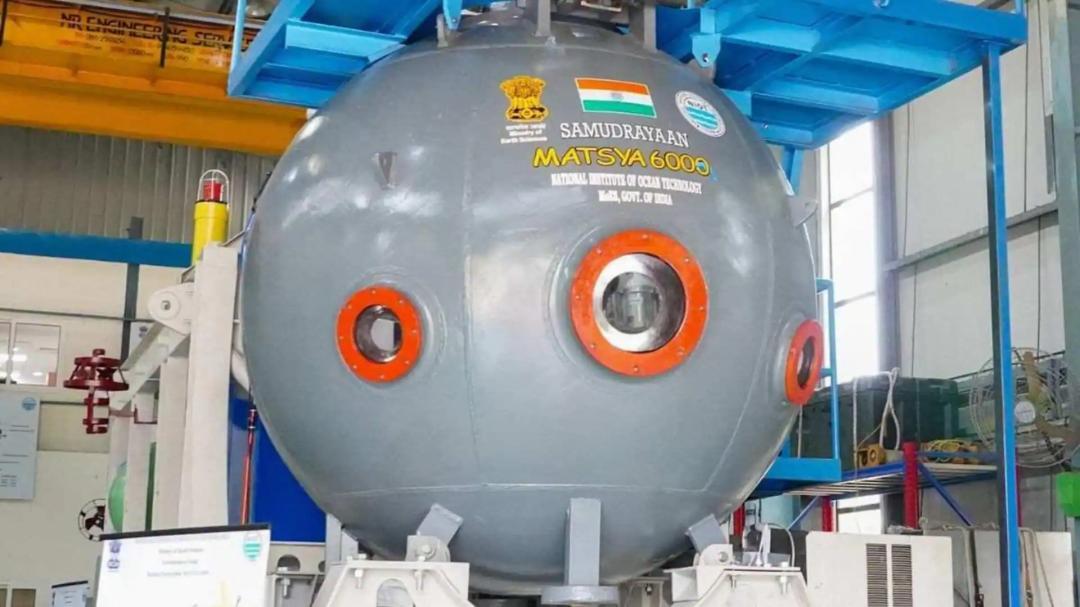
What is causing the delay in India’s Samudrayaan mission?
India’s ambitious Samudrayaan mission, which aims to send a manned submersible to a depth of 6,000 meters underwater, has been delayed due to unforeseen circumstances. The mission, led by the National Institute of Ocean Technology (NIOT), has been facing a setback due to the late delivery of a critical component from France. The component in question is syntactic foam cladding, which is vital for the submersible’s buoyancy. In this blog post, we will delve into the details of the mission, the importance of syntactic foam cladding, and the impact of the delay on the project’s timeline.
The Samudrayaan mission is a significant undertaking by the Indian government to explore the ocean floor, collect samples, and pave the way for deep-sea mining. The mission is expected to provide valuable insights into the ocean’s ecosystem, geology, and potential mineral resources. The submersible, which is being designed and built by NIOT, will be capable of withstanding the extreme pressure and conditions found at depths of 6,000 meters.
Syntactic foam cladding is a critical component of the submersible’s design, as it provides the necessary buoyancy to maintain the vessel’s stability and balance underwater. The foam cladding is made up of a combination of materials, including glass microspheres and resin, which are mixed together to create a lightweight yet incredibly strong material. The syntactic foam cladding is essential for the submersible’s ability to dive to great depths and return to the surface safely.
The delay in the delivery of the syntactic foam cladding from France has thrown a spanner in the works of the Samudrayaan mission. The component was initially expected to arrive in India by the end of 2022, but due to unforeseen circumstances, the delivery has been delayed. The NIOT team has been working tirelessly to complete the submersible’s design and construction, but the absence of the syntactic foam cladding has brought the project to a standstill.
The delay in the Samudrayaan mission has significant implications for India’s deep-sea exploration and mining ambitions. The country has been keen to explore the ocean floor for mineral resources, including copper, zinc, and gold. The Samudrayaan mission is a crucial step towards achieving this goal, as it will provide valuable insights into the ocean’s geology and potential mineral deposits. The delay in the mission’s timeline may impact India’s ability to exploit these resources in a timely manner.
Despite the setback, the NIOT team remains optimistic about the mission’s prospects. The team is working closely with the French supplier to expedite the delivery of the syntactic foam cladding. Once the component arrives, the team will resume work on the submersible’s construction and testing. According to reports, the tests are now expected to commence by April next year, with the mission likely to be completed by the end of 2024.
The Samudrayaan mission is a significant undertaking by the Indian government, and its success will have far-reaching implications for the country’s deep-sea exploration and mining ambitions. While the delay in the syntactic foam cladding’s delivery has been a setback, the NIOT team remains committed to completing the mission. With the tests expected to commence by April next year, the team is working tirelessly to ensure that the mission is completed on time and within budget.
In conclusion, the delay in the Samudrayaan mission is a setback, but it is not a permanent obstacle. The NIOT team is working closely with the French supplier to expedite the delivery of the syntactic foam cladding, and the tests are expected to commence by April next year. The success of the Samudrayaan mission will be a significant milestone for India’s deep-sea exploration and mining ambitions, and the country’s scientific community is eagerly awaiting the mission’s completion.
News Source: https://www.newsbytesapp.com/news/science/samudrayaan-mission-delayed-due-to-late-delivery-of-french-foam/story
About the Author