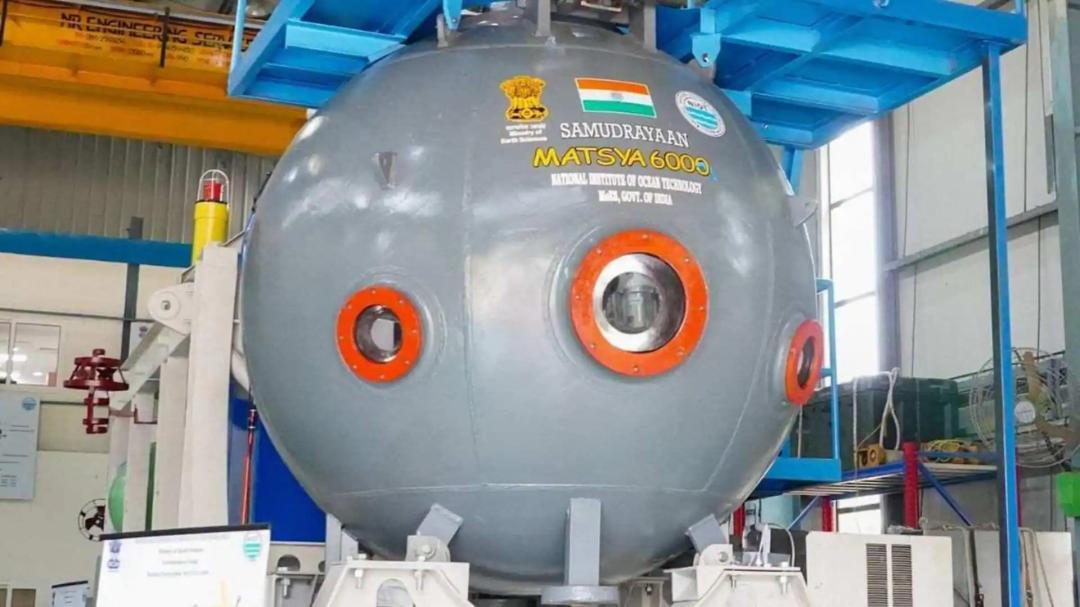
What is causing the delay in India’s Samudrayaan mission?
India’s ambitious Samudrayaan mission, which aims to send a manned submersible to a depth of 6,000 meters underwater, has hit a roadblock. The mission, led by the National Institute of Ocean Technology (NIOT), has been delayed due to the late delivery of a critical component – syntactic foam cladding – from France. This vital component is essential for the submersible’s buoyancy, and its delay has pushed back the mission’s timeline.
The Samudrayaan mission is a significant undertaking for India, as it seeks to explore the ocean floor, collect samples, and pave the way for deep-sea mining. The mission is expected to provide valuable insights into the ocean’s ecosystem, geology, and potential mineral resources. However, the delay in the delivery of the syntactic foam cladding has thrown a spanner in the works, and the tests are now expected to take place by April next year.
The syntactic foam cladding is a critical component of the submersible’s design, as it provides the necessary buoyancy to maintain the vessel’s stability and balance underwater. The foam cladding is made up of a combination of materials, including glass microspheres and epoxy resin, which provides the required strength and durability to withstand the extreme pressure of the deep sea. The cladding is essential to ensure the submersible’s safety and efficiency during its underwater journey.
The delay in the delivery of the syntactic foam cladding from France has been attributed to various factors, including logistical issues and production delays. The French manufacturer, who is supplying the cladding, has cited unforeseen circumstances that have impacted their production schedule, resulting in the delay. The Indian authorities, however, are working closely with the manufacturer to expedite the delivery and get the mission back on track.
The Samudrayaan mission is a complex and challenging undertaking, requiring the coordination of multiple agencies and stakeholders. The mission involves the design and development of a manned submersible that can withstand the extreme conditions of the deep sea, including high pressure, near-freezing temperatures, and total darkness. The submersible will be equipped with state-of-the-art technology, including advanced life support systems, communication equipment, and sampling gear.
The mission’s objective is to explore the ocean floor and collect samples of marine life, sediments, and rocks. The data and samples collected during the mission will provide valuable insights into the ocean’s ecosystem, geology, and potential mineral resources. The mission will also help to identify potential sites for deep-sea mining, which could provide a new source of revenue for India.
The delay in the Samudrayaan mission is a setback, but it is not a significant one. The Indian authorities are working diligently to resolve the issue and get the mission back on track. The tests are now expected to take place by April next year, and the mission is expected to be completed within the next two years.
In conclusion, the delay in the Samudrayaan mission is a minor setback, but it highlights the complexities and challenges involved in such a complex undertaking. The mission’s success will depend on the coordination and collaboration of multiple agencies and stakeholders, including the NIOT, the French manufacturer, and other international partners. The Samudrayaan mission has the potential to make significant contributions to our understanding of the ocean and its resources, and its success will be a major milestone for India’s scientific community.
News Source: https://www.newsbytesapp.com/news/science/samudrayaan-mission-delayed-due-to-late-delivery-of-french-foam/story
About the Author