What is causing the delay in India’s Samudrayaan mission?
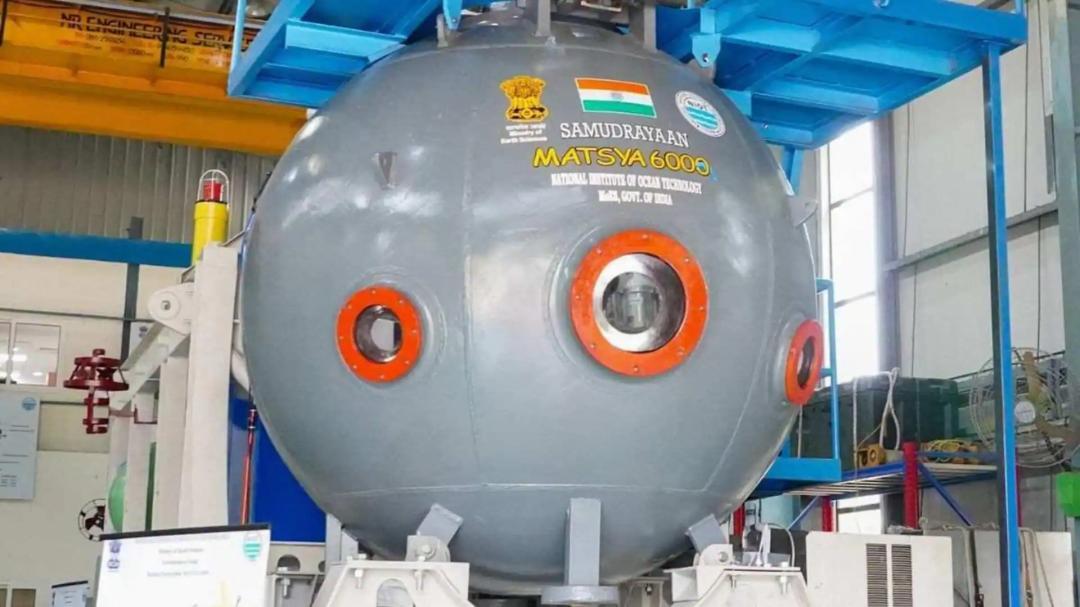
India’s ambitious Samudrayaan mission, which aims to send a manned submersible to a depth of 6,000 meters underwater, has hit a roadblock. The mission, led by the National Institute of Ocean Technology (NIOT), has been delayed due to the late delivery of a critical component from France. The component in question is syntactic foam cladding, which is vital for the submersible’s buoyancy. In this blog post, we will delve into the details of the delay, the significance of the Samudrayaan mission, and what this means for India’s deep-sea exploration ambitions.
The Samudrayaan mission is a pioneering endeavor that seeks to explore the ocean floor, collect samples, and pave the way for deep-sea mining. The mission is expected to play a crucial role in enhancing our understanding of the ocean’s ecosystem, as well as unlocking the vast mineral resources that lie beneath the waves. The submersible, which is being designed and developed by NIOT, will be capable of withstanding the immense pressure of the deep ocean and will be equipped with state-of-the-art sensors and sampling equipment.
However, the delay in the delivery of the syntactic foam cladding from France has thrown a spanner in the works. The foam cladding is a critical component that provides the submersible with the necessary buoyancy to operate at depths of up to 6,000 meters. Without it, the submersible would be unable to maintain its stability and would be at risk of sinking or experiencing other technical difficulties.
According to reports, the delivery of the foam cladding was expected to take place several months ago, but it has been delayed due to unspecified reasons. As a result, the tests for the submersible, which were initially scheduled to take place this year, have now been pushed back to April next year. This delay is likely to have a ripple effect on the entire mission, and it remains to be seen how it will impact the overall timeline and budget of the project.
The Samudrayaan mission is not just significant for India’s scientific community, but it also has important implications for the country’s economy and industry. The ocean floor is believed to be rich in mineral resources, including copper, zinc, and gold, and the mission could potentially unlock new avenues for deep-sea mining. Additionally, the mission could also lead to breakthroughs in fields such as marine biology, geology, and environmental science.
Despite the delay, the NIOT team remains optimistic about the mission’s prospects. The team has been working tirelessly to design and develop the submersible, and they are confident that the mission will be a success once the foam cladding is delivered and the tests are completed. The team has also been working closely with international partners, including the French company that is supplying the foam cladding, to ensure that the mission stays on track.
In conclusion, the delay in the Samudrayaan mission is a setback, but it is not a fatal blow. The mission remains an important and ambitious endeavor that has the potential to unlock new discoveries and opportunities for India. The NIOT team is working hard to overcome the challenges, and it is expected that the tests will take place by April next year. As we wait for the mission to get back on track, it is essential to recognize the significance of the Samudrayaan mission and the potential it holds for India’s scientific community, economy, and industry.
The Samudrayaan mission is a testament to India’s growing capabilities in the field of oceanography and deep-sea exploration. The mission is expected to pave the way for future expeditions and research initiatives, and it could potentially establish India as a major player in the field of deep-sea exploration. As we look to the future, it is essential to continue supporting and investing in initiatives like the Samudrayaan mission, which have the potential to drive innovation, discovery, and economic growth.
In the coming months, we can expect to see significant developments in the Samudrayaan mission. The delivery of the foam cladding, the completion of the tests, and the eventual deployment of the submersible will be closely watched by scientists, policymakers, and industry leaders. As the mission progresses, it is likely to generate significant interest and excitement, both in India and around the world.
For now, we will have to wait and see how the Samudrayaan mission unfolds. The delay may have been a setback, but it is not a reason to lose hope. The NIOT team is working hard to overcome the challenges, and it is expected that the mission will be a success in the end. As we look to the future, it is essential to continue supporting and investing in initiatives like the Samudrayaan mission, which have the potential to drive innovation, discovery, and economic growth.
News Source: https://www.newsbytesapp.com/news/science/samudrayaan-mission-delayed-due-to-late-delivery-of-french-foam/story
About the Author