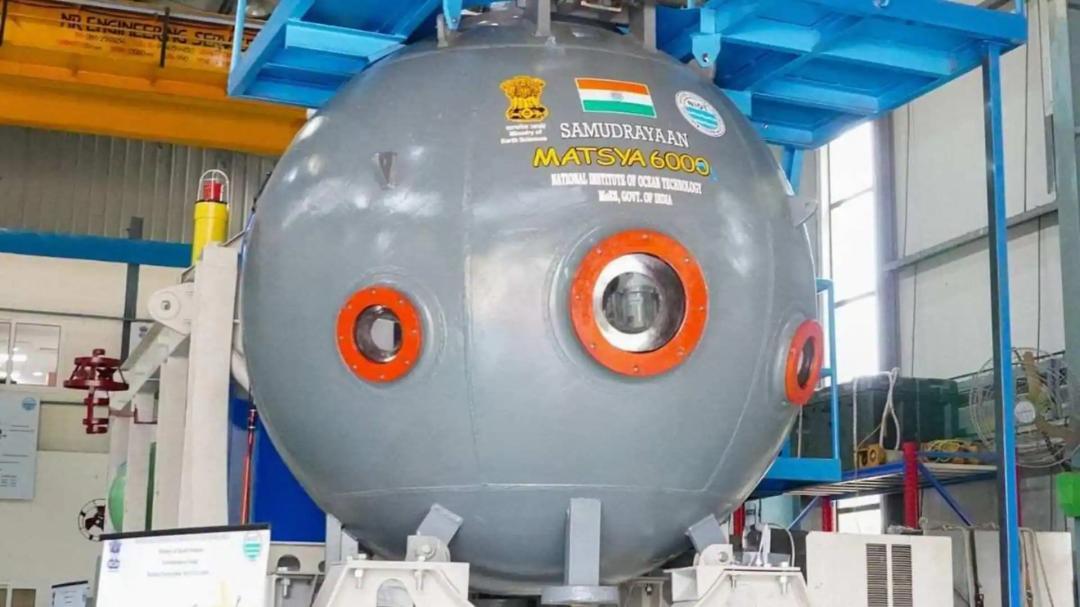
What is causing the delay in India’s Samudrayaan mission?
India’s ambitious Samudrayaan mission, which aims to send a manned submersible to a depth of 6,000 meters underwater, has been delayed due to unforeseen circumstances. The mission, led by the National Institute of Ocean Technology (NIOT), has been facing a significant setback due to the late delivery of a critical component from France. The syntactic foam cladding, which is vital for the submersible’s buoyancy, has been delayed, pushing back the mission’s timeline.
The Samudrayaan mission is a pioneering effort by India to explore the ocean floor, collect samples, and pave the way for deep-sea mining. The mission is expected to play a crucial role in enhancing our understanding of the ocean’s ecosystem and unlocking its vast resources. However, the delay in the delivery of the syntactic foam cladding has thrown a spanner in the works, forcing the researchers to reschedule their plans.
The syntactic foam cladding is a critical component of the submersible’s design, providing the necessary buoyancy to ensure the vessel’s stability and safety at extreme depths. The foam cladding is designed to withstand the immense pressure of the deep sea, maintaining the submersible’s structural integrity and preventing it from collapsing under the weight of the water. Without the syntactic foam cladding, the submersible would be unable to dive to the required depths, making it impossible to achieve the mission’s objectives.
The delay in the delivery of the syntactic foam cladding has been attributed to unforeseen circumstances, including production delays and logistical issues. The French company responsible for manufacturing the foam cladding has been working tirelessly to expedite the delivery, but the delay has already had a significant impact on the mission’s timeline.
The Samudrayaan mission was initially scheduled to begin in late 2022, with the submersible expected to dive to a depth of 6,000 meters in the Indian Ocean. However, with the delay in the delivery of the syntactic foam cladding, the mission has been pushed back to April next year. The researchers are now working on a revised schedule, with a series of tests and trials planned to ensure the submersible’s safety and efficacy.
The delay in the Samudrayaan mission is a setback for India’s oceanic research program, which has been gaining momentum in recent years. The program has been focused on exploring the country’s vast oceanic resources, including mineral deposits, fisheries, and energy reserves. The Samudrayaan mission is a key component of this program, with the potential to unlock new discoveries and opportunities for India’s economic growth.
Despite the delay, the researchers remain optimistic about the mission’s prospects. The Samudrayaan mission is a complex and challenging undertaking, requiring the collaboration of multiple agencies and stakeholders. The delay in the delivery of the syntactic foam cladding is a minor setback, and the researchers are confident that the mission will ultimately achieve its objectives.
The Samudrayaan mission is not only significant for India’s oceanic research program but also has global implications. The mission’s success could pave the way for deep-sea mining and exploration, providing new opportunities for resource extraction and economic growth. The mission’s findings could also contribute to our understanding of the ocean’s ecosystem, helping to inform policies and practices for sustainable ocean management.
In conclusion, the delay in the Samudrayaan mission is a setback for India’s oceanic research program, but it is not a defeat. The researchers are working tirelessly to overcome the challenges and ensure the mission’s success. The Samudrayaan mission has the potential to unlock new discoveries and opportunities for India’s economic growth, and its success could have far-reaching implications for the global community.
The delay in the delivery of the syntactic foam cladding from France has been a significant setback, but it is not the only challenge faced by the Samudrayaan mission. The mission’s success will depend on the collaboration of multiple agencies and stakeholders, as well as the resolve and determination of the researchers involved. As the mission moves forward, it is essential to acknowledge the challenges and setbacks, while remaining focused on the ultimate goal of exploring the ocean floor and unlocking its vast resources.
The Samudrayaan mission is a testament to India’s commitment to oceanic research and exploration. The mission’s success could pave the way for new discoveries and opportunities, contributing to India’s economic growth and global influence. As the mission moves forward, it is essential to recognize the significance of the Samudrayaan mission and its potential to shape the future of oceanic research and exploration.
News Source: https://www.newsbytesapp.com/news/science/samudrayaan-mission-delayed-due-to-late-delivery-of-french-foam/story
About the Author