What is causing the delay in India’s Samudrayaan mission?
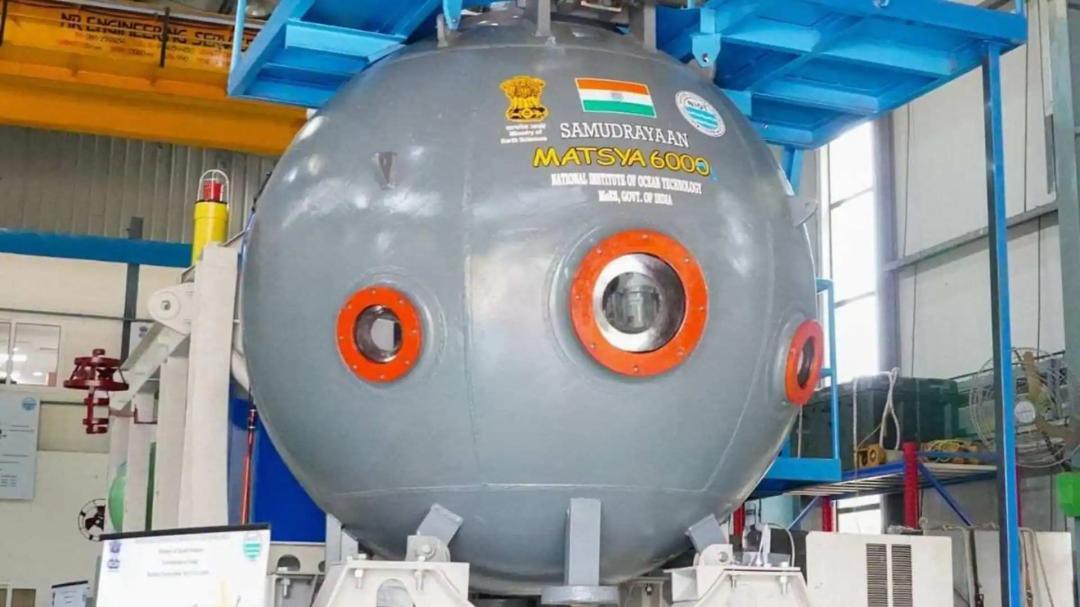
India’s ambitious Samudrayaan mission, which aims to send a manned submersible to a depth of 6,000 meters underwater, has hit a roadblock. The mission, led by the National Institute of Ocean Technology (NIOT), has been delayed due to the late delivery of a critical component from France. The component in question is syntactic foam cladding, a vital material that provides buoyancy to the submersible. The delay has pushed back the expected testing schedule, with trials now expected to commence by April next year.
The Samudrayaan mission is a significant undertaking for India, with the potential to unlock new avenues for deep-sea exploration, research, and mining. The mission’s primary objective is to design, develop, and test a manned submersible that can withstand the extreme conditions of the deep ocean. The submersible will be equipped with state-of-the-art technology, including advanced life support systems, communication equipment, and sampling gear. Once deployed, the submersible will enable scientists to explore the ocean floor, collect samples, and conduct experiments in real-time.
The syntactic foam cladding, which is being supplied by a French company, plays a crucial role in the submersible’s design. The foam provides the necessary buoyancy to the submersible, allowing it to descend to great depths while maintaining its structural integrity. The foam is also designed to withstand the immense pressure of the deep ocean, which can reach over 1,000 times the pressure at sea level. Without the syntactic foam cladding, the submersible would be unable to achieve its intended depth, rendering the mission ineffective.
The delay in the delivery of the syntactic foam cladding has significant implications for the mission’s timeline. Initially, the trials were expected to commence earlier this year, with the submersible slated to reach its target depth by the end of 2023. However, with the delayed delivery of the critical component, the testing schedule has been pushed back to April next year. This delay will not only impact the mission’s overall timeline but also increase the costs associated with the project.
The National Institute of Ocean Technology (NIOT) is the lead agency responsible for the Samudrayaan mission. NIOT has been working tirelessly to develop the submersible, with a team of scientists and engineers dedicated to the project. The institute has also collaborated with other organizations, including the Indian Navy and the Defence Research and Development Organisation (DRDO), to ensure the mission’s success.
The Samudrayaan mission is not only significant for India’s scientific community but also has the potential to unlock new economic opportunities. The deep ocean is believed to be rich in mineral resources, including copper, zinc, and gold. By developing the capability to explore and mine these resources, India can reduce its dependence on foreign imports and create new industries. The mission will also provide valuable insights into the ocean’s ecosystem, helping to inform conservation efforts and sustainable management of marine resources.
In conclusion, the delay in the Samudrayaan mission is a setback for India’s ambitious deep-sea exploration plans. However, the mission’s significance and potential benefits make it an endeavor worth pursuing. The National Institute of Ocean Technology (NIOT) and its partners must work to overcome the current challenges and ensure that the mission stays on track. With the syntactic foam cladding expected to arrive soon, the testing schedule can commence, and the submersible can begin its journey to the depths of the ocean.
As the world’s oceans continue to play a vital role in regulating the planet’s climate and providing resources, missions like Samudrayaan will become increasingly important. India’s commitment to deep-sea exploration and research demonstrates its willingness to invest in the future of our planet. The success of the Samudrayaan mission will not only benefit India but also contribute to the global understanding of our oceans and their potential.
News Source: https://www.newsbytesapp.com/news/science/samudrayaan-mission-delayed-due-to-late-delivery-of-french-foam/story
About the Author