Vulturine Guinea Fowl Uses Light to Look Blue Instead of Pigment
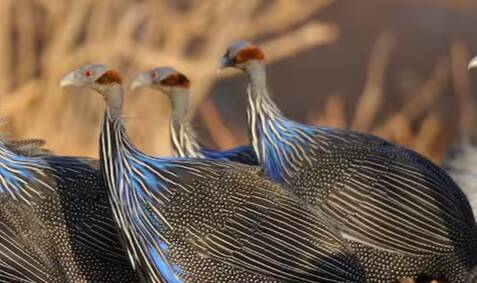
The natural world is full of fascinating creatures, each with unique characteristics that have evolved over time to help them survive and thrive in their environments. One such creature is the vulturine guinea fowl, a bird known for its striking electric blue feathers. However, what’s remarkable about this bird’s plumage is that it doesn’t contain any pigment. Instead, the colour comes from microscopic feather structures that scatter light, reflecting only blue wavelengths.
The vulturine guinea fowl’s ability to appear blue without using pigment is a result of a phenomenon known as structural colour. This occurs when the microscopic structure of a material, in this case, the bird’s feathers, interacts with light in a way that creates a specific colour. The feathers of the vulturine guinea fowl contain tiny, plate-like structures called melanosomes, which are made up of the protein melanin. However, unlike other birds, the melanosomes in the vulturine guinea fowl’s feathers are not filled with pigment. Instead, they are hollow and contain air-filled cavities that scatter light.
When light hits the feathers of the vulturine guinea fowl, it encounters the microscopic melanosomes and is scattered in all directions. However, the structure of the melanosomes is such that it preferentially scatters shorter, blue wavelengths of light, while longer wavelengths, such as red and yellow, are absorbed or transmitted. This results in the appearance of a bright, electric blue colour, even though there is no pigment present.
The vulturine guinea fowl’s striking plumage serves several purposes. The bright blue colour helps the birds to communicate with each other, particularly in the open savannas where they live. The colour may also play a role in mating and courtship, as well as in warning off potential predators. In addition, the structural colour of the vulturine guinea fowl’s feathers may help to reduce the amount of heat that is absorbed by the bird, keeping it cooler in the hot savanna sun.
The study of the vulturine guinea fowl’s structural colour is not only fascinating from a biological perspective, but it also has significant implications for the fields of optics and materials science. Scientists are interested in understanding how the microscopic structure of the bird’s feathers creates the blue colour, and how this can be replicated in other materials.
One potential application of this research is in the development of new, more efficient types of solar cells. By creating materials that can scatter light in a similar way to the vulturine guinea fowl’s feathers, scientists may be able to increase the amount of energy that is absorbed by the cells, making them more efficient. Additionally, the study of structural colour could lead to the development of new types of displays and lighting systems, which could be more energy-efficient and environmentally friendly.
The vulturine guinea fowl is just one example of the many fascinating creatures that exist in the natural world. Its unique ability to appear blue without using pigment is a testament to the incredible diversity and complexity of life on Earth. By studying this bird and its remarkable characteristics, scientists can gain a deeper understanding of the natural world and develop new technologies and materials that can benefit society.
In conclusion, the vulturine guinea fowl’s use of light to appear blue is a remarkable example of the complex and fascinating ways in which living organisms interact with their environments. The study of this phenomenon has significant implications for our understanding of the natural world and could lead to the development of new technologies and materials. As we continue to explore and learn more about the world around us, we are reminded of the incredible beauty and complexity of life on Earth.
About the Author