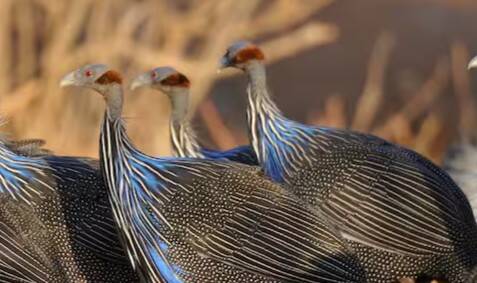
Vulturine Guinea Fowl Uses Light to Look Blue Instead of Pigment
The natural world is full of fascinating phenomena, and one of the most intriguing is the way that certain animals use light to create their striking colors. The vulturine guinea fowl, a bird native to the savannas of East Africa, is a prime example of this. Its electric blue feathers are a sight to behold, but what’s even more remarkable is that they contain no pigment. Instead, the color comes from microscopic feather structures that scatter light, reflecting only blue wavelengths. In this blog post, we’ll delve into the science behind this incredible phenomenon and explore how it helps the vulturine guinea fowl communicate and survive in its environment.
The Science of Structural Color
Structural color is a phenomenon that occurs when the microscopic structure of a material scatters light in a way that creates a specific color. This is different from pigment-based color, which is created by the absorption and reflection of light by molecules. In the case of the vulturine guinea fowl, the microscopic structure of its feathers is made up of tiny, plate-like melanin crystals that are arranged in a specific pattern. When light hits these crystals, it is scattered in all directions, but the blue wavelengths are reflected back to our eyes, creating the illusion of bright blue color.
This phenomenon is not unique to the vulturine guinea fowl, of course. Many animals, including butterflies, peacocks, and even some species of fish, use structural color to create their striking hues. However, the vulturine guinea fowl is one of the most striking examples of this phenomenon, and its electric blue feathers have captivated scientists and bird enthusiasts alike.
Communication and Survival
So, why does the vulturine guinea fowl need to create such a striking color? The answer lies in its social behavior and environment. The vulturine guinea fowl is a highly social bird that lives in large flocks, and communication is key to its survival. The bright blue color of its feathers plays a crucial role in this communication, allowing the birds to recognize one another and coordinate their behavior.
In the open savannas where the vulturine guinea fowl lives, visibility is crucial. The birds need to be able to see one another from a distance, and the bright blue color of their feathers helps them to stand out against the dull brown and green background of the savanna. This is especially important for young birds, which need to be able to recognize their parents and follow them to food sources.
Inspiring Research in Optics and Materials Science
The vulturine guinea fowl’s structural color is not just a fascinating natural phenomenon – it’s also inspiring research in optics and materials science. Scientists are studying the microscopic structure of the bird’s feathers to understand how they create such a striking color, and this research has the potential to lead to breakthroughs in fields such as materials science and biotechnology.
For example, researchers are working to develop new materials that can mimic the structural color of the vulturine guinea fowl’s feathers. These materials could have a wide range of applications, from cosmetics and textiles to biomedical devices and solar cells. By studying the way that the vulturine guinea fowl creates its bright blue color, scientists may be able to develop new technologies that can create similar effects.
Conclusion
The vulturine guinea fowl is a remarkable bird, and its electric blue feathers are just one of the many fascinating things about it. By using light to create its striking color, the bird is able to communicate and survive in its environment, and its unique plumage is inspiring research in optics and materials science. As we continue to learn more about this incredible phenomenon, we may uncover even more secrets about the natural world and the incredible ways that animals adapt to their environments.
About the Author