Vulturine Guinea Fowl Uses Light to Look Blue Instead of Pigment
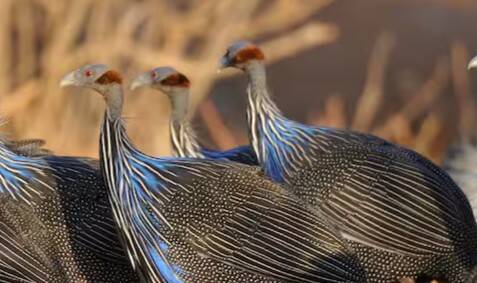
The natural world is full of fascinating phenomena, and one of the most intriguing is the way that certain animals can produce striking colors without the use of pigments. The vulturine guinea fowl is a prime example of this, with its electric blue feathers being a notable exception to the usual rule that colors in nature are created by pigments. Instead, the vulturine guinea fowl’s blue coloration is the result of microscopic feather structures that scatter light, reflecting only blue wavelengths. This unique property has not only helped the bird to thrive in its open savanna habitat but has also inspired scientists to explore new areas of research in optics and materials science.
The vulturine guinea fowl is a medium-sized bird that is native to the savannas and grasslands of eastern Africa. It is a member of the Numididae family, which includes other guinea fowl species, and is known for its distinctive blue-gray plumage. However, unlike other birds that have blue feathers, the vulturine guinea fowl’s coloration is not due to the presence of pigments such as melanin or carotenoids. Instead, the bird’s feathers contain microscopic structures that are made up of tiny, plate-like cells called melanosomes. These melanosomes are arranged in a specific pattern that creates a diffraction grating, which scatters light and reflects only the blue wavelengths.
This phenomenon is known as structural coloration, and it is a common feature of many animals, including birds, butterflies, and fish. Structural coloration is created by the way that light interacts with the microscopic structures found in an animal’s skin or feathers. In the case of the vulturine guinea fowl, the melanosomes in its feathers create a diffraction grating that scatters light in a specific way, resulting in the reflection of only blue wavelengths. This means that the bird’s feathers appear blue, even though they do not contain any blue pigment.
The vulturine guinea fowl’s blue coloration is not just a matter of aesthetics; it also plays an important role in the bird’s communication and survival. In the open savannas where the bird lives, the blue coloration helps the vulturine guinea fowl to stand out against the dull brown and green background. This makes it easier for the bird to communicate with other members of its flock, which is essential for its survival. The blue coloration also helps the vulturine guinea fowl to attract mates and to warn off potential predators.
The study of the vulturine guinea fowl’s structural coloration has also inspired scientists to explore new areas of research in optics and materials science. By studying the microscopic structures that create the bird’s blue coloration, scientists have been able to develop new materials and technologies that can mimic the same effects. For example, researchers have developed new types of paints and coatings that use structural coloration to create bright, vibrant colors without the use of pigments. These materials have a wide range of potential applications, from the development of more efficient solar cells to the creation of new types of displays and screens.
In addition to its potential applications in materials science, the study of the vulturine guinea fowl’s structural coloration has also shed new light on the evolution of coloration in animals. By studying the microscopic structures that create the bird’s blue coloration, scientists have been able to gain a better understanding of how coloration evolves in response to different environmental pressures. For example, the vulturine guinea fowl’s blue coloration is thought to have evolved as a response to the bright sunlight found in the open savannas where the bird lives. The blue coloration helps the bird to reflect some of the intense sunlight, which would otherwise be absorbed by its feathers and cause it to overheat.
In conclusion, the vulturine guinea fowl’s use of light to create its blue coloration is a fascinating example of the complex and often surprising ways that animals can produce striking colors. The bird’s unique feather structures, which scatter light and reflect only blue wavelengths, have not only helped it to thrive in its open savanna habitat but have also inspired scientists to explore new areas of research in optics and materials science. As we continue to study the natural world and the many fascinating phenomena that it contains, we are reminded of the importance of preserving and protecting the diverse range of species that inhabit our planet.
About the Author