Vulturine Guinea Fowl Uses Light to Look Blue Instead of Pigment
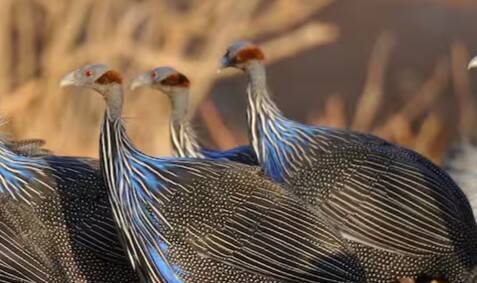
The natural world is full of fascinating phenomena, and one of the most intriguing is the way that certain animals use light to create their striking colors. The vulturine guinea fowl, a bird native to eastern Africa, is a prime example of this. Its electric blue feathers are a sight to behold, but what’s even more remarkable is that they contain no pigment. Instead, the color comes from microscopic feather structures that scatter light, reflecting only blue wavelengths. In this blog post, we’ll delve into the science behind this phenomenon and explore how it helps the vulturine guinea fowl survive and thrive in its open savanna habitat.
The vulturine guinea fowl’s blue feathers are a result of a process called structural coloration. This is different from pigment-based coloration, where colors are created by the absorption and reflection of light by pigments such as melanin. Structural coloration, on the other hand, relies on the physical structure of the material to create color. In the case of the vulturine guinea fowl, the microscopic structure of its feathers is made up of tiny, plate-like melanosomes that reflect light. These melanosomes are arranged in a specific pattern, which scatters shorter, blue wavelengths of light more than longer, red wavelengths. This is known as the Tyndall effect, named after the 19th-century British physicist John Tyndall, who first described the phenomenon.
The result of this structural coloration is a brilliant, electric blue color that appears to shift and change as the bird moves. This is because the angle of the light hitting the feathers affects the way that the melanosomes scatter the light, creating a dynamic, iridescent effect. The color is not just aesthetically pleasing; it also plays a crucial role in the vulturine guinea fowl’s survival and communication. The bright blue feathers help the birds to recognize one another and establish dominance within their flocks. They also serve as a warning to potential predators, signaling that the bird is alert and aware of its surroundings.
The vulturine guinea fowl’s use of structural coloration is not unique, but it is particularly striking in this species. Other birds, such as peacocks and birds of paradise, also use structural coloration to create their bright, iridescent feathers. However, the vulturine guinea fowl’s blue color is particularly noteworthy because of its intensity and uniformity. The bird’s feathers are a deep, rich blue that appears almost black in certain lighting conditions, and the color is consistent across its entire body.
The study of the vulturine guinea fowl’s structural coloration has also inspired research in optics and materials science. Scientists are interested in understanding how the bird’s feathers create their unique color, and how this can be replicated in synthetic materials. This could have a range of applications, from the development of more efficient solar cells to the creation of new, high-tech materials with unique optical properties. The study of structural coloration in birds and other animals has already led to the development of new materials and technologies, such as more efficient LED lights and more effective optical filters.
In addition to its scientific significance, the vulturine guinea fowl’s blue feathers have also inspired artists and designers. The bird’s striking plumage has been the subject of numerous paintings, photographs, and other works of art, and its color has been used in a range of design applications, from fashion to graphic design. The vulturine guinea fowl’s unique appearance has also made it a popular subject in birdwatching and wildlife tourism, with many people traveling to eastern Africa to catch a glimpse of the bird in its natural habitat.
In conclusion, the vulturine guinea fowl’s use of light to create its electric blue feathers is a fascinating example of the natural world’s ability to inspire and awe us. The bird’s structural coloration is a remarkable phenomenon that has evolved to serve a range of purposes, from communication and survival to attracting mates and warning off predators. The study of this phenomenon has also inspired scientific research and technological innovation, and has captured the imagination of artists and designers around the world. Whether you’re a scientist, a birdwatcher, or simply someone who appreciates the beauty of nature, the vulturine guinea fowl’s blue feathers are a truly remarkable sight to behold.
About the Author