Vulturine Guinea Fowl Uses Light to Look Blue Instead of Pigment
The natural world is full of fascinating phenomena, and one of the most striking examples is the vulturine guinea fowl’s electric blue feathers. While it may seem like a simple case of pigmentation, scientists have discovered that the bird’s vibrant plumage is actually created by microscopic feather structures that scatter light, reflecting only blue wavelengths. This remarkable phenomenon is not only a testament to the incredible diversity of nature but also has significant implications for our understanding of optics and materials science.
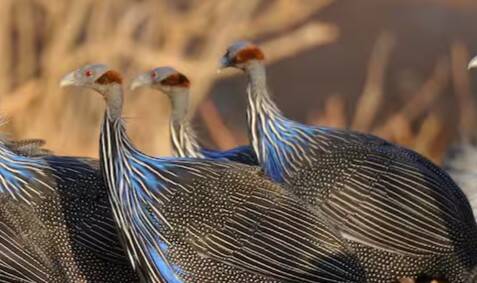
The vulturine guinea fowl, native to the savannas of eastern Africa, is a striking bird with its iridescent blue feathers, distinctive red eyes, and unique call. However, what makes this bird truly remarkable is the way it achieves its brilliant blue coloration. Unlike most birds, which rely on pigments to create their colorful plumage, the vulturine guinea fowl uses a completely different mechanism to produce its electric blue feathers.
Researchers have found that the bird’s feathers contain microscopic structures that scatter light in a specific way, reflecting only blue wavelengths. This phenomenon, known as structural coloration, is created by the arrangement of tiny melanin-filled organelles called melanosomes within the feathers. These melanosomes are arranged in a specific pattern, which causes them to scatter light in a way that favors the reflection of blue wavelengths.
The result is a brilliant, shimmering blue color that appears to shift and change as the bird moves. This structural coloration is not only visually stunning but also plays a crucial role in the bird’s communication and survival. In the open savannas where the vulturine guinea fowl lives, the ability to stand out and signal to other members of the flock is essential for finding food, avoiding predators, and attracting mates.
The vulturine guinea fowl’s remarkable plumage has also inspired research in optics and materials science. Scientists are fascinated by the way the bird’s feathers manipulate light, and are working to develop new materials and technologies that can mimic this phenomenon. For example, researchers are exploring the use of nanostructured materials to create new types of coatings and surfaces that can manipulate light in a similar way.
One potential application of this research is the development of more efficient solar cells. By creating surfaces that can scatter light in a specific way, scientists may be able to increase the amount of light that is absorbed by the solar cells, leading to more efficient energy production. Another potential application is the creation of new types of displays and screens that can produce vibrant, high-contrast images using structural coloration.
In addition to its potential applications in technology, the vulturine guinea fowl’s remarkable plumage also highlights the importance of conservation and preservation of natural habitats. The bird’s striking blue feathers are not just a beautiful phenomenon, but also an essential part of its survival strategy. As humans, we have a responsibility to protect and preserve the natural world, not just for the sake of the animals that live there, but also for the sake of our own well-being and inspiration.
In conclusion, the vulturine guinea fowl’s electric blue feathers are a remarkable example of the natural world’s ability to inspire and fascinate us. By using microscopic feather structures to scatter light and create its vibrant plumage, the bird has evolved a unique and effective way to communicate and survive in its environment. As scientists continue to study and learn from this phenomenon, we may uncover new and innovative ways to manipulate light and create new materials and technologies. And as we marvel at the beauty and diversity of the natural world, we are reminded of the importance of preserving and protecting our planet’s precious resources.
About the Author