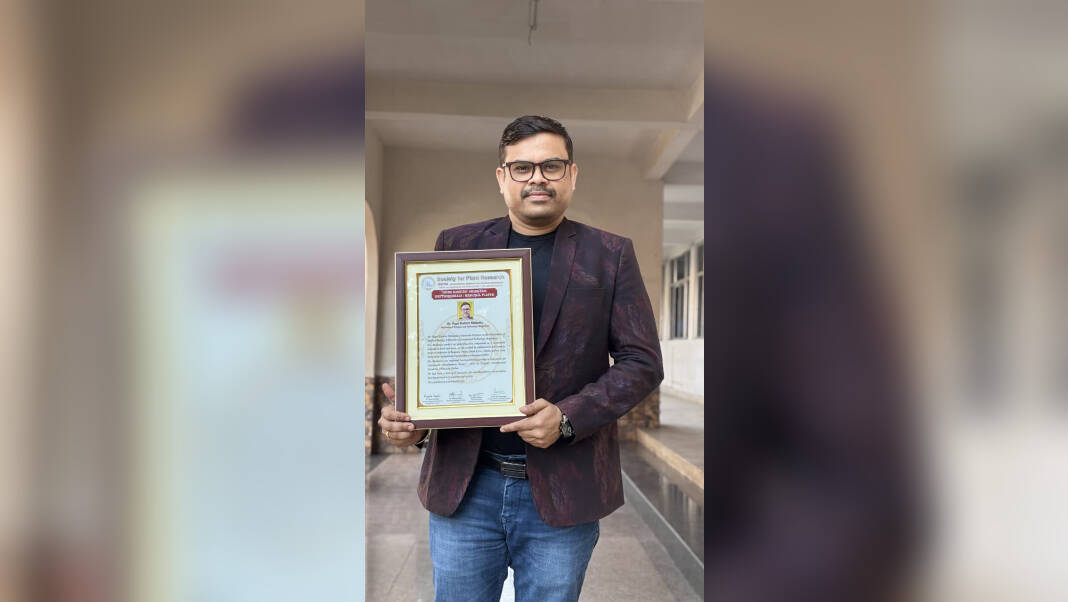
USTM scientist wins Young Scientist Award 2025
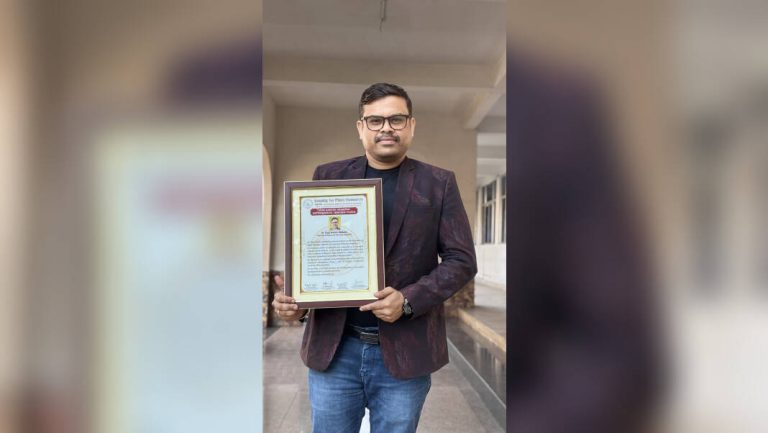
The scientific community has long been abuzz with the potential of medicinal plants and phytochemicals to revolutionize modern medicine. At the forefront of this groundbreaking research is Dr. Yugal Kishore Mohanta, an Assistant Professor at the University of Science and Technology, Meghalaya (USTM). In a remarkable achievement, Dr. Mohanta has been conferred the prestigious global Young Scientist Award–2025 for his pioneering work in translating indigenous botanical knowledge into modern therapeutic applications. This esteemed honor, awarded by the Society for Plant Research (VEGETOS), is a testament to Dr. Mohanta’s tireless efforts to unlock the secrets of medicinal plants and harness their potential to improve human health.
The Young Scientist Award is a highly coveted recognition that acknowledges outstanding contributions to the field of plant research. The award is conferred annually by the Society for Plant Research (VEGETOS), a renowned organization dedicated to promoting research and innovation in plant sciences. The award selection process is rigorous, with a panel of esteemed experts evaluating nominees based on their research excellence, innovation, and impact on the scientific community. Dr. Mohanta’s selection for this award is a significant achievement, reflecting his dedication to advancing the field of medicinal plant research.
Dr. Mohanta’s research focuses on the exploration of medicinal plants and phytochemicals, with a particular emphasis on their potential applications in modern medicine. His work involves the identification, isolation, and characterization of bioactive compounds from plants, as well as the investigation of their therapeutic properties. By leveraging cutting-edge technologies and innovative research methodologies, Dr. Mohanta has made significant strides in unlocking the secrets of medicinal plants, paving the way for the development of novel, plant-based therapies.
One of the key aspects of Dr. Mohanta’s research is its emphasis on translating indigenous botanical knowledge into modern therapeutic applications. By collaborating with traditional healers and indigenous communities, Dr. Mohanta has been able to tap into the rich repository of traditional knowledge surrounding medicinal plants. This approach has not only facilitated the discovery of new bioactive compounds but also enabled the development of novel, culturally sensitive therapies that are tailored to the needs of diverse populations.
The implications of Dr. Mohanta’s research are far-reaching, with potential applications in a wide range of fields, including medicine, agriculture, and conservation. His work has the potential to contribute to the development of novel, plant-based therapies for various diseases, including cancer, diabetes, and infectious diseases. Furthermore, his research highlights the importance of preserving biodiversity and promoting sustainable use of medicinal plants, which is essential for maintaining ecosystem health and ensuring the long-term availability of these valuable resources.
The University of Science and Technology, Meghalaya (USTM) has expressed pride and congratulations to Dr. Mohanta on his achievement, recognizing the significance of his research and its potential impact on the scientific community. The university’s support for Dr. Mohanta’s research is a testament to its commitment to fostering innovation and excellence in scientific research.
In conclusion, Dr. Yugal Kishore Mohanta’s win of the Young Scientist Award–2025 is a remarkable achievement that reflects his dedication to advancing the field of medicinal plant research. His groundbreaking work has the potential to revolutionize modern medicine, and his commitment to preserving indigenous botanical knowledge is a significant contribution to the global scientific community. As we look to the future, it is clear that Dr. Mohanta’s research will continue to inspire and inform new generations of scientists, policymakers, and healthcare professionals, ultimately contributing to improved human health and well-being.
About the Author