UK Scientists Create Shape-Shifting Jelly Robot that Moves with Electric Fields
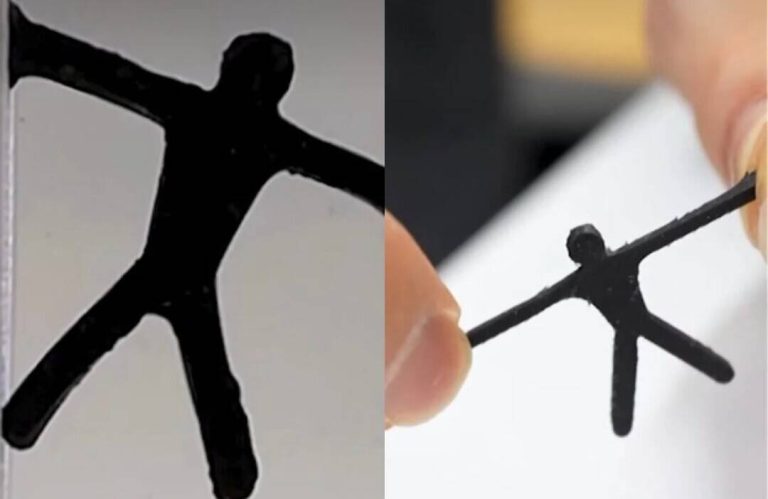
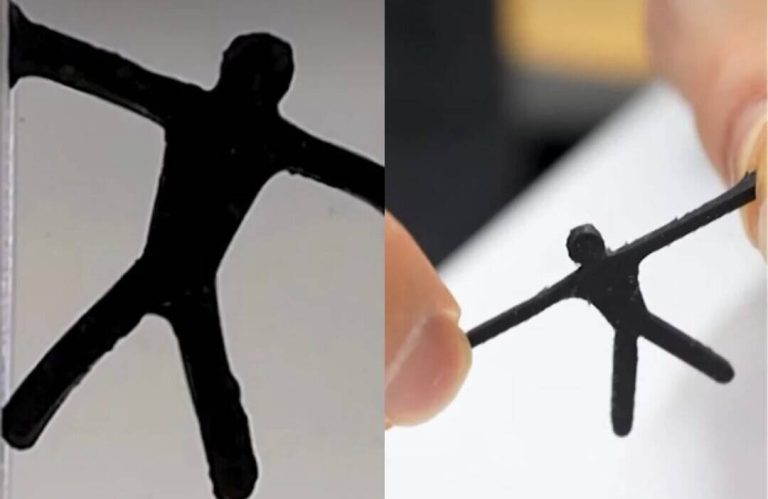
In a groundbreaking achievement, British researchers have developed a revolutionary soft, jelly-like robot that can move and change shape using external electric fields, without the need for motors or joints. Designed by University of Bristol scientists, this innovative robot has the ability to reshape its body to bend, stretch, and move, opening up new possibilities for exploration in tight, fragile, or hazardous environments.
The development of this shape-shifting robot is a significant breakthrough in the field of robotics, as it has the potential to overcome the limitations of traditional rigid robots. Conventional robots are often restricted by their rigid structures, which can make it difficult for them to navigate through narrow or delicate spaces. In contrast, the soft and flexible nature of the jelly-like robot allows it to adapt to its surroundings and move in ways that would be impossible for traditional robots.
The robot’s ability to change shape and move using electric fields is based on a principle called electroactive polymer (EAP) actuation. EAPs are materials that can change shape or size when an electric field is applied to them. By using EAPs, the researchers were able to create a robot that can deform its body to achieve the desired movement or shape. This technology has the potential to be used in a wide range of applications, from search and rescue missions to medical procedures.
One of the most significant advantages of the jelly-like robot is its ability to navigate through tight spaces. Traditional robots often struggle to move through narrow openings or navigate through complex environments, but the soft and flexible nature of the jelly-like robot allows it to squeeze through small spaces and adapt to changing environments. This makes it an ideal candidate for exploration in tight or fragile environments, such as disaster zones or delicate ecosystems.
The robot’s shape-shifting abilities also make it an attractive option for applications where traditional robots may be too bulky or rigid. For example, the robot could be used to inspect narrow pipes or tubes, or to navigate through complex networks of tunnels or channels. Its ability to change shape and size also makes it an ideal candidate for applications where a robot needs to fit through a small opening or navigate through a tight space.
In addition to its potential for exploration and navigation, the jelly-like robot also has the potential to be used in a range of other applications. For example, it could be used to develop new types of prosthetic limbs or exoskeletons that can change shape and move in response to electric fields. It could also be used to create new types of soft and flexible sensors that can detect changes in their environment and respond accordingly.
The development of the jelly-like robot is a significant achievement for the University of Bristol researchers, who have been working on the project for several years. The team, led by Dr. Jonathan Rossiter, has been experimenting with different types of EAPs and developing new technologies to control and manipulate the robot’s shape and movement.
The researchers have already demonstrated the robot’s capabilities in a range of experiments, including navigating through narrow tubes and changing shape in response to electric fields. The robot has also been shown to be able to move and change shape in a range of different environments, including water and air.
Overall, the development of the shape-shifting jelly robot is a significant breakthrough in the field of robotics, with the potential to revolutionize the way we approach exploration and navigation in tight, fragile, or hazardous environments. With its soft and flexible body, ability to change shape and size, and ability to move using electric fields, this robot is an exciting example of the innovative technologies that are being developed by researchers around the world.
As the technology continues to evolve and improve, it is likely that we will see even more exciting applications of the jelly-like robot in the future. From search and rescue missions to medical procedures, the potential uses of this robot are vast and varied, and it is an exciting time for researchers and scientists working in the field of robotics.
In conclusion, the development of the shape-shifting jelly robot is a significant achievement that has the potential to revolutionize the way we approach exploration and navigation in tight, fragile, or hazardous environments. With its soft and flexible body, ability to change shape and size, and ability to move using electric fields, this robot is an exciting example of the innovative technologies that are being developed by researchers around the world.
About the Author