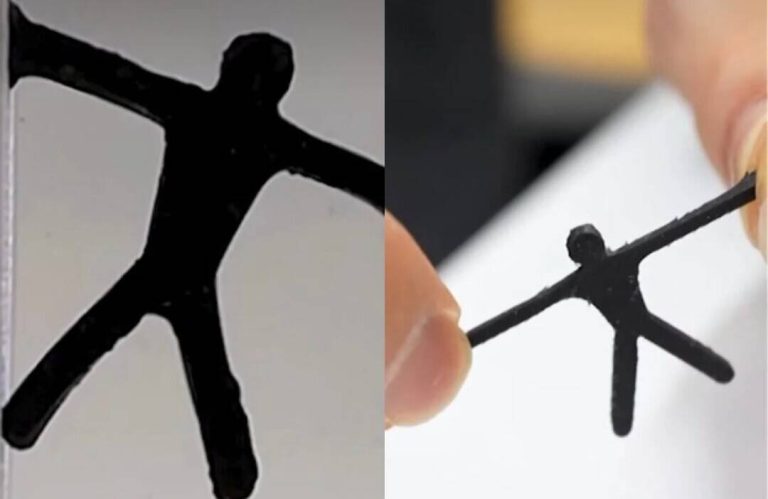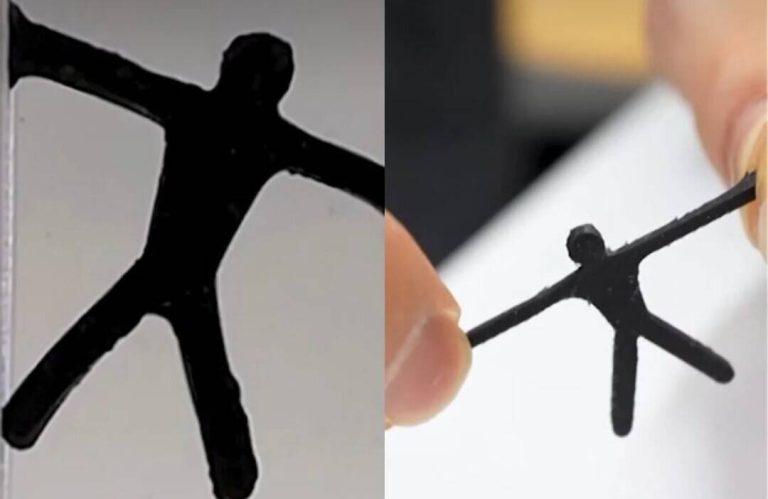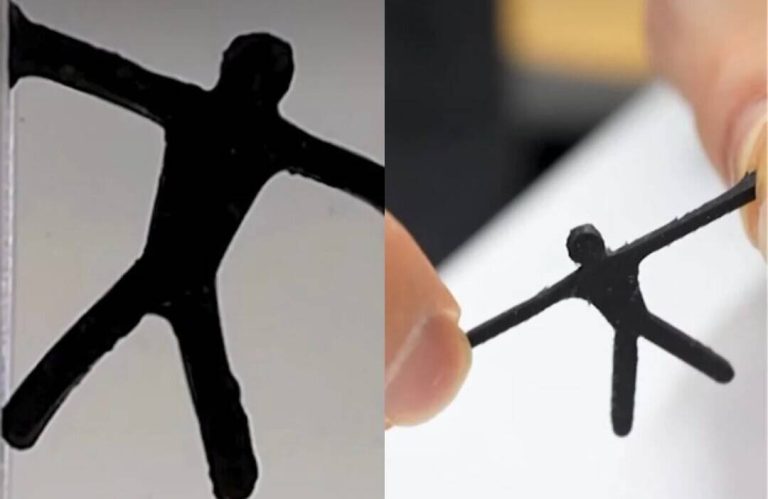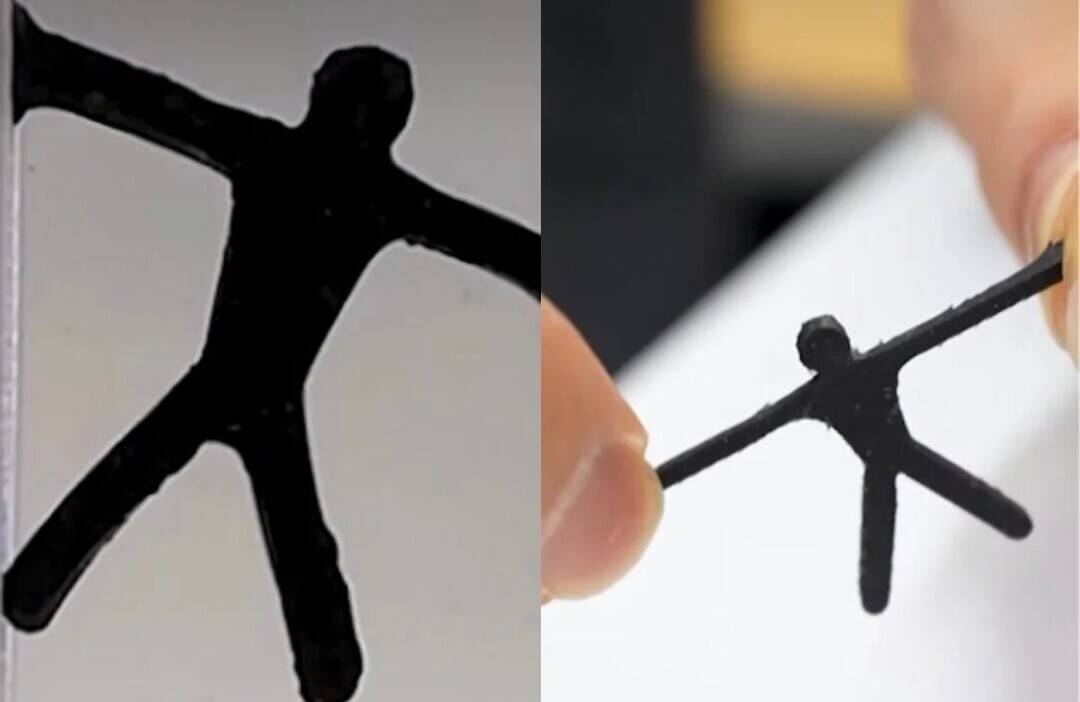
UK scientists create shape-shifting jelly robot that moves with electric fields
In a groundbreaking achievement, British researchers have developed a soft, jelly-like robot that moves and changes shape using external electric fields, without the need for motors or joints. This innovative creation, designed by scientists at the University of Bristol, has the ability to reshape its body to bend, stretch, and move in various directions. The potential applications of this shape-shifting robot are vast, and experts believe it could aid exploration in tight, fragile, or hazardous environments.
The robot, which resembles a jelly-like substance, is made of a soft, flexible material that can be controlled using electric fields. By applying an electric field to the robot, it can change its shape and move in a specific direction. This is achieved through the use of electroactive polymers, which are materials that can change their shape or size when an electric field is applied. The robot’s ability to change its shape and move without the need for motors or joints makes it ideal for navigating through tight spaces or fragile environments.
One of the most significant advantages of this shape-shifting robot is its ability to adapt to different situations. Unlike traditional robots, which are often rigid and inflexible, this robot can change its shape to fit through narrow openings or navigate through complex environments. This makes it an ideal candidate for search and rescue missions, where the ability to navigate through tight spaces can be a matter of life and death.
The robot’s soft and flexible body also makes it an ideal candidate for exploring fragile or hazardous environments. For example, it could be used to explore damaged buildings or navigate through toxic waste, where traditional robots might be damaged or contaminated. The robot’s ability to change its shape and move without the need for motors or joints also makes it quieter and more stealthy than traditional robots, which could be beneficial in situations where noise needs to be minimized.
The development of this shape-shifting robot is a significant breakthrough in the field of robotics, and it has the potential to revolutionize the way we approach exploration and search and rescue missions. The University of Bristol scientists who designed the robot are currently exploring various applications for the technology, including its use in medical settings, such as surgery, and in environmental monitoring, such as tracking water pollution.
The use of electric fields to control the robot’s movements is also a significant innovation. Traditional robots often rely on motors or hydraulic systems to move, which can be bulky and heavy. The use of electric fields, on the other hand, allows the robot to move without the need for these systems, making it lighter and more agile. This also makes it easier to control the robot’s movements, as the electric fields can be precisely controlled to achieve the desired movement.
The potential applications of this shape-shifting robot are vast, and it is likely that we will see it being used in a variety of settings in the future. From search and rescue missions to medical settings, this robot has the potential to make a significant impact. Its ability to adapt to different situations, navigate through tight spaces, and move quietly and stealthily make it an ideal candidate for a wide range of applications.
In conclusion, the development of this shape-shifting jelly robot is a significant breakthrough in the field of robotics, and it has the potential to revolutionize the way we approach exploration and search and rescue missions. Its ability to change its shape and move without the need for motors or joints makes it an ideal candidate for navigating through tight spaces or fragile environments. As researchers continue to explore the potential applications of this technology, it is likely that we will see it being used in a variety of settings in the future.
About the Author