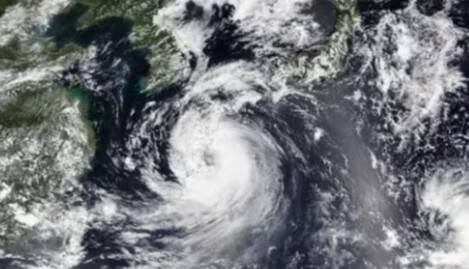
Typhoons return microplastics to land after humans pollute oceans: Study
The world’s oceans have become a dumping ground for human waste, with millions of tons of plastic waste entering the marine ecosystem every year. While the impact of plastic pollution on marine life is well-documented, a new study has revealed that typhoons are now playing a significant role in returning microplastics to land. The research, published in Environmental Science and Technology, has found that typhoons can efficiently vacuum microplastics from the ocean and spread them over land, highlighting the need for urgent action to address the global plastic pollution crisis.
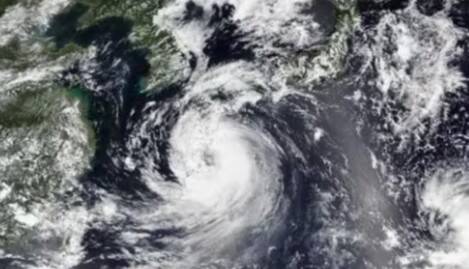
The study, which documented three typhoons in Ningbo, China, found that the storms were not mobilizing local litter from Ningbo, but were instead actively transferring ocean-sourced microplastics into the atmosphere and depositing them on land. This suggests that typhoons are acting as a conduit for microplastics to be transported from the ocean to land, highlighting the interconnectedness of the marine and terrestrial environments.
Microplastics, which are defined as plastic particles smaller than 5 millimeters, have become a major concern in recent years due to their ubiquity in the environment and their potential to harm human health and the environment. They can enter the environment through a variety of means, including the breakdown of larger plastic items, microbeads in personal care products, and synthetic fibers from clothing.
The study’s findings have significant implications for our understanding of the plastic pollution crisis. While it is well-known that plastic waste can enter the ocean through a variety of means, including litter, sewage, and industrial activities, the role of typhoons in transporting microplastics from the ocean to land has not been well-studied. The research suggests that typhoons are an important mechanism for the transport of microplastics, and that they can play a significant role in the dispersal of these particles across the environment.
The study’s authors used a combination of field observations and laboratory analysis to study the impact of typhoons on microplastic transport. They collected samples of microplastics from the ocean and from land before and after the typhoons, and used a variety of techniques, including microscopy and spectroscopy, to analyze the samples. The results showed that the typhoons were associated with a significant increase in microplastic concentrations on land, and that the microplastics were primarily composed of polyethylene and polypropylene, which are common types of plastic used in packaging and other applications.
The study’s findings have significant implications for policy and management. While the study’s authors note that the exact mechanisms by which typhoons transport microplastics are not yet fully understood, they suggest that reducing plastic pollution in the ocean could help to mitigate the impact of typhoons on microplastic transport. This could involve a range of measures, including reducing plastic waste, improving waste management, and increasing recycling rates.
In addition, the study highlights the need for further research on the impact of typhoons on microplastic transport. While the study provides new insights into the role of typhoons in transporting microplastics, more research is needed to fully understand the mechanisms involved and to develop effective strategies for mitigating the impact of typhoons on microplastic pollution.
Overall, the study provides a significant contribution to our understanding of the plastic pollution crisis and highlights the need for urgent action to address this global problem. The findings suggest that typhoons are playing a significant role in transporting microplastics from the ocean to land, and that reducing plastic pollution in the ocean could help to mitigate the impact of typhoons on microplastic transport.
As the world continues to grapple with the challenges of plastic pollution, studies like this one provide important insights into the complex mechanisms involved in the transport of microplastics. By understanding the role of typhoons in transporting microplastics, we can develop more effective strategies for reducing plastic pollution and mitigating its impact on the environment.
In conclusion, the study’s findings highlight the interconnectedness of the marine and terrestrial environments and the need for a comprehensive approach to addressing the plastic pollution crisis. By reducing plastic pollution in the ocean and improving waste management, we can help to mitigate the impact of typhoons on microplastic transport and protect the environment from the harmful effects of plastic pollution.
News Source: https://pubs.acs.org/doi/10.1021/acs.est.5c11101
About the Author