Typhoons return microplastics to land after humans pollute oceans: Study
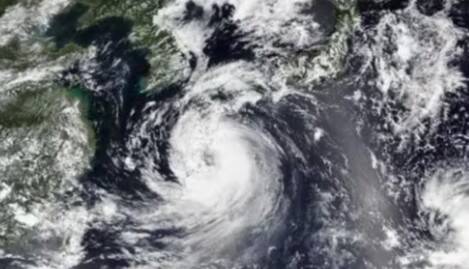
The world’s oceans have become a dumping ground for human waste, and plastic pollution has become a significant concern in recent years. Microplastics, in particular, have been found to be ubiquitous in the ocean, with millions of tons of plastic debris breaking down into smaller pieces that can be ingested by marine life. However, a new study published in Environmental Science and Technology has found that typhoons are capable of vacuuming up these microplastics from the ocean and depositing them back onto land.
The study, which documented three typhoons in Ningbo, China, found that the storms were not mobilizing local litter from Ningbo, but were instead actively transferring ocean-sourced microplastics into the atmosphere and depositing them on land. This means that the microplastics that humans have been polluting the oceans with are now being returned to land, potentially contaminating soil, water, and air.
The researchers behind the study used a combination of field observations and laboratory experiments to investigate the impact of typhoons on microplastic transport. They collected samples of microplastics from the ocean and from the air during the three typhoons, and analyzed them to determine their origin and composition. The results showed that the microplastics found in the air during the typhoons were similar in composition to those found in the ocean, suggesting that they had been transported from the ocean to the atmosphere by the storms.
The study’s findings have significant implications for our understanding of the global plastic pollution problem. Microplastics have been found to be present in almost every environment on Earth, from the deepest parts of the ocean to the highest mountains. They have also been found in the bodies of animals and humans, and have been linked to a range of health problems, including cancer and reproductive issues.
The fact that typhoons are capable of transporting microplastics from the ocean to land means that plastic pollution is not just a problem for the ocean, but also for terrestrial ecosystems. Microplastics can contaminate soil and water, and can be ingested by animals and humans, potentially causing harm. The study’s findings suggest that efforts to reduce plastic pollution need to be focused not just on the ocean, but also on land.
The study’s authors note that the transport of microplastics by typhoons is a complex process that involves a range of factors, including wind speed, precipitation, and the size and composition of the microplastics. However, they suggest that the findings of the study could be used to develop new strategies for reducing plastic pollution, such as using typhoons as a natural mechanism for removing microplastics from the ocean.
The study’s findings also highlight the need for more research into the impact of microplastics on human health and the environment. While the study provides new insights into the transport of microplastics by typhoons, more research is needed to fully understand the effects of microplastics on ecosystems and human health.
In conclusion, the study published in Environmental Science and Technology provides new evidence that typhoons are capable of transporting microplastics from the ocean to land, highlighting the need for a more comprehensive approach to addressing plastic pollution. The findings of the study suggest that efforts to reduce plastic pollution need to be focused not just on the ocean, but also on land, and that more research is needed to fully understand the effects of microplastics on ecosystems and human health.
The study’s authors hope that the findings of the study will raise awareness about the importance of reducing plastic pollution, and will inspire new efforts to address this global problem. As the world continues to grapple with the challenges of plastic pollution, the study’s findings provide a timely reminder of the need for urgent action to protect the health of our planet.
News Source: https://pubs.acs.org/doi/10.1021/acs.est.5c11101
About the Author