Tiny ancient animal had sharpest teeth ever, study finds
For centuries, humans have been fascinated by the diversity and complexity of ancient life forms. From the mighty dinosaurs that once roamed the Earth to the fearsome sharks that still inhabit our oceans, it’s easy to assume that the most impressive and formidable creatures are always the largest and most powerful. However, a recent study has turned this assumption on its head, revealing that the sharpest teeth ever belonged not to a massive predator, but to a tiny, jawless marine animal called conodonts.
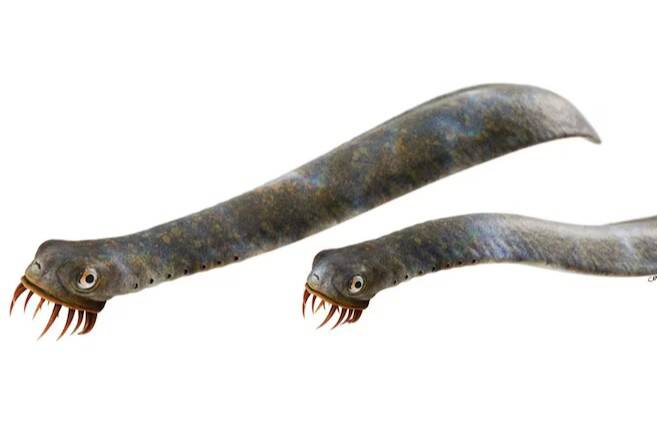
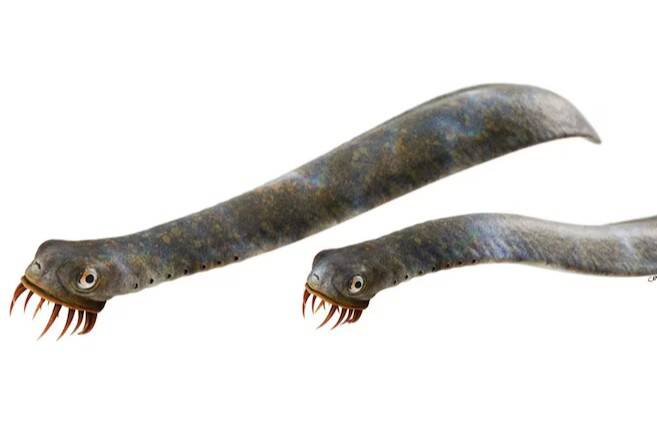
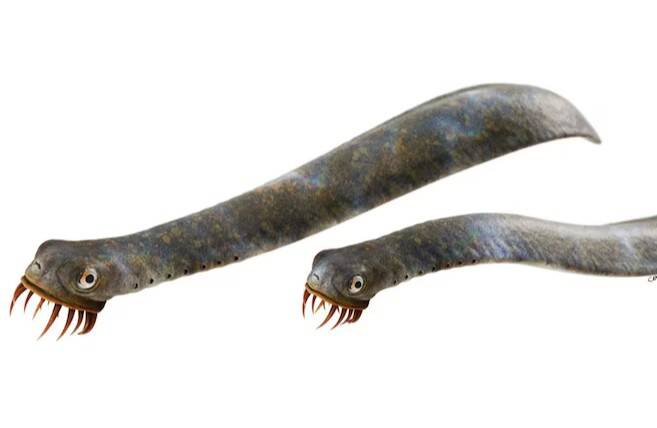
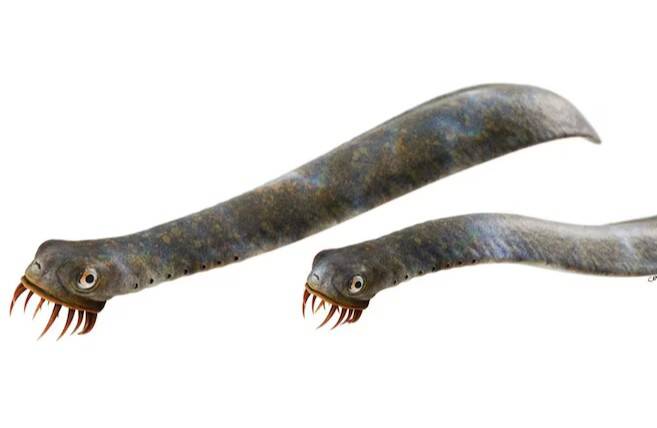
Conodonts were small, eel-like creatures that lived during the Paleozoic and Triassic periods, over 500 million years ago. Despite their humble size, these ancient animals have long been of interest to paleontologists and scientists due to their unique tooth-like structures, known as conodont elements. These microscopic elements were used by conodonts to capture and eat prey, and have been found in fossil form all over the world.
The recent study, which analyzed the conodont elements in detail, found that they were not only incredibly sharp but also exceeded the sharpness of modern animal teeth and even steel blades. The researchers used advanced techniques such as scanning electron microscopy and nanoindentation to examine the structure and properties of the conodont elements, and were amazed by what they found.
The conodont elements were found to have a unique, saw-toothed structure that allowed them to cut and tear through tissue with ease. The teeth were also incredibly hard, with a hardness that rivaled that of modern shark teeth. But what was most remarkable about the conodont elements was their sharpness. The researchers found that the teeth had a razor-sharp edge, with a radius of curvature of just 10 nanometers. To put that in perspective, the radius of curvature of a modern shark tooth is around 100 nanometers, while a steel blade has a radius of curvature of around 1000 nanometers.
The implications of this discovery are significant, as it shows that these tiny ancient animals were able to push the biological and material limits of tooth design hundreds of millions of years ago. The conodont elements are a testament to the incredible diversity and adaptability of life on Earth, and demonstrate that even the smallest creatures can have a big impact.
So, how did conodonts manage to develop such incredibly sharp teeth? The answer lies in their unique biology and environment. Conodonts lived in a time when the oceans were very different from those of today, with different chemistry and different types of prey. As a result, they had to adapt to their environment in order to survive, and their tooth-like structures evolved to become incredibly sharp and efficient.
The study of conodonts and their tooth-like structures also has implications for modern materials science and engineering. By studying the structure and properties of these ancient teeth, scientists may be able to develop new materials and technologies that are inspired by nature. For example, the unique saw-toothed structure of the conodont elements could inspire the development of new cutting tools or surgical instruments.
In conclusion, the discovery of the sharpest teeth ever in a tiny ancient animal called conodonts is a remarkable finding that challenges our assumptions about the evolution of life on Earth. These tiny creatures, which lived over 500 million years ago, were able to develop tooth-like structures that were not only incredibly sharp but also exceeded the sharpness of modern animal teeth and steel blades. The study of conodonts and their tooth-like structures is a testament to the incredible diversity and adaptability of life on Earth, and demonstrates that even the smallest creatures can have a big impact.
About the Author