Tiny ancient animal had sharpest teeth ever, study finds
When we think of sharp teeth, we often imagine the powerful jaws of sharks or the ferocious bites of dinosaurs. However, new research has revealed that the sharpest teeth ever belonged to a tiny, jawless marine animal called conodonts. These ancient creatures, which lived hundreds of millions of years ago, had microscopic tooth elements that were sharper than modern animal teeth and even steel blades.
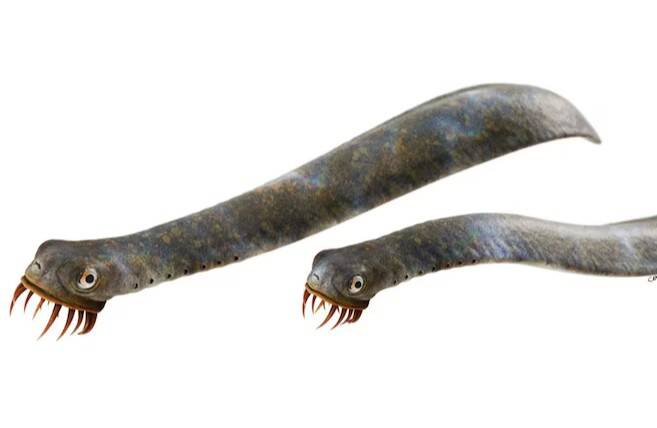
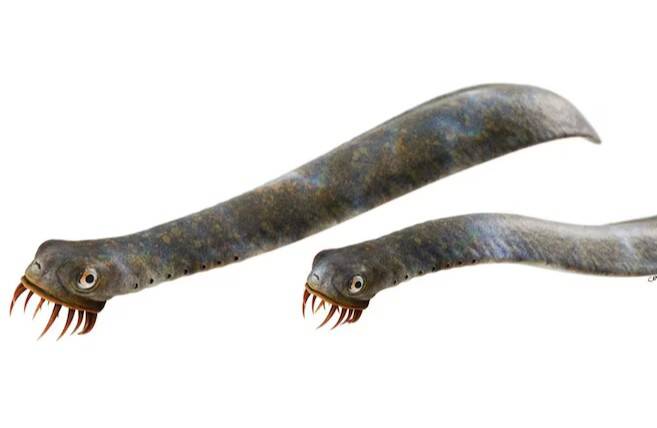
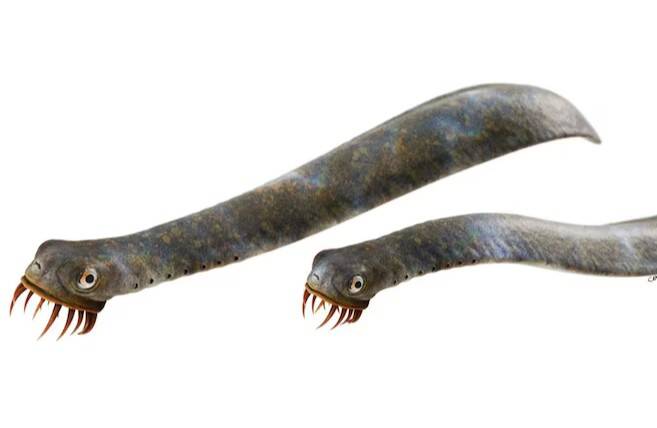
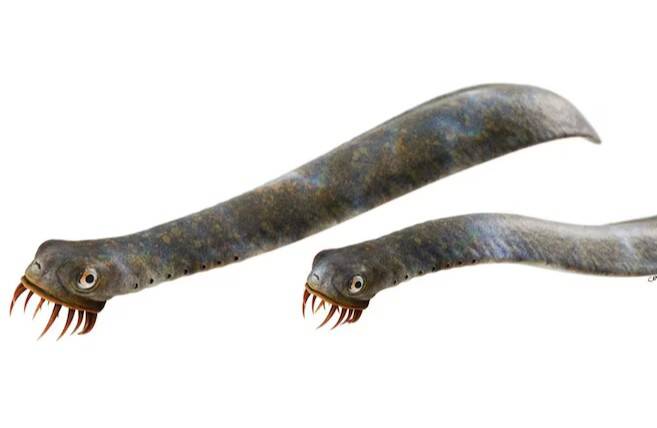
Conodonts were small, eel-like animals that dominated the oceans during the Paleozoic and Triassic periods, around 500-200 million years ago. Despite their tiny size, they played a crucial role in the marine ecosystem, serving as both predators and prey for other animals. One of the most distinctive features of conodonts was their unique dental structure, which consisted of complex arrangements of microscopic tooth elements.
Researchers have long been fascinated by the conodont’s dental system, but it wasn’t until recently that they were able to study the teeth in detail. Using advanced imaging techniques, such as scanning electron microscopy and focused ion beam milling, scientists were able to analyze the microscopic structure of conodont teeth. What they found was astonishing: the teeth were made up of tiny, razor-sharp elements that were capable of cutting through even the toughest materials.
The study, which was published in a recent scientific journal, found that the conodont’s tooth elements were sharper than any modern animal teeth, including those of sharks and dolphins. In fact, the teeth were so sharp that they were comparable to steel blades, with some elements having a sharpness of up to 20 nanometers. To put that into perspective, the average human hair is around 80,000 nanometers thick, making the conodont’s teeth incredibly sharp.
So, how did these tiny animals manage to develop such sharp teeth? According to scientists, the answer lies in the unique structure of the conodont’s dental system. Unlike modern animals, which have teeth made up of enamel and dentin, conodonts had teeth composed of a hard, calcium phosphate-based material. This material, which is similar to the enamel found in human teeth, was arranged in a complex pattern of microscopic elements that worked together to create a razor-sharp cutting surface.
The discovery of the conodont’s sharp teeth has significant implications for our understanding of evolutionary biology. It suggests that these tiny animals were able to push the boundaries of biological and material limits hundreds of millions of years ago, developing dental structures that were far more advanced than anything seen in modern animals. This raises interesting questions about the evolution of teeth and the development of complex dental systems in animals.
In addition to their sharp teeth, conodonts also had a number of other unique features that allowed them to thrive in the ancient oceans. They were highly efficient predators, using their sharp teeth to capture and eat small fish and other marine animals. They also had a complex system of muscles and ligaments that allowed them to move and maneuver with ease, making them highly effective hunters.
Despite their many impressive features, conodonts eventually went extinct at the end of the Triassic period, around 200 million years ago. However, their legacy lives on in the form of their remarkable dental structures, which continue to inspire scientists and engineers today. The study of conodont teeth has already led to the development of new materials and technologies, such as advanced cutting tools and dental implants.
In conclusion, the discovery of the conodont’s sharp teeth is a significant finding that challenges our assumptions about the evolution of dental structures in animals. It highlights the incredible diversity and complexity of life on Earth, and reminds us that even the smallest and most ancient creatures can hold the key to major scientific breakthroughs. Whether you’re a scientist, a historian, or simply someone who’s fascinated by the natural world, the story of the conodont’s sharp teeth is a truly remarkable one that’s sure to capture your imagination.
About the Author