Tiny ancient animal had sharpest teeth ever, study finds
For centuries, the title of “sharpest teeth” has been attributed to the likes of sharks and dinosaurs, with their powerful jaws and razor-sharp dentition. However, a recent study has turned this notion on its head, revealing that the sharpest teeth ever belonged to a tiny, jawless marine animal called conodonts. These ancient creatures, which lived over 500 million years ago, have been found to have had microscopic tooth elements that were sharper than even modern animal teeth and steel blades.
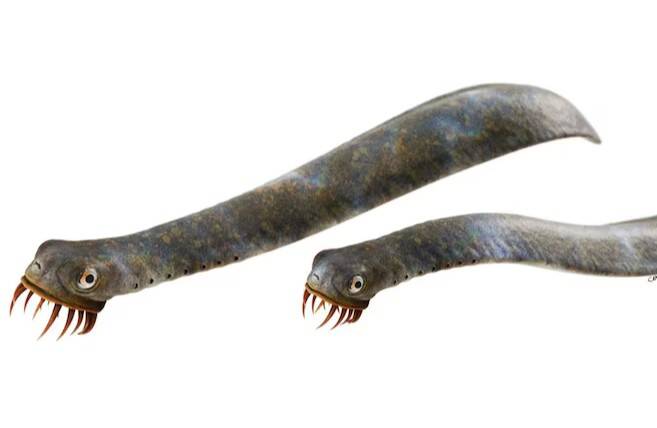
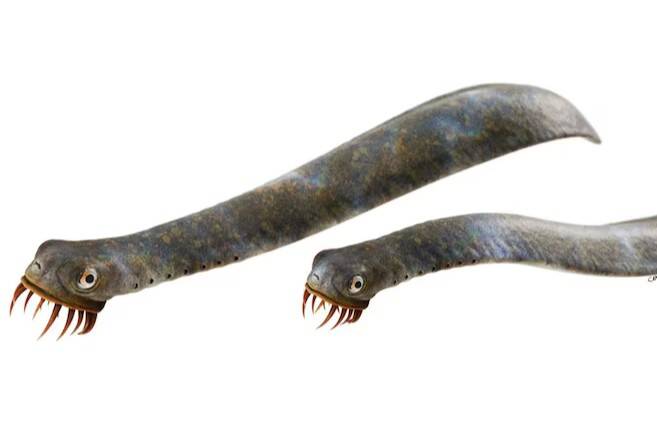
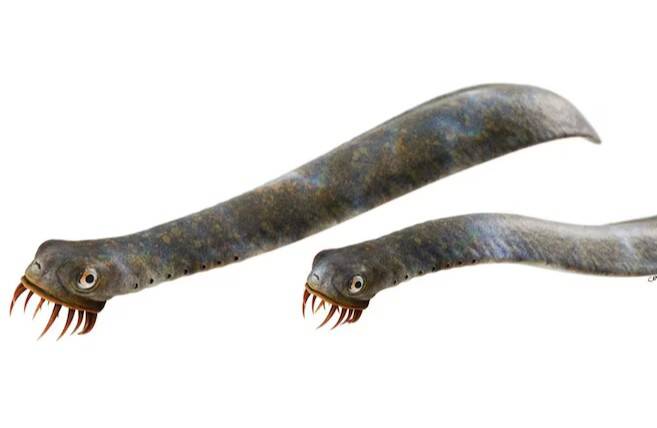
Conodonts were small, eel-like animals that lived during the Cambrian Period, a time of great evolutionary innovation and diversification on Earth. Despite their small size, they played a significant role in the ecosystem, serving as both predators and prey for other marine animals. One of the most distinctive features of conodonts was their unique dental structure, which consisted of a series of microscopic tooth elements that were used for capturing and eating prey.
The study, which was conducted by a team of scientists from the University of Bristol, used advanced fossil analysis techniques to examine the tooth elements of conodonts. The researchers were amazed to find that these tiny teeth were incredibly sharp, with some specimens having a sharpness that exceeded that of modern animal teeth and even steel blades.
To put this into perspective, the sharpness of a tooth or blade is typically measured by its “radius of curvature,” which is the radius of the circle that best fits the curve of the tooth or blade. The smaller the radius of curvature, the sharper the tooth or blade. In the case of conodonts, the researchers found that their tooth elements had a radius of curvature of just 0.1 micrometers, which is significantly smaller than that of modern animal teeth and steel blades.
The implications of this discovery are significant, as it suggests that conodonts were able to achieve a level of sharpness that is unprecedented in the animal kingdom. This is particularly impressive given the fact that conodonts lived over 500 million years ago, during a time when the evolution of complex life forms was still in its early stages.
So, how did conodonts manage to achieve such incredible sharpness? According to the researchers, the answer lies in the unique structure of their tooth elements. Unlike modern animal teeth, which are made of enamel and dentin, conodont tooth elements were composed of a hard, phosphatic material that was capable of withstanding the stresses and strains of biting and chewing.
The researchers also suggest that the sharpness of conodont teeth may have been due to the fact that they were constantly being replaced throughout the animal’s lifetime. This process, known as “tooth replacement,” allowed conodonts to maintain a sharp set of teeth at all times, which would have been essential for their survival in the competitive marine environment of the Cambrian Period.
The discovery of conodonts’ incredibly sharp teeth has also sparked interest in the field of materials science, where researchers are seeking to develop new materials that can mimic the properties of these ancient animals’ dental structures. By studying the composition and structure of conodont tooth elements, scientists may be able to develop new materials that are stronger, lighter, and more durable than those currently available.
In conclusion, the discovery of conodonts’ incredibly sharp teeth is a significant finding that challenges our current understanding of the evolution of animal dentition. These tiny, jawless marine animals have been found to have had the sharpest teeth ever, with a level of sharpness that exceeds that of modern animal teeth and steel blades. As scientists continue to study the unique structure and composition of conodont tooth elements, they may uncover new insights into the evolution of complex life forms and the development of new materials with unique properties.
About the Author