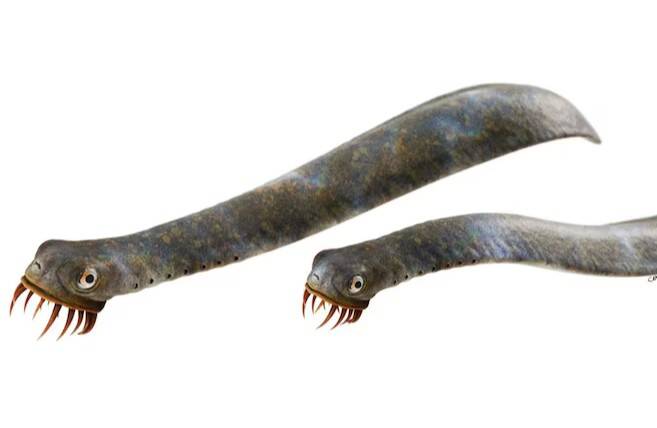
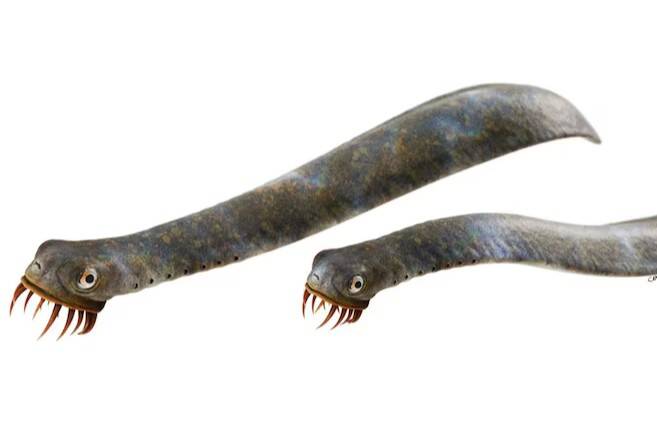
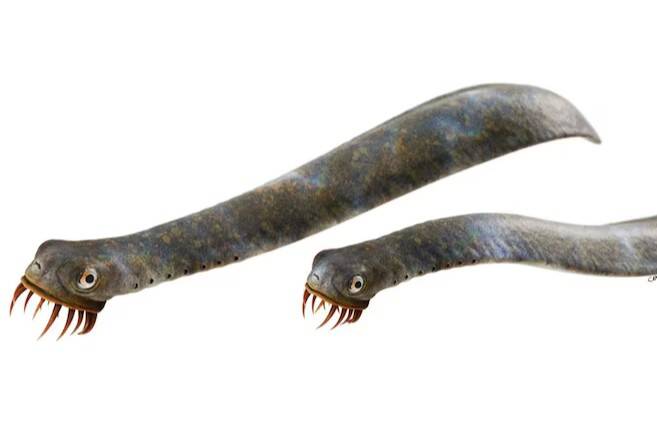
Tiny ancient animal had sharpest teeth ever, study finds
When we think of sharp teeth, our minds often wander to the fierce predators of the animal kingdom, such as sharks and dinosaurs. However, a new study has revealed that the sharpest teeth ever belonged to a tiny, jawless marine animal called conodonts. These ancient creatures, which lived hundreds of millions of years ago, had microscopic tooth elements that were sharper than modern animal teeth and even steel blades.
Conodonts were small, eel-like animals that lived during the Paleozoic and Triassic periods, around 500-200 million years ago. They were one of the first vertebrates to evolve on Earth and were characterized by their lack of jaws and teeth. Or so we thought. Researchers have now discovered that conodonts had complex dental structures that were made up of tiny, sharp tooth elements.
The study, which was conducted by a team of scientists from the University of Bristol, used advanced imaging techniques to analyze the fossilized remains of conodonts. They found that the tooth elements were made of a hard, calcium-based material that was similar to modern tooth enamel. However, the conodont tooth elements were much sharper and more complex than modern teeth, with some having sharp, pointed tips and others having serrated edges.
The researchers used a technique called focused ion beam milling to create high-resolution images of the conodont tooth elements. They then used these images to measure the sharpness of the teeth and compare them to modern animal teeth and steel blades. The results were astonishing – the conodont tooth elements were found to be significantly sharper than any modern animal teeth, including those of sharks and dinosaurs.
In fact, the conodont tooth elements were so sharp that they were comparable to steel blades. The researchers found that the teeth had a sharpness of around 0.1-0.5 micrometers, which is much sharper than any modern animal teeth. For comparison, the sharpness of a steel blade is typically around 1-5 micrometers.
So, how did conodonts manage to evolve such sharp teeth? The researchers believe that it was due to the unique design of their dental structures. Conodonts had a complex system of teeth that were made up of many tiny, sharp elements. These elements were arranged in a specific pattern to create a sharp, cutting edge that was perfect for catching and eating prey.
The study’s findings have significant implications for our understanding of the evolution of teeth and dental structures in animals. It shows that even hundreds of millions of years ago, animals were able to evolve complex and highly specialized dental structures that were adapted to their specific environments and diets.
The researchers also believe that the study of conodont teeth could have practical applications in the development of new materials and technologies. For example, the unique structure and composition of conodont teeth could inspire the development of new, ultra-sharp materials that could be used in a variety of applications, from medicine to manufacturing.
In conclusion, the discovery of the sharpest teeth ever in conodonts is a significant finding that challenges our current understanding of the evolution of teeth and dental structures in animals. It shows that even tiny, jawless marine animals were able to evolve complex and highly specialized dental structures that were adapted to their specific environments and diets. The study’s findings also have significant implications for the development of new materials and technologies, and highlight the importance of continued research into the evolution and diversity of life on Earth.
About the Author