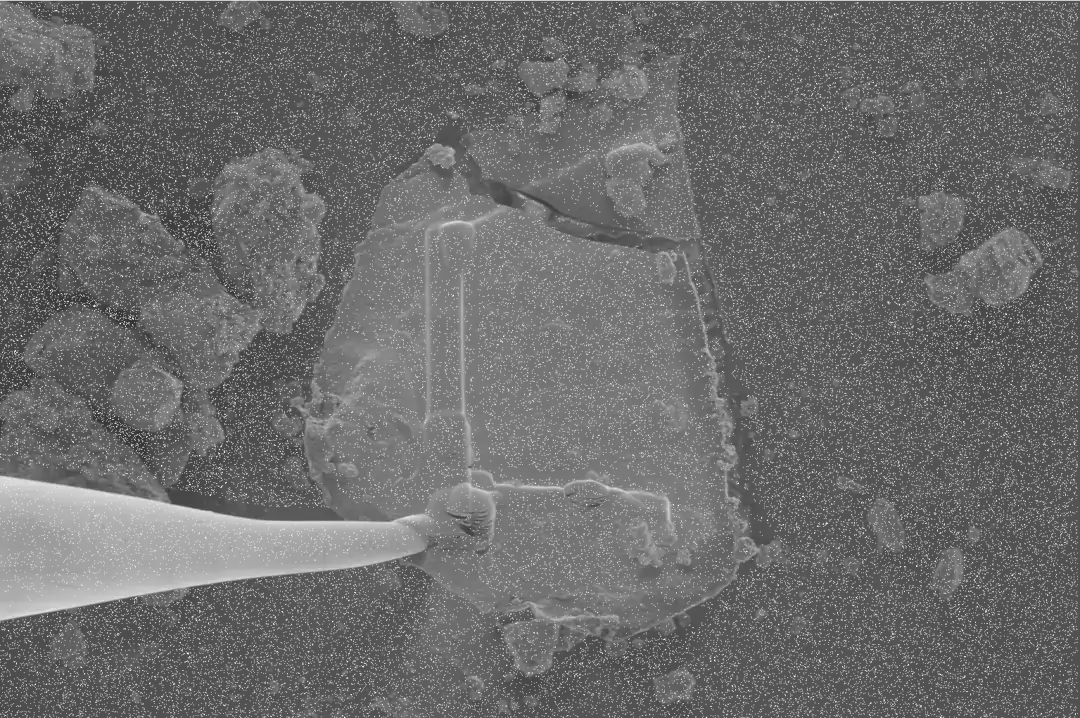
Sugars, ‘gum’, stardust found in Asteroid Bennu
In a groundbreaking discovery, NASA scientists have found life-essential sugars, a gum-like substance, and stardust in samples collected from Asteroid Bennu. This remarkable finding has shed new light on the origins of our solar system and the potential for life beyond Earth. The discovery was made possible by the OSIRIS-REx spacecraft, which returned to Earth with samples from the asteroid in 2020.
The samples were found to contain ribose and, for the first time in an extraterrestrial sample, six-carbon glucose. These sugars are essential building blocks of life and play a crucial role in the formation of RNA and DNA. The presence of these sugars in the asteroid samples suggests that the raw materials for life are widespread in our solar system and may have been delivered to Earth on comets or meteorites.
In addition to the sugars, the samples also contained a gum-like substance that formed tangled molecular chains. This material is thought to have emerged early in the asteroid’s history and may have played a role in the formation of the asteroid’s complex organic molecules. The gum-like substance is composed of carbon-rich molecules that are similar to those found in meteorites and interstellar dust.
One of the most significant discoveries made from the asteroid samples is the presence of stardust. The samples were found to contain six times the amount of supernova dust than any other studied astromaterial. This suggests that the asteroid is a window into the early history of our solar system and may hold clues to the formation of the Sun and the planets.
The discovery of stardust in the asteroid samples is particularly significant because it provides evidence of the asteroid’s origins. The stardust is thought to have been formed in the explosion of a nearby star, which would have ejected massive amounts of dust and gas into space. This dust and gas would have then been incorporated into the asteroid, providing a snapshot of the early solar system.
The OSIRIS-REx spacecraft was launched in 2016 with the goal of collecting samples from Asteroid Bennu and returning them to Earth. The spacecraft spent two years in orbit around the asteroid, studying its composition and geology. In 2020, the spacecraft collected samples from the asteroid’s surface using a robotic arm and returned to Earth.
The samples were then analyzed using a range of techniques, including spectroscopy and chromatography. These techniques allowed scientists to identify the presence of sugars, the gum-like substance, and stardust in the samples. The results of the analysis were published in a series of papers in the journal Nature.
The discovery of life-essential sugars, a gum-like substance, and stardust in Asteroid Bennu has significant implications for our understanding of the origins of life in the universe. The presence of these molecules in an extraterrestrial sample suggests that the raw materials for life are widespread in our solar system and may have been delivered to Earth on comets or meteorites.
The discovery also provides evidence of the asteroid’s origins and the early history of our solar system. The presence of stardust in the samples suggests that the asteroid is a window into the early history of our solar system and may hold clues to the formation of the Sun and the planets.
In conclusion, the discovery of life-essential sugars, a gum-like substance, and stardust in Asteroid Bennu is a groundbreaking finding that has shed new light on the origins of our solar system and the potential for life beyond Earth. The discovery was made possible by the OSIRIS-REx spacecraft and the analysis of the samples using advanced techniques. The results of the discovery have significant implications for our understanding of the universe and the potential for life beyond our planet.
About the Author