Sugars, ‘gum’, stardust found in Asteroid Bennu
The discovery of life-essential sugars, a gum-like substance, and stardust in Asteroid Bennu samples has sent shockwaves throughout the scientific community. NASA scientists have made a groundbreaking finding, uncovering the presence of ribose and, for the first time in an extraterrestrial sample, six-carbon glucose. These sugars are crucial components of life on Earth, and their discovery in an asteroid has significant implications for our understanding of the origins of life in the universe.
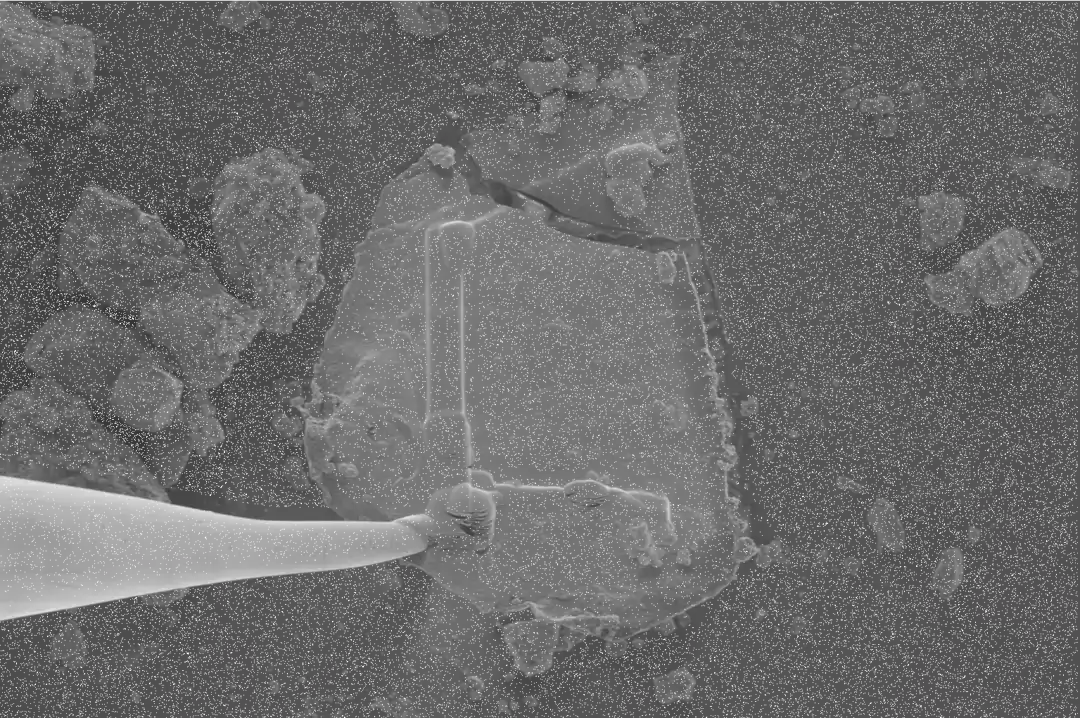
The samples, which were collected by NASA’s OSIRIS-REx spacecraft, also contained a gum-like material that formed tangled molecular chains. This substance is believed to have emerged early in the asteroid’s history, potentially during a period of intense heating or radiation. The exact nature and origins of this material are still unknown, but its discovery has sparked excitement among scientists, who are eager to learn more about its composition and properties.
One of the most striking aspects of the Asteroid Bennu samples is the presence of stardust. The samples were found to contain six times the amount of supernova dust than any other studied astromaterial. This is a remarkable discovery, as it suggests that the asteroid has a unique composition that is distinct from other celestial bodies. The presence of stardust also raises questions about the origins of the asteroid and its potential connection to other stars and galaxies.
The discovery of sugars in Asteroid Bennu is particularly significant, as it suggests that the building blocks of life are more widespread in the universe than previously thought. Ribose and glucose are both essential components of life on Earth, and their presence in an asteroid raises the possibility that other celestial bodies may also harbor the raw materials for life. This discovery has significant implications for the search for life beyond Earth, as it suggests that the conditions for life may be more common in the universe than previously thought.
The OSIRIS-REx spacecraft, which collected the Asteroid Bennu samples, is a NASA mission that was designed to study the asteroid and its composition. The spacecraft launched in 2016 and arrived at Asteroid Bennu in 2018. Over the course of several months, the spacecraft collected samples from the asteroid’s surface, which were then returned to Earth for analysis. The samples were found to contain a wealth of information about the asteroid’s composition, including the presence of sugars, gum-like substances, and stardust.
The discovery of life-essential sugars and stardust in Asteroid Bennu has sparked a new wave of interest in the search for life beyond Earth. As scientists continue to study the samples and learn more about the asteroid’s composition, they may uncover even more surprising discoveries. The possibility that other celestial bodies may harbor the raw materials for life is a tantalizing one, and it raises questions about the potential for life to exist elsewhere in the universe.
The search for life beyond Earth is an ongoing and challenging endeavor, but discoveries like the one made in Asteroid Bennu offer a glimpse into the possibilities that may exist. As scientists continue to explore the universe and study the composition of celestial bodies, they may uncover even more evidence of the building blocks of life. The discovery of sugars, gum-like substances, and stardust in Asteroid Bennu is a significant step forward in this search, and it raises hopes that one day we may find evidence of life beyond Earth.
In conclusion, the discovery of life-essential sugars, a gum-like substance, and stardust in Asteroid Bennu samples is a groundbreaking finding that has significant implications for our understanding of the origins of life in the universe. The presence of ribose and glucose in an asteroid raises the possibility that the conditions for life may be more common in the universe than previously thought, and the discovery of stardust suggests that the asteroid has a unique composition that is distinct from other celestial bodies. As scientists continue to study the samples and learn more about the asteroid’s composition, they may uncover even more surprising discoveries that shed light on the mysteries of the universe.
About the Author