Sugars, ‘gum’, stardust found in Asteroid Bennu
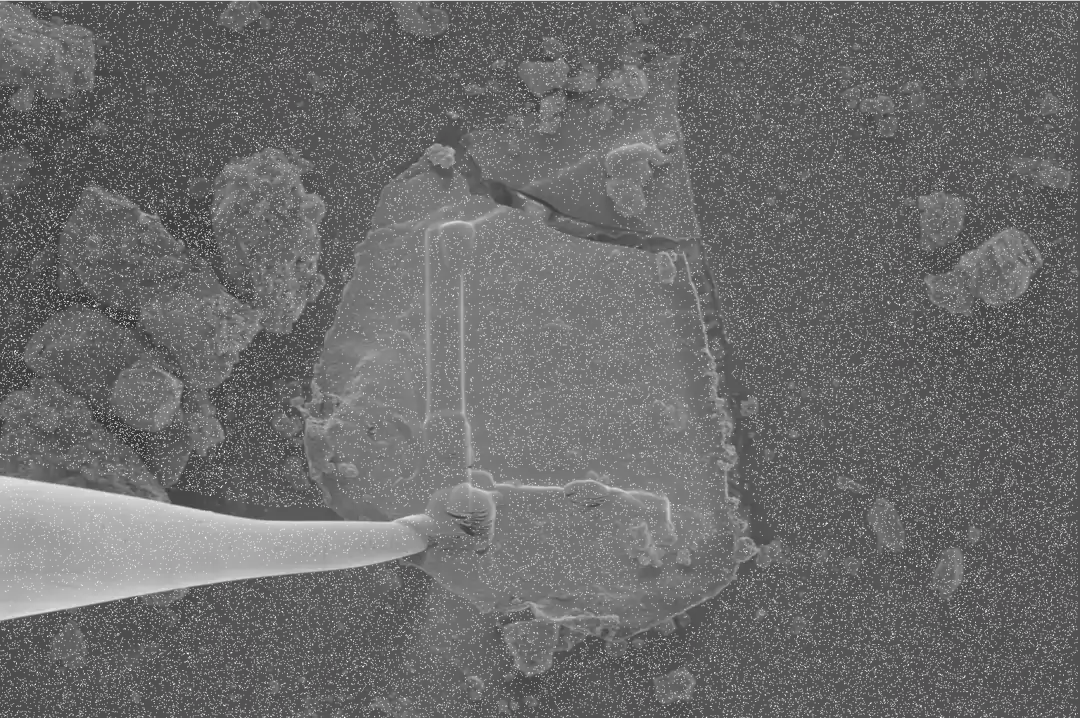
The search for life beyond Earth has been an ongoing quest for scientists, with many studying the composition of asteroids and other celestial bodies to gain insights into the origins of life. Recently, NASA scientists made a groundbreaking discovery in the samples collected from Asteroid Bennu, a near-Earth asteroid that is about 1,640 feet (500 meters) in diameter. The team found life-essential sugars, a gum-like substance, and stardust in the samples, shedding new light on the possibility of life existing elsewhere in the universe.
The discovery was made possible by the OSIRIS-REx mission, which launched in 2016 and aimed to collect samples from Asteroid Bennu. The spacecraft spent two years orbiting the asteroid, gathering data and collecting samples, before returning to Earth in 2020. The samples were then analyzed by a team of scientists, who made the remarkable discovery of sugars, including ribose and glucose, in the asteroid’s composition.
Ribose is a five-carbon sugar that is a key component of RNA (ribonucleic acid), a molecule essential for life. The discovery of ribose in the Asteroid Bennu samples is significant, as it suggests that the building blocks of life are widespread in the universe. However, what’s even more remarkable is the discovery of six-carbon glucose, a sugar that is commonly found in living organisms, in an extraterrestrial sample for the first time. Glucose is a key source of energy for many living organisms, and its presence in the asteroid’s samples raises intriguing questions about the origins of life.
In addition to the sugars, the scientists also found a gum-like substance in the samples. This material is composed of tangled molecular chains that are similar to those found in certain types of terrestrial materials. The gum-like substance is thought to have emerged early in the asteroid’s history, possibly as a result of chemical reactions that occurred when the asteroid was still forming. The discovery of this material provides valuable insights into the asteroid’s composition and the processes that shaped its evolution.
Another significant discovery made by the scientists is the presence of stardust in the samples. Stardust refers to the remnants of supernovae, or exploding stars, that are scattered throughout the universe. The samples from Asteroid Bennu contain six times the amount of supernova dust than any other studied astromaterial. This suggests that the asteroid is a window into the early history of the solar system, providing a unique glimpse into the formation and evolution of our cosmic neighborhood.
The discovery of sugars, gum-like substances, and stardust in the Asteroid Bennu samples has significant implications for our understanding of the origins of life. The presence of these materials in an extraterrestrial sample suggests that the building blocks of life are widespread in the universe, and that the conditions for life to emerge may be more common than previously thought. The discovery also raises questions about the possibility of life existing elsewhere in the universe, and whether the emergence of life is a rare event or a common occurrence.
The study of asteroids like Bennu provides a unique opportunity for scientists to gain insights into the early history of the solar system and the origins of life. By analyzing the composition of these celestial bodies, scientists can learn more about the conditions that existed in the early solar system, and how these conditions may have given rise to the emergence of life. The discovery of sugars, gum-like substances, and stardust in the Asteroid Bennu samples is a significant step forward in this quest for knowledge, and it highlights the importance of continued exploration and research into the mysteries of the universe.
In conclusion, the discovery of life-essential sugars, a gum-like substance, and stardust in the Asteroid Bennu samples is a groundbreaking finding that sheds new light on the possibility of life existing elsewhere in the universe. The presence of these materials in an extraterrestrial sample suggests that the building blocks of life are widespread in the universe, and that the conditions for life to emerge may be more common than previously thought. As scientists continue to study the composition of asteroids and other celestial bodies, we may uncover even more secrets about the origins of life and the universe we inhabit.
About the Author