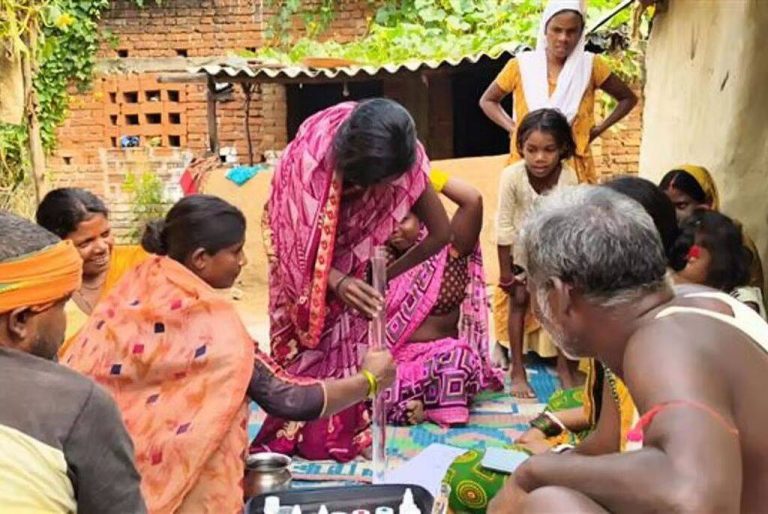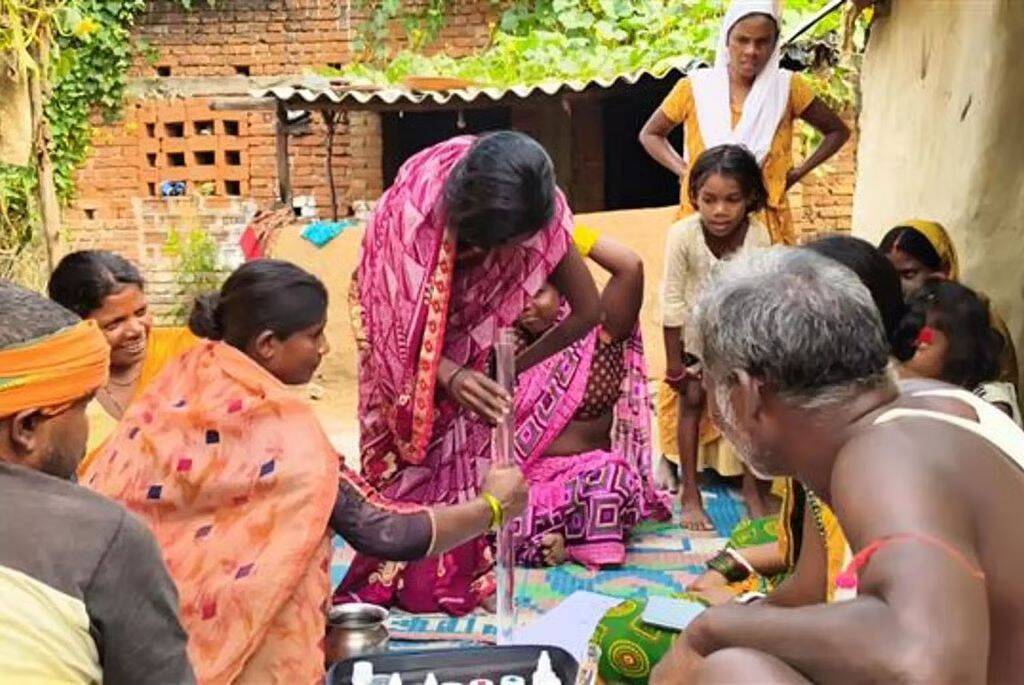
Social beliefs drive rural water adoption: Study
Access to clean drinking water is a fundamental human right, yet millions of people in rural India continue to struggle with contaminated water sources. The Indian government has launched various initiatives to improve water quality, including the installation of community water purification systems. However, the adoption of these systems has been inconsistent, with some communities embracing them while others remain skeptical. New research has shed light on the factors driving the adoption of household water purification systems in rural India, and the results are surprising.
Contrary to common assumptions, the study found that the adoption of household water purification systems in rural India depends more on social trust and collective norms than infrastructure access. In other words, communities with stronger peer influence and shared beliefs reported higher uptake of low-cost purification methods. This suggests that water programs must align with local social dynamics to be effective.
The study, which surveyed rural communities in India, found that social beliefs and norms play a significant role in shaping the adoption of water purification systems. Communities where people trust each other and share similar values are more likely to adopt these systems, even if they have limited access to infrastructure. On the other hand, communities with weaker social bonds and limited collective norms are less likely to adopt water purification systems, even if they have better access to infrastructure.
The researchers identified several key factors that influence the adoption of water purification systems in rural India. These include:
- Social trust: Communities with high levels of social trust, where people trust each other and feel a sense of belonging, are more likely to adopt water purification systems.
- Collective norms: Communities with strong collective norms, where people share similar values and beliefs, are more likely to adopt water purification systems.
- Peer influence: Communities where people are influenced by their peers and neighbors are more likely to adopt water purification systems.
- Local leadership: Communities with strong local leadership, where leaders promote the use of water purification systems, are more likely to adopt these systems.
The study’s findings have significant implications for water programs in rural India. Rather than focusing solely on infrastructure development, programs must also take into account the social dynamics of the communities they serve. This includes building trust, promoting collective norms, and leveraging peer influence to encourage the adoption of water purification systems.
The researchers also noted that the adoption of water purification systems is not just a matter of individual choice, but also a collective decision that involves the community as a whole. In communities where people share similar values and beliefs, the adoption of water purification systems becomes a social norm, and individuals are more likely to adopt these systems to conform to the norms of their community.
The study’s findings are consistent with other research on the role of social norms in shaping behavior. Studies have shown that social norms can influence a wide range of behaviors, from energy consumption to health habits. In the context of water purification, social norms can play a critical role in encouraging the adoption of low-cost purification methods, which are essential for improving water quality in rural India.
The Indian government has launched several initiatives to improve water quality in rural India, including the National Rural Drinking Water Programme (NRDWP). The program aims to provide universal access to safe drinking water in rural areas, and has made significant progress in recent years. However, the program’s success depends on the adoption of water purification systems by rural communities, which is influenced by social beliefs and norms.
In conclusion, the adoption of household water purification systems in rural India is driven by social beliefs and norms, rather than infrastructure access. Communities with stronger peer influence and shared beliefs are more likely to adopt low-cost purification methods, and programs must align with local social dynamics to be effective. The study’s findings have significant implications for water programs in rural India, and highlight the need for a more nuanced approach to improving water quality in these communities.
About the Author