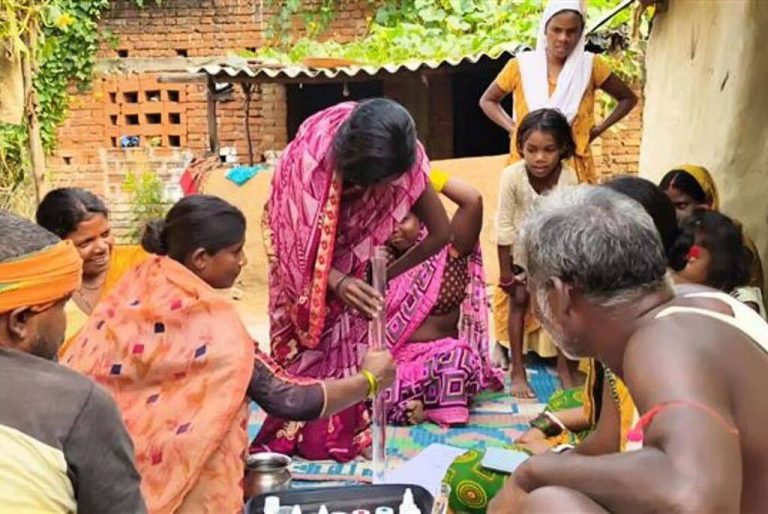
Social beliefs drive rural water adoption: Study
Access to clean drinking water is a fundamental human right, yet millions of people in rural India still lack access to safe and reliable water sources. While efforts to improve water infrastructure have been ongoing, a new study suggests that social beliefs and collective norms play a significant role in the adoption of household water purification systems in rural India. The research highlights that communities with stronger peer influence and shared beliefs reported higher uptake of low-cost purification methods, underscoring the importance of considering local social dynamics in water programs.
The study, which focused on rural communities in India, found that the adoption of household water purification systems was not solely dependent on access to infrastructure, such as piped water or electricity. Instead, social trust and collective norms were found to be significant predictors of uptake. Communities where social norms emphasized the importance of clean drinking water and where peers influenced each other to adopt purification systems showed higher rates of adoption.
This finding is crucial, as it suggests that water programs must align with local social dynamics to be effective. Simply providing access to infrastructure or technology is not enough; programs must also take into account the social context in which they are operating. This includes understanding the role of social trust, peer influence, and collective norms in shaping behavior and decision-making.
The study’s findings are consistent with other research on the role of social norms in shaping behavior. Social norms refer to the unwritten rules that govern behavior in a particular community or society. They can influence everything from what we wear to how we behave in public, and even what technologies we adopt. In the context of water purification, social norms can play a significant role in shaping attitudes and behaviors around clean drinking water.
The study’s authors suggest that water programs can leverage social norms to promote the adoption of household water purification systems. This can be done by engaging with local leaders and influencers, who can help promote the importance of clean drinking water and encourage others to adopt purification systems. Programs can also use social marketing techniques, such as messaging campaigns and community events, to raise awareness and build support for purification systems.
Another key finding of the study was the importance of collective efficacy in shaping adoption rates. Collective efficacy refers to the belief that a community can work together to achieve a common goal. Communities with high collective efficacy were found to be more likely to adopt purification systems, as they were more confident in their ability to solve problems and work together to improve their water quality.
The study’s findings have important implications for water programs in rural India. They suggest that programs must move beyond a focus on individual-level factors, such as knowledge and attitudes, and consider the broader social context in which they are operating. This includes understanding the role of social norms, peer influence, and collective efficacy in shaping behavior and decision-making.
In addition, the study highlights the importance of community-based approaches to promoting the adoption of household water purification systems. Community-based approaches involve working with local communities to identify their needs and develop solutions that are tailored to their specific context. This can include training local leaders and influencers, providing education and awareness-raising activities, and supporting community-led initiatives to improve water quality.
Overall, the study’s findings suggest that social beliefs and collective norms play a significant role in the adoption of household water purification systems in rural India. By understanding and leveraging these social dynamics, water programs can be more effective in promoting the adoption of low-cost purification methods and improving access to clean drinking water.
As the world works to achieve the Sustainable Development Goals (SDGs), including universal access to clean water and sanitation, the findings of this study are particularly relevant. They highlight the importance of considering the social context in which water programs are operating and the need for community-based approaches that take into account local social dynamics.
In conclusion, the adoption of household water purification systems in rural India is a complex issue that depends on a range of factors, including social trust, peer influence, and collective norms. By understanding and leveraging these social dynamics, water programs can be more effective in promoting the adoption of low-cost purification methods and improving access to clean drinking water. As we move forward in our efforts to achieve the SDGs, it is essential that we consider the social context in which we are operating and work to develop programs that are tailored to the specific needs and circumstances of local communities.
About the Author