Skull reveals some ancient humans had more ‘primitive’ faces
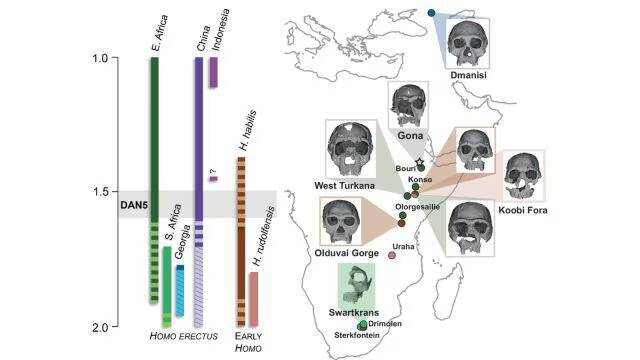
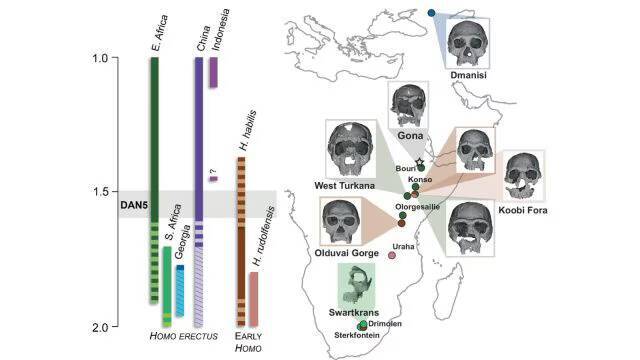
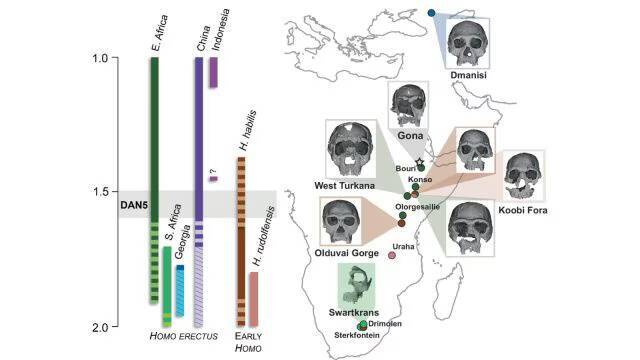
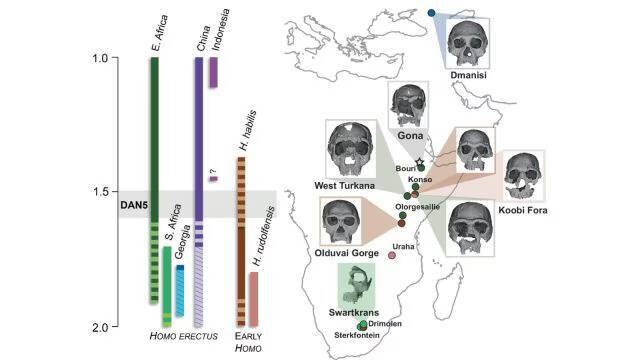
The discovery of a 1.5-1.6-million-year-old Homo erectus skull in Ethiopia has shed new light on the evolution of early humans. A recent study has revealed that this ancient skull, known as DAN5, exhibits more primitive facial traits than previously thought. The findings have surprised scientists, who had expected to see more modern features in a fossil of this age.
The reconstruction of the DAN5 skull was made possible by micro-CT modelling, a technique that allows researchers to create detailed 3D models of fossils. The results showed a small braincase paired with ancestral features, including a flat nasal bridge and large molars. According to Dr. Baab, one of the researchers involved in the study, “The face is more archaic than we anticipated.” This suggests that early Homo erectus humans may have retained more primitive characteristics than previously thought.
The discovery of the DAN5 skull is significant because it provides new insights into the evolution of early humans. Homo erectus is considered a key species in the human evolutionary lineage, as it is thought to have given rise to both Homo heidelbergensis and eventually, Homo sapiens. However, the fossil record of early Homo erectus is limited, and many questions remain about the evolution of this species.
The DAN5 skull was found in the Danakil Depression in Ethiopia, a region known for its rich fossil deposits. The skull is remarkably well-preserved, considering its age, and has provided scientists with a unique opportunity to study the anatomy of early Homo erectus. According to Yousuke Kaifu, another researcher involved in the study, “Seeing such a primitive face on a fossil this young was surprising.” This suggests that the evolution of early humans may have been more complex and nuanced than previously thought.
The study of the DAN5 skull has also highlighted the importance of micro-CT modelling in paleoanthropology. This technique allows researchers to create detailed 3D models of fossils, which can be used to study the anatomy of ancient humans in unprecedented detail. According to Dr. Baab, “Micro-CT modelling has revolutionized the field of paleoanthropology, allowing us to study fossils in a way that was previously impossible.”
The discovery of the DAN5 skull has also raised questions about the evolution of human facial features. The primitive facial traits exhibited by the DAN5 skull suggest that early Homo erectus humans may have retained more ancestral characteristics than previously thought. This has implications for our understanding of human evolution, as it suggests that the evolution of modern human facial features may have occurred more recently than previously thought.
In conclusion, the discovery of the DAN5 skull has provided new insights into the evolution of early humans. The primitive facial traits exhibited by this fossil suggest that early Homo erectus humans may have retained more ancestral characteristics than previously thought. The study of this fossil has also highlighted the importance of micro-CT modelling in paleoanthropology, and has raised questions about the evolution of human facial features. As scientists continue to study the DAN5 skull and other fossils, we can expect to learn more about the complex and nuanced history of human evolution.
The study of human evolution is a complex and ongoing field of research, with new discoveries being made regularly. The discovery of the DAN5 skull is just one example of the many fascinating fossils that have been found in recent years. As scientists continue to study these fossils, we can expect to learn more about the history of our species and the evolution of our ancestors.
In the meantime, the discovery of the DAN5 skull serves as a reminder of the importance of continued research and exploration in the field of paleoanthropology. By studying fossils like the DAN5 skull, scientists can gain a better understanding of human evolution and the history of our species. This knowledge can also inform our understanding of human biology and behavior, and can provide insights into the complex and nuanced history of our species.
The discovery of the DAN5 skull is also a testament to the power of scientific collaboration and international cooperation. The study of this fossil was made possible by a team of researchers from around the world, who worked together to analyze the fossil and interpret its significance. This collaboration is a reminder of the importance of international cooperation in scientific research, and highlights the many benefits that can be gained from working together to advance our understanding of the world.
In the end, the discovery of the DAN5 skull is a significant finding that has the potential to reshape our understanding of human evolution. The primitive facial traits exhibited by this fossil suggest that early Homo erectus humans may have retained more ancestral characteristics than previously thought, and raise questions about the evolution of human facial features. As scientists continue to study this fossil and other discoveries, we can expect to learn more about the complex and nuanced history of human evolution.
About the Author