Skull reveals some ancient humans had more ‘primitive’ faces
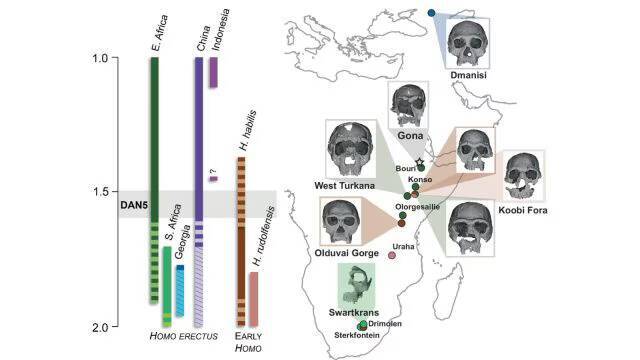
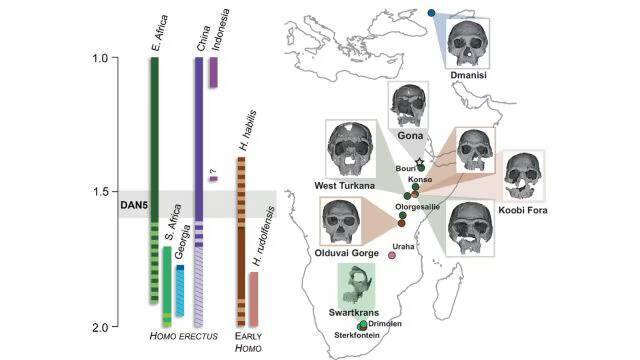
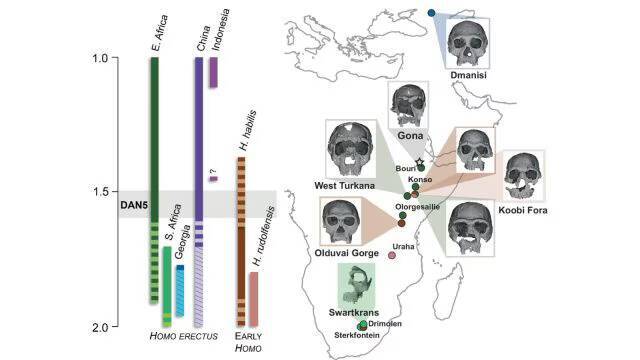
The discovery of a 1.5-1.6-million-year-old Homo erectus skull in Ethiopia has shed new light on the evolution of early humans. A recent study has revealed that this ancient skull, known as DAN5, exhibits more primitive facial traits than previously thought. The findings have surprised scientists, who had expected to see more modern features in a fossil of this age.
The reconstruction of the DAN5 skull was made possible through the use of micro-CT modelling, a technique that allows researchers to create detailed 3D models of fossils. This technology has revolutionized the field of paleoanthropology, enabling scientists to study fossils in greater detail than ever before. The micro-CT model of the DAN5 skull revealed a small braincase paired with ancestral features, including a flat nasal bridge and large molars.
According to Dr. Baab, one of the researchers involved in the study, “The face is more archaic than we anticipated.” This is a significant finding, as it suggests that early Homo erectus populations may have exhibited a greater range of physical characteristics than previously thought. The presence of primitive facial traits in a fossil of this age is particularly surprising, as it was expected that early Homo erectus would have had more modern features.
Yousuke Kaifu, another researcher involved in the study, expressed similar surprise at the findings. “Seeing such a primitive face on a fossil this young was surprising,” he said. The discovery of the DAN5 skull has significant implications for our understanding of early human evolution. It suggests that the evolution of modern human facial features may have been a more complex and nuanced process than previously thought.
The study of early human evolution is a complex and multifaceted field, with many different theories and hypotheses. The discovery of the DAN5 skull provides new evidence that can be used to inform and refine these theories. It also highlights the importance of continued exploration and research in the field of paleoanthropology, as new discoveries can significantly impact our understanding of human evolution.
One of the most significant implications of the DAN5 skull is that it challenges the traditional view of early Homo erectus as a single, homogeneous species. The presence of primitive facial traits in a fossil of this age suggests that early Homo erectus populations may have exhibited a greater range of physical characteristics than previously thought. This has significant implications for our understanding of human evolution, as it suggests that the process of evolution may have been more complex and nuanced than previously thought.
The discovery of the DAN5 skull is also significant because it provides new insights into the evolution of the human brain. The small braincase of the DAN5 skull suggests that early Homo erectus may have had smaller brain sizes than previously thought. This has significant implications for our understanding of human cognitive evolution, as it suggests that the development of modern human brain sizes may have been a more gradual process than previously thought.
In addition to its implications for our understanding of human evolution, the discovery of the DAN5 skull also highlights the importance of preserving and protecting fossil sites. The DAN5 skull was discovered in Ethiopia, a country with a rich fossil record. The preservation of fossil sites like this is crucial for our understanding of human evolution, as they provide a unique window into the past.
The study of the DAN5 skull is also significant because it demonstrates the importance of interdisciplinary research in the field of paleoanthropology. The use of micro-CT modelling in this study highlights the importance of collaboration between researchers from different fields, including paleoanthropology, biology, and computer science. This interdisciplinary approach has enabled researchers to gain a more detailed understanding of the DAN5 skull and its significance for our understanding of human evolution.
In conclusion, the discovery of the DAN5 skull has significant implications for our understanding of early human evolution. The presence of primitive facial traits in a fossil of this age challenges the traditional view of early Homo erectus as a single, homogeneous species. The study of the DAN5 skull also highlights the importance of preserving and protecting fossil sites, as well as the significance of interdisciplinary research in the field of paleoanthropology.
The discovery of the DAN5 skull is a significant finding that will continue to be studied and debated by researchers in the field of paleoanthropology. As new evidence and discoveries are made, our understanding of human evolution will continue to evolve and refine. For now, the DAN5 skull provides a fascinating glimpse into the evolution of early humans, and highlights the complexity and nuance of the human evolutionary process.
About the Author