Skull reveals some ancient humans had more ‘primitive’ faces
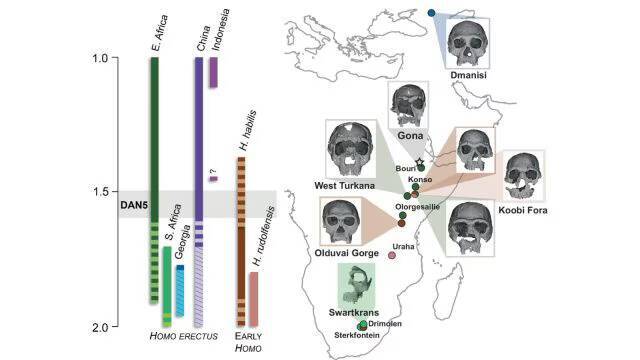
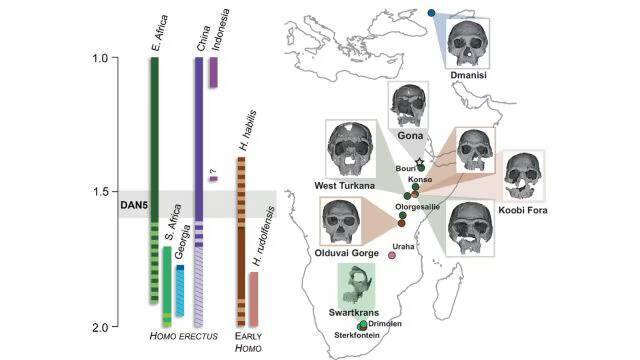
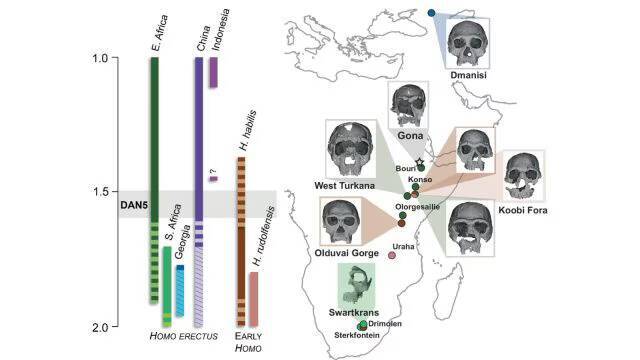
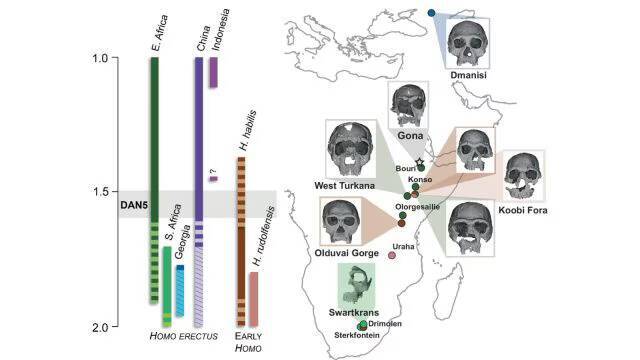
The discovery of a 1.5-1.6 million-year-old Homo erectus skull in Ethiopia has shed new light on the evolution of early humans. A recent study has revealed that this ancient skull, known as DAN5, exhibits surprisingly primitive facial traits, challenging our previous understanding of human evolution. The findings of this research have significant implications for our knowledge of human history and the development of our species.
According to Dr. Baab, one of the researchers involved in the study, “The face is more archaic than we anticipated.” The team used micro-CT modeling to analyze the skull and found that it had a small braincase paired with ancestral features, including a flat nasal bridge and large molars. These characteristics are more typical of earlier human ancestors, such as Homo habilis, rather than the more advanced Homo erectus.
The discovery of the DAN5 skull has been a significant one, providing valuable insights into the evolution of early humans. As Yousuke Kaifu, another researcher on the project, noted, “Seeing such a primitive face on a fossil this young was surprising.” The fact that this skull is relatively young, dating back to around 1.5-1.6 million years ago, makes it an important find, as it suggests that some ancient humans may have retained more primitive features for longer than previously thought.
The Homo erectus species is believed to have originated around 2 million years ago and is thought to have given rise to several other human species, including Homo heidelbergensis and eventually, Homo sapiens. However, the discovery of the DAN5 skull suggests that the evolution of early humans may have been more complex and nuanced than previously thought.
One of the most significant findings of the study is the presence of a flat nasal bridge and large molars in the DAN5 skull. These features are more typical of earlier human ancestors and suggest that some ancient humans may have retained more primitive traits for longer than previously thought. The small braincase of the skull is also noteworthy, as it suggests that the cognitive abilities of early humans may have developed more slowly than previously thought.
The discovery of the DAN5 skull has significant implications for our understanding of human evolution. It suggests that the process of evolution was more complex and nuanced than previously thought, with different species and populations exhibiting a range of characteristics. The fact that some ancient humans retained more primitive features for longer than previously thought highlights the importance of continued research and study of human evolution.
The study also highlights the importance of using advanced technologies, such as micro-CT modeling, to analyze fossils and gain a better understanding of human evolution. By using these technologies, researchers can gain a more detailed understanding of the characteristics of ancient humans and how they evolved over time.
In conclusion, the discovery of the DAN5 skull is a significant one, providing valuable insights into the evolution of early humans. The presence of primitive facial traits, including a flat nasal bridge and large molars, suggests that some ancient humans may have retained more primitive features for longer than previously thought. The study highlights the importance of continued research and study of human evolution, using advanced technologies to analyze fossils and gain a better understanding of our species’ history.
The discovery of the DAN5 skull is a reminder that there is still much to be learned about human evolution, and that new discoveries can challenge our previous understanding of the subject. As researchers continue to study and analyze fossils, such as the DAN5 skull, we can gain a deeper understanding of our species’ history and the complex and nuanced process of evolution that has shaped us into who we are today.
The study of human evolution is an ongoing and dynamic field, with new discoveries and advances in technology continually shedding new light on our understanding of the subject. The discovery of the DAN5 skull is a significant contribution to this field, and highlights the importance of continued research and study of human evolution.
As we continue to learn more about human evolution, we are reminded of the complexity and nuance of the process. The discovery of the DAN5 skull is a significant one, providing valuable insights into the evolution of early humans and challenging our previous understanding of the subject. By continuing to study and analyze fossils, such as the DAN5 skull, we can gain a deeper understanding of our species’ history and the complex and nuanced process of evolution that has shaped us into who we are today.
About the Author