Skull reveals some ancient humans had more ‘primitive’ faces
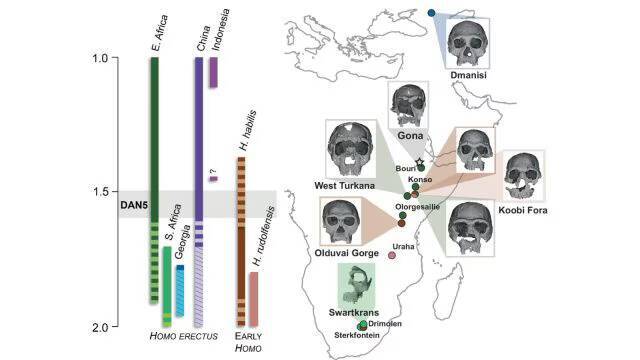
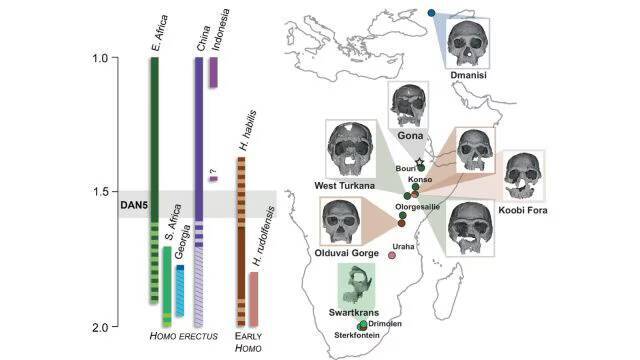
The discovery of a 1.5-1.6 million-year-old Homo erectus skull in Ethiopia has shed new light on the evolution of early humans. The reconstruction of the skull, known as DAN5, has revealed a face with more primitive features than previously thought. According to a recent study, the fossilized skull shows a unique combination of archaic and modern traits, challenging our current understanding of human evolution.
The DAN5 skull was discovered in the Danakil Depression, a region in northern Ethiopia known for its rich fossil deposits. The skull was found in a layer of rock dated to the early Pleistocene era, around 1.5-1.6 million years ago. The fossil was carefully excavated and transported to a laboratory for further analysis.
Using advanced micro-CT modeling techniques, researchers were able to create a detailed reconstruction of the skull. The results were surprising, with the skull showing a small braincase paired with ancestral features, including a flat nasal bridge and large molars. These primitive traits are more commonly associated with earlier human ancestors, such as Homo habilis.
“The face is more archaic than we anticipated,” said Dr. Baab, one of the lead researchers on the study. “Seeing such a primitive face on a fossil this young was surprising,” added Yousuke Kaifu, another researcher involved in the project. The discovery suggests that early Homo erectus populations may have retained more primitive features than previously thought, challenging the traditional view of human evolution as a linear progression from primitive to modern.
The Homo erectus species is thought to have originated around 2 million years ago in Africa and eventually spread to other parts of the world. They are known for their more human-like body proportions and larger brain size compared to earlier human ancestors. However, the DAN5 skull suggests that there may have been more variation within the species than previously thought.
The study’s findings have significant implications for our understanding of human evolution. The discovery of a primitive face on a relatively young fossil suggests that the evolution of modern human features may have been a more complex and nuanced process than previously thought. It also highlights the importance of continued fossil discovery and analysis in refining our understanding of human history.
The DAN5 skull is also significant because it provides a unique glimpse into the lives of early Homo erectus populations. The fossilized skull shows evidence of a diet rich in tough, fibrous plants, which would have required powerful jaws and teeth to chew. The large molars and flat nasal bridge of the skull are consistent with this type of diet, suggesting that early Homo erectus populations may have played a key role in shaping the evolution of human cuisine.
In addition to its significance for human evolution, the DAN5 skull also highlights the importance of interdisciplinary research in paleoanthropology. The study brought together experts from a range of fields, including paleontology, anthropology, and geology, to analyze the fossil and its context. This collaborative approach allowed researchers to reconstruct the skull and interpret its significance in a more comprehensive and nuanced way.
The discovery of the DAN5 skull is a reminder that there is still much to be learned about human evolution and the history of our species. As new fossils are discovered and analyzed, our understanding of human history will continue to evolve and refine. The study of the DAN5 skull is an important contribution to this ongoing process, and its findings will likely be the subject of continued research and debate in the years to come.
In conclusion, the reconstruction of the 1.5-1.6 million-year-old Homo erectus skull DAN5 has revealed a face with more primitive features than previously thought. The discovery of this fossil has significant implications for our understanding of human evolution, highlighting the complexity and nuance of the evolutionary process. As we continue to learn more about our ancient ancestors, we are reminded of the importance of fossil discovery and analysis in shaping our understanding of human history.
About the Author