Skull reveals some ancient humans had more ‘primitive’ faces
The study of human evolution has always been a fascinating and complex field, with new discoveries constantly reshaping our understanding of the history of our species. Recently, a team of researchers made a groundbreaking discovery that has shed new light on the evolution of early Homo erectus, one of the earliest human ancestors. The finding, based on the analysis of a 1.5-1.6-million-year-old skull, suggests that some ancient humans had more ‘primitive’ faces than previously thought.
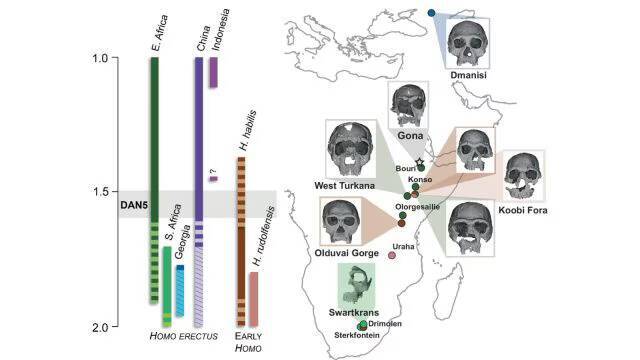
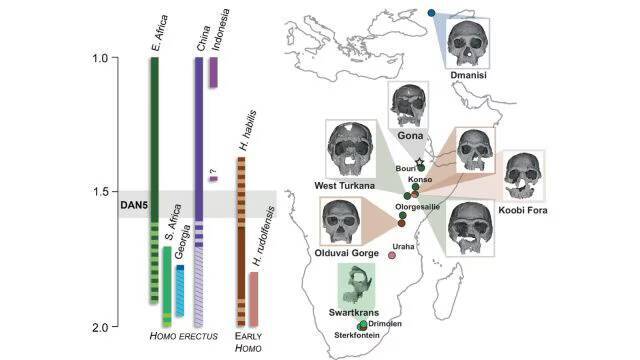
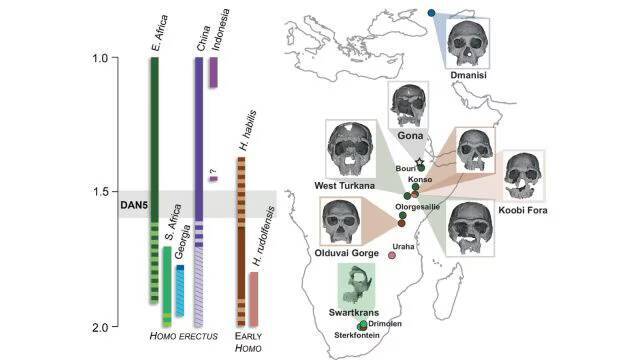
The skull, known as DAN5, was discovered in Ethiopia and is considered one of the most well-preserved fossils of its kind. Using advanced micro-CT modeling techniques, researchers were able to create a detailed reconstruction of the skull, revealing a number of surprising features. According to Dr. Baab, one of the lead researchers on the project, “The face is more archaic than we anticipated.” The skull shows a small braincase paired with ancestral features, including a flat nasal bridge and large molars, which are characteristic of more primitive human ancestors.
The discovery of the DAN5 skull has significant implications for our understanding of human evolution. Prior to this finding, it was believed that early Homo erectus had more modern facial features, similar to those of present-day humans. However, the DAN5 skull suggests that this may not have been the case, and that some ancient humans may have retained more primitive traits for longer than previously thought. As Yousuke Kaifu, another researcher involved in the study, noted, “Seeing such a primitive face on a fossil this young was surprising.”
The analysis of the DAN5 skull has also provided valuable insights into the evolution of the human brain. The small braincase of the skull suggests that early Homo erectus may not have had the same level of cognitive abilities as modern humans. This is consistent with other studies that have suggested that the development of the human brain was a gradual process that occurred over millions of years.
One of the most interesting aspects of the DAN5 skull is its age. At 1.5-1.6 million years old, it is significantly younger than many other fossils of early Homo erectus. This suggests that the process of human evolution was more complex and nuanced than previously thought, with different populations of early humans evolving at different rates. As Dr. Baab noted, “The face is more archaic than we anticipated, and this has significant implications for our understanding of human evolution.”
The discovery of the DAN5 skull is also a testament to the importance of continued exploration and research into human evolution. Despite the many advances that have been made in this field, there is still much that we do not know about the history of our species. By continuing to study fossils like the DAN5 skull, researchers can gain a deeper understanding of the complex and often surprising process of human evolution.
In conclusion, the discovery of the DAN5 skull has provided significant new insights into the evolution of early Homo erectus. The finding that some ancient humans had more ‘primitive’ faces than previously thought has challenged our existing understanding of human evolution and highlights the complexity and nuance of this process. As researchers continue to study this fascinating field, it is likely that we will uncover many more surprises and discoveries that will help to shape our understanding of the history of our species.
The study of the DAN5 skull is a powerful reminder of the importance of continued research and exploration into human evolution. By studying fossils like the DAN5 skull, researchers can gain a deeper understanding of the complex and often surprising process of human evolution. This, in turn, can help us to better understand ourselves and our place in the world.
As we continue to learn more about the history of our species, it is likely that we will uncover many more surprises and discoveries that will challenge our existing understanding of human evolution. The discovery of the DAN5 skull is just one example of the many fascinating findings that are waiting to be uncovered, and it highlights the importance of continued research and exploration into this fascinating field.
The study of human evolution is a complex and multifaceted field that requires the collaboration of researchers from a wide range of disciplines. By working together, researchers can gain a deeper understanding of the history of our species and the complex processes that have shaped our evolution. The discovery of the DAN5 skull is a powerful reminder of the importance of this collaboration and the many exciting discoveries that are waiting to be made.
In the end, the study of human evolution is a journey of discovery that is full of surprises and challenges. As we continue to explore and learn more about the history of our species, we are reminded of the complexity and nuance of this process. The discovery of the DAN5 skull is just one example of the many fascinating findings that are waiting to be uncovered, and it highlights the importance of continued research and exploration into this fascinating field.
About the Author