Skull reveals some ancient humans had more ‘primitive’ faces
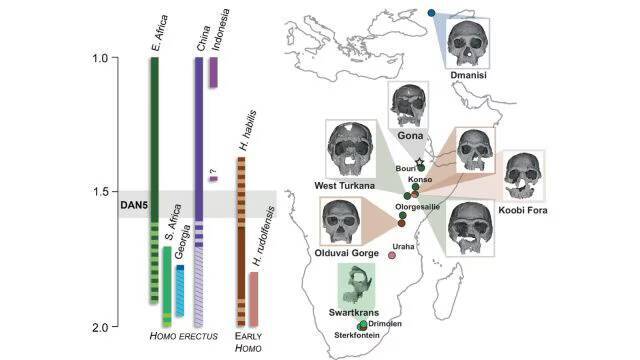
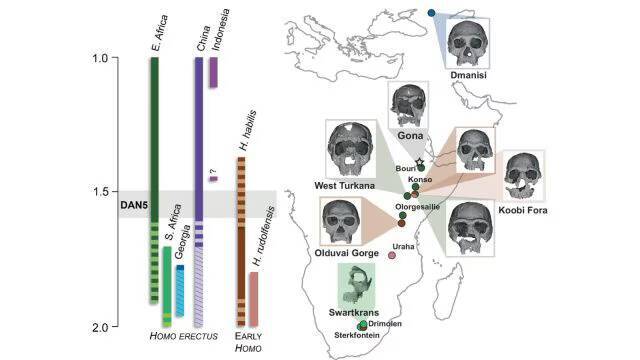
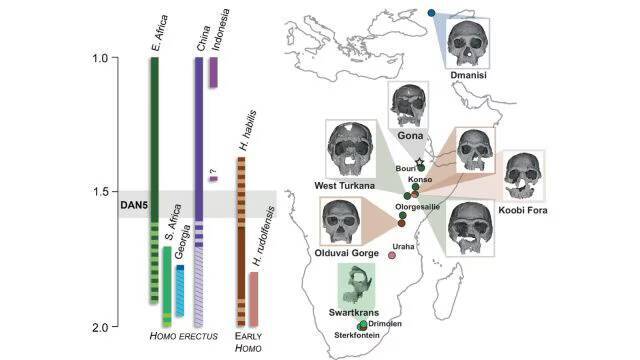
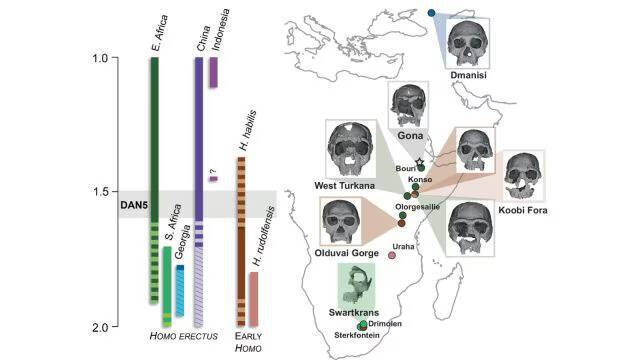
The discovery of a 1.5-1.6-million-year-old Homo erectus skull in Ethiopia has shed new light on the evolution of early humans. The fossil, known as DAN5, has revealed a more primitive face than expected, with characteristics that were thought to have disappeared much earlier in human evolution. This finding has significant implications for our understanding of human evolution and the diversity of early human populations.
The skull was reconstructed using micro-CT modeling, a technique that allows researchers to create detailed 3D images of fossilized bones. The results showed a small braincase paired with ancestral features, including a flat nasal bridge and large molars. According to Dr. Baab, one of the researchers involved in the study, “The face is more archaic than we anticipated.” This suggests that early Homo erectus populations may have exhibited a greater range of physical characteristics than previously thought.
The discovery of the DAN5 skull is significant because it challenges our current understanding of human evolution. For a long time, it was believed that early Homo erectus populations had more modern facial features, similar to those of present-day humans. However, the DAN5 skull reveals a more primitive face, with characteristics that are more similar to those of earlier human ancestors. As Yousuke Kaifu, another researcher involved in the study, noted, “Seeing such a primitive face on a fossil this young was surprising.”
The implications of this discovery are far-reaching. It suggests that early Homo erectus populations may have been more diverse than previously thought, with different populations exhibiting a range of physical characteristics. This diversity may have been driven by a variety of factors, including geographic isolation, climate, and diet. The discovery of the DAN5 skull also highlights the importance of continued exploration and research into human evolution.
One of the key takeaways from this study is that human evolution is more complex and nuanced than previously thought. The discovery of the DAN5 skull reveals that early Homo erectus populations may have exhibited a range of physical characteristics, from more modern to more primitive. This challenges the traditional view of human evolution, which suggests that early humans evolved in a linear and progressive manner.
The study also highlights the importance of using advanced technologies, such as micro-CT modeling, to analyze fossilized bones. This technique allows researchers to create detailed 3D images of fossils, which can provide valuable insights into the anatomy and morphology of early humans. The use of micro-CT modeling in this study has provided a level of detail and precision that would not have been possible using traditional methods.
In addition to its implications for human evolution, the discovery of the DAN5 skull also has significant implications for our understanding of early human behavior and culture. The fact that early Homo erectus populations may have exhibited a range of physical characteristics suggests that they may have also exhibited a range of behaviors and cultural practices. This diversity may have been driven by a variety of factors, including geographic location, climate, and access to resources.
The discovery of the DAN5 skull is a significant contribution to the field of paleoanthropology, and it highlights the importance of continued research and exploration into human evolution. As our understanding of human evolution continues to evolve, we may uncover even more surprises and challenges to our current understanding. However, one thing is clear: the discovery of the DAN5 skull has shed new light on the evolution of early humans, and it has significant implications for our understanding of human diversity and complexity.
In conclusion, the discovery of the 1.5-1.6-million-year-old Homo erectus skull DAN5 has revealed a more primitive face than expected, with characteristics that were thought to have disappeared much earlier in human evolution. This finding has significant implications for our understanding of human evolution and the diversity of early human populations. As researchers continue to explore and analyze fossilized bones, we may uncover even more surprises and challenges to our current understanding of human evolution.
About the Author