Skull reveals some ancient humans had more ‘primitive’ faces
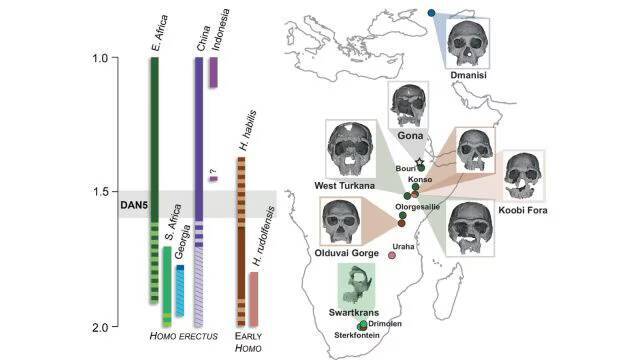
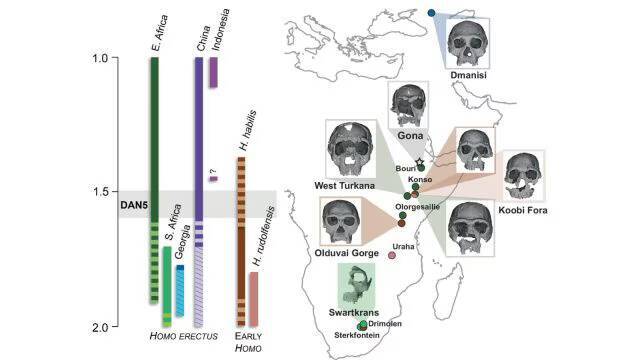
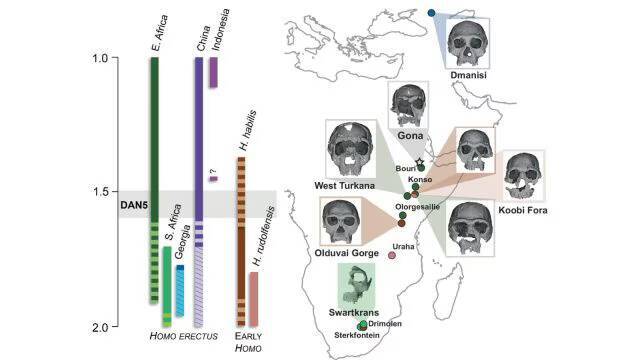
The discovery of a 1.5-1.6-million-year-old Homo erectus skull in Ethiopia has shed new light on the evolution of early humans. A recent study has revealed that this ancient skull, known as DAN5, exhibits more primitive facial traits than previously thought. The findings have significant implications for our understanding of human evolution and the diversity of ancient human populations.
The reconstruction of the DAN5 skull was made possible through the use of micro-CT modelling, a technique that allows researchers to create detailed digital models of fossils. The results showed that the skull had a small braincase paired with ancestral features, including a flat nasal bridge and large molars. According to Dr. Baab, one of the researchers involved in the study, “The face is more archaic than we anticipated.” This suggests that early Homo erectus populations may have been more diverse than previously thought, with some individuals exhibiting more primitive characteristics.
The discovery of the DAN5 skull is significant because it provides a unique glimpse into the evolution of early humans. Homo erectus is thought to have evolved from earlier human species, such as Homo habilis, and is considered a key transitional phase in the development of modern humans. The fact that the DAN5 skull exhibits primitive facial traits suggests that the evolution of the human face may have been more complex and nuanced than previously thought.
Yousuke Kaifu, another researcher involved in the study, expressed surprise at the primitive features of the DAN5 skull. “Seeing such a primitive face on a fossil this young was surprising,” he said. This reaction highlights the significance of the discovery, as it challenges our current understanding of human evolution and raises new questions about the diversity of ancient human populations.
The study of the DAN5 skull also highlights the importance of continued exploration and research into human evolution. The discovery of new fossils and the development of new technologies, such as micro-CT modelling, are allowing researchers to reconstruct the history of human evolution with greater accuracy and detail. As our understanding of human evolution grows, so too does our appreciation for the complexity and diversity of ancient human populations.
The implications of the DAN5 skull discovery extend beyond the field of paleoanthropology, with potential applications in fields such as genetics and anthropology. By studying the evolution of the human face, researchers can gain insights into the development of other human characteristics, such as brain size and cognitive abilities. Additionally, the discovery of primitive facial traits in early Homo erectus populations raises questions about the evolution of human behavior and culture.
In conclusion, the discovery of the 1.5-1.6-million-year-old Homo erectus skull DAN5 has significant implications for our understanding of human evolution. The primitive facial traits exhibited by the skull suggest that early Homo erectus populations may have been more diverse than previously thought, with some individuals exhibiting more primitive characteristics. As researchers continue to study the DAN5 skull and other fossils, we can expect to gain a deeper understanding of human evolution and the complexity of ancient human populations.
The study of human evolution is an ongoing and dynamic field, with new discoveries and advancements in technology continually reshaping our understanding of the past. As we continue to explore and learn more about our ancient ancestors, we are reminded of the importance of preserving and protecting our cultural and natural heritage. By supporting research and conservation efforts, we can ensure that future generations will be able to learn from and appreciate the rich history of human evolution.
In the end, the discovery of the DAN5 skull serves as a reminder of the awe-inspiring complexity and diversity of human evolution. As we continue to uncover the secrets of our ancient past, we are drawn closer to a deeper understanding of ourselves and our place in the world. The study of human evolution is a testament to the power of human curiosity and the boundless potential of the human spirit.
About the Author