Skull reveals some ancient humans had more ‘primitive’ faces
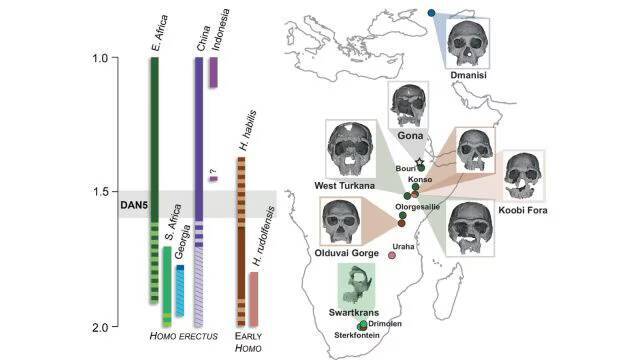
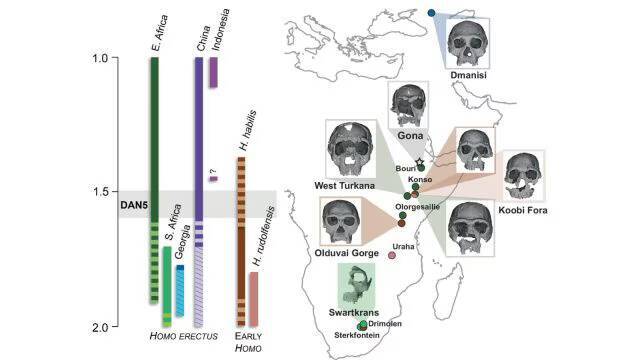
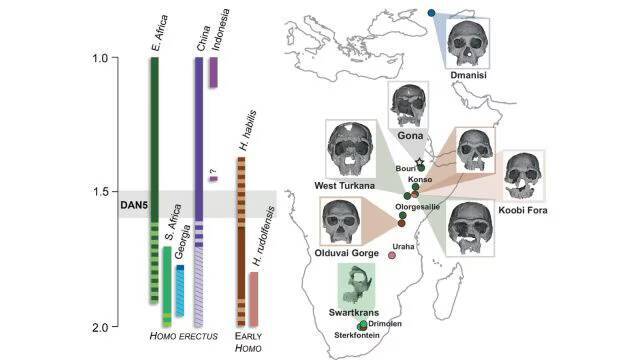
The study of human evolution has always been a fascinating field, with new discoveries constantly reshaping our understanding of our ancient ancestors. A recent study has shed new light on the evolution of early Homo erectus, a species that lived around 1.5-1.6 million years ago. The discovery of a well-preserved skull in Ethiopia has revealed that some ancient humans had more ‘primitive’ faces than previously thought.
The skull, known as DAN5, was reconstructed using micro-CT modelling, a technique that allows researchers to create detailed 3D models of fossils. The results were surprising, with the face of the ancient human appearing more archaic than expected. “The face is more archaic than we anticipated,” said Dr Baab, one of the researchers involved in the study. The skull showed a small braincase paired with ancestral features, including a flat nasal bridge and large molars.
The discovery of the DAN5 skull has significant implications for our understanding of human evolution. Early Homo erectus were thought to have had more modern facial features, but the DAN5 skull suggests that this may not have been the case. “Seeing such a primitive face on a fossil this young was surprising,” said Yousuke Kaifu, another researcher involved in the study. The fact that the skull is relatively young, at 1.5-1.6 million years old, makes the discovery even more significant.
The study of human evolution is a complex and multifaceted field, with many different factors influencing the development of our species. The discovery of the DAN5 skull highlights the importance of continued research and exploration in this field. By studying the fossils of our ancient ancestors, we can gain a better understanding of how our species evolved over time.
One of the key findings of the study was the presence of a small braincase in the DAN5 skull. This suggests that early Homo erectus may not have had the same level of cognitive abilities as modern humans. The braincase is the part of the skull that contains the brain, and its size is often used as a proxy for cognitive ability. The fact that the DAN5 skull has a small braincase suggests that early Homo erectus may have had more limited cognitive abilities than previously thought.
In addition to the small braincase, the DAN5 skull also shows a number of other primitive features. The nasal bridge is flat, and the molars are large, suggesting that early Homo erectus may have had a different diet than modern humans. The presence of these primitive features is significant, as it suggests that early Homo erectus may have been more similar to their ancestors than previously thought.
The discovery of the DAN5 skull is also significant because it highlights the importance of preserving and studying fossils. The skull was found in Ethiopia, a country that is known for its rich fossil record. The preservation of fossils like the DAN5 skull is crucial for our understanding of human evolution, and it is only through the continued discovery and study of fossils that we can gain a more complete picture of our ancient ancestors.
In conclusion, the discovery of the DAN5 skull has significant implications for our understanding of human evolution. The fact that the skull shows a number of primitive features, including a small braincase and a flat nasal bridge, suggests that early Homo erectus may have been more similar to their ancestors than previously thought. The study of human evolution is a complex and multifaceted field, and continued research and exploration are necessary to gain a more complete understanding of our species.
The discovery of the DAN5 skull is a reminder that there is still much to be learned about human evolution, and that new discoveries can always challenge our existing understanding. As researchers continue to study the fossils of our ancient ancestors, we can expect to gain a more complete picture of how our species evolved over time. For now, the DAN5 skull remains an important discovery, one that highlights the complexity and fascination of the human evolution story.
The study of human evolution is an ongoing field of research, with new discoveries being made all the time. The discovery of the DAN5 skull is just one example of how our understanding of human evolution is constantly being refined and updated. As we continue to learn more about our ancient ancestors, we can gain a deeper appreciation for the complexity and diversity of the human experience.
In the end, the study of human evolution is a reminder that our species is part of a much larger story, one that spans millions of years and involves the evolution of countless different species. The discovery of the DAN5 skull is a small but significant part of this story, and it highlights the importance of continued research and exploration in the field of human evolution.
About the Author