Skull reveals some ancient humans had more ‘primitive’ faces
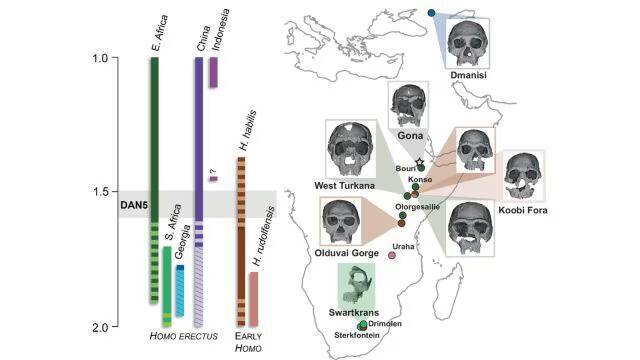
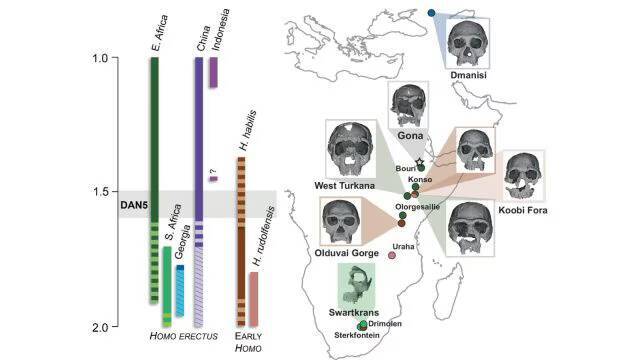
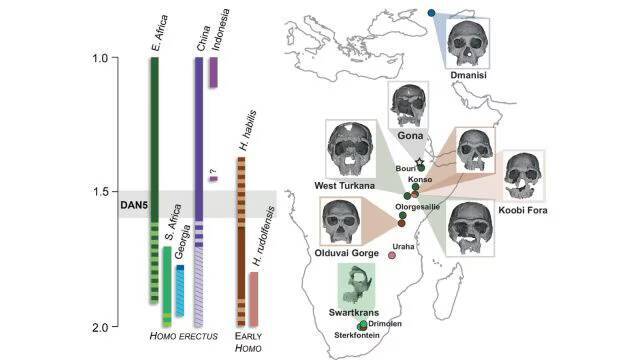
The discovery of an ancient skull in Ethiopia has shed new light on the evolution of early humans, revealing that some ancient humans had more ‘primitive’ faces than previously thought. A reconstruction of the 1.5-1.6-million-year-old Homo erectus skull, known as DAN5, has shown that it possesses primitive facial traits, including a flat nasal bridge and large molars. This finding has surprised scientists, who had expected the skull to exhibit more modern features.
The study, which used micro-CT modeling to analyze the skull, found that it had a small braincase paired with ancestral features, which were thought to have disappeared by this stage of human evolution. According to Dr. Baab, one of the researchers involved in the study, “The face is more archaic than we anticipated.” This suggests that the evolution of the human face was more complex and nuanced than previously thought, with some populations retaining more primitive traits for longer periods.
The discovery of the DAN5 skull has significant implications for our understanding of human evolution. It suggests that the transition from more primitive human ancestors to modern humans was not a straightforward process, but rather a complex and multifaceted one. The fact that some ancient humans had more ‘primitive’ faces challenges the traditional view of human evolution, which assumes that human ancestors gradually evolved more modern features over time.
Yousuke Kaifu, another researcher involved in the study, expressed surprise at the discovery, saying “Seeing such a primitive face on a fossil this young was surprising.” This reaction highlights the significance of the finding, which has forced scientists to reevaluate their assumptions about human evolution. The discovery of the DAN5 skull is a reminder that the fossil record is full of surprises, and that new discoveries can challenge our existing understanding of the past.
The study of human evolution is a complex and ongoing field of research, with new discoveries constantly shedding new light on our understanding of the past. The discovery of the DAN5 skull is a significant addition to this field, providing new insights into the evolution of the human face and challenging traditional views of human evolution. As scientists continue to study the fossil record and analyze new discoveries, our understanding of human evolution will continue to evolve and become more nuanced.
The use of micro-CT modeling in the study of the DAN5 skull is a significant example of how new technologies are helping to advance our understanding of human evolution. This non-invasive technique allows scientists to analyze fossils in detail, revealing new information about their structure and composition. The application of micro-CT modeling to the study of human fossils has the potential to revolutionize the field, enabling scientists to gain new insights into the evolution of the human species.
In conclusion, the discovery of the DAN5 skull has significant implications for our understanding of human evolution. The fact that some ancient humans had more ‘primitive’ faces challenges traditional views of human evolution, highlighting the complexity and nuance of the evolutionary process. As scientists continue to study the fossil record and analyze new discoveries, our understanding of human evolution will continue to evolve and become more refined. The use of new technologies, such as micro-CT modeling, will play a significant role in this process, enabling scientists to gain new insights into the evolution of the human species.
The study of human evolution is an ongoing and dynamic field of research, with new discoveries constantly shedding new light on our understanding of the past. As we continue to explore the fossil record and analyze new findings, our understanding of human evolution will continue to evolve and become more nuanced. The discovery of the DAN5 skull is a significant addition to this field, providing new insights into the evolution of the human face and challenging traditional views of human evolution.
As we look to the future, it is clear that the study of human evolution will continue to be an exciting and dynamic field of research. New discoveries will continue to shed new light on our understanding of the past, and the use of new technologies will enable scientists to gain new insights into the evolution of the human species. The discovery of the DAN5 skull is a significant example of this, highlighting the importance of continued research and exploration in the field of human evolution.
In the end, the discovery of the DAN5 skull is a reminder that the fossil record is full of surprises, and that new discoveries can challenge our existing understanding of the past. As scientists continue to study the fossil record and analyze new findings, our understanding of human evolution will continue to evolve and become more refined. The use of new technologies, such as micro-CT modeling, will play a significant role in this process, enabling scientists to gain new insights into the evolution of the human species.
About the Author