Skull reveals some ancient humans had more ‘primitive’ faces
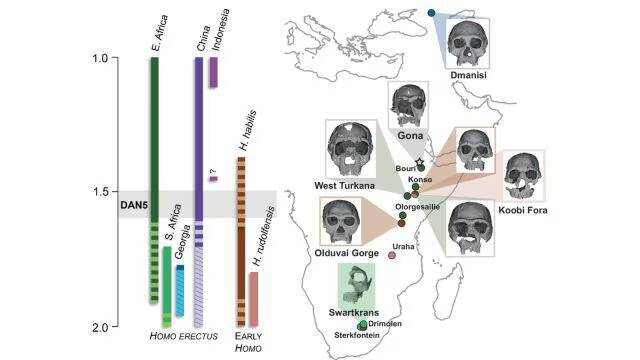
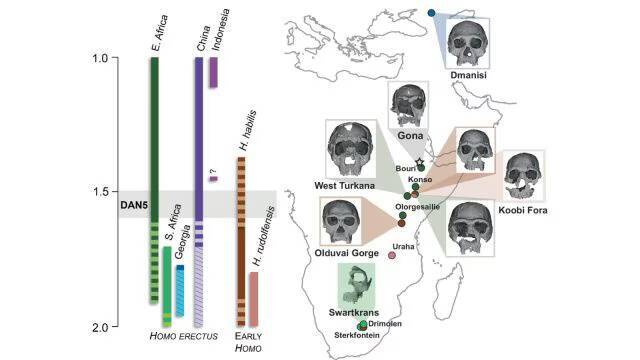
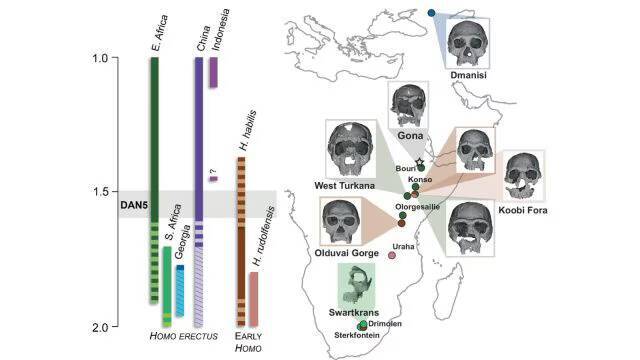
The study of human evolution has always been a fascinating field, with new discoveries constantly reshaping our understanding of our ancestors. A recent study has made a significant contribution to this field, revealing that some ancient humans had more ‘primitive’ faces than previously thought. The discovery was made possible by the reconstruction of a 1.5-1.6-million-year-old Homo erectus skull, known as DAN5.
The skull, which was found in Ethiopia, has been the subject of intense study, with researchers using micro-CT modelling to gain a detailed understanding of its structure. The results of this study have been surprising, with the skull showing a number of primitive facial traits that were not expected in a fossil of this age. “The face is more archaic than we anticipated,” said Dr. Baab, one of the researchers involved in the study.
One of the most striking features of the DAN5 skull is its small braincase, which is paired with a number of ancestral features, including a flat nasal bridge and large molars. These characteristics are more typically associated with earlier human ancestors, such as Homo habilis, and were not expected to be found in a Homo erectus fossil. “Seeing such a primitive face on a fossil this young was surprising,” said Yousuke Kaifu, another researcher involved in the study.
The discovery of the DAN5 skull and its primitive facial traits has significant implications for our understanding of human evolution. It suggests that the evolution of the human face was a more complex and nuanced process than previously thought, with different species and populations exhibiting a range of characteristics. The study also highlights the importance of continued research and discovery in the field of human evolution, as new findings can challenge and refine our existing understanding of our ancestors.
The Homo erectus species, to which the DAN5 skull belongs, is thought to have played a significant role in the evolution of modern humans. They are believed to have been one of the first human ancestors to migrate out of Africa, and their fossils have been found in a number of locations around the world, including Asia and Europe. The discovery of the DAN5 skull provides new insights into the evolution of this species, and suggests that they may have been more diverse than previously thought.
The use of micro-CT modelling in the study of the DAN5 skull has been instrumental in revealing its primitive facial traits. This technique allows researchers to create highly detailed images of the skull’s internal structure, which can be used to identify features that may not be visible to the naked eye. The application of this technology has opened up new possibilities for the study of human evolution, and is likely to play an increasingly important role in future research.
The study of human evolution is a complex and multifaceted field, with many different disciplines and techniques contributing to our understanding of our ancestors. The discovery of the DAN5 skull and its primitive facial traits is a significant addition to this field, and highlights the importance of continued research and discovery. As our understanding of human evolution continues to evolve, it is likely that we will encounter many more surprises and challenges to our existing knowledge.
In conclusion, the reconstruction of the 1.5-1.6-million-year-old Homo erectus skull DAN5 has revealed a number of primitive facial traits that were not expected in a fossil of this age. The discovery of this skull and its characteristics has significant implications for our understanding of human evolution, and highlights the importance of continued research and discovery in this field. As we continue to learn more about our ancestors and the processes that shaped the human face, we are reminded of the complexity and nuance of human evolution, and the many surprises that still await us.
The study of the DAN5 skull is a testament to the power of scientific inquiry and the importance of continued exploration and discovery. As we look to the future, it is likely that we will encounter many more surprises and challenges to our existing knowledge, and it is through the continued application of new technologies and techniques that we will be able to refine and expand our understanding of human evolution.
The discovery of the DAN5 skull and its primitive facial traits is a significant addition to the field of human evolution, and highlights the importance of continued research and discovery. As we continue to learn more about our ancestors and the processes that shaped the human face, we are reminded of the complexity and nuance of human evolution, and the many surprises that still await us.
About the Author