Skull reveals some ancient humans had more ‘primitive’ faces
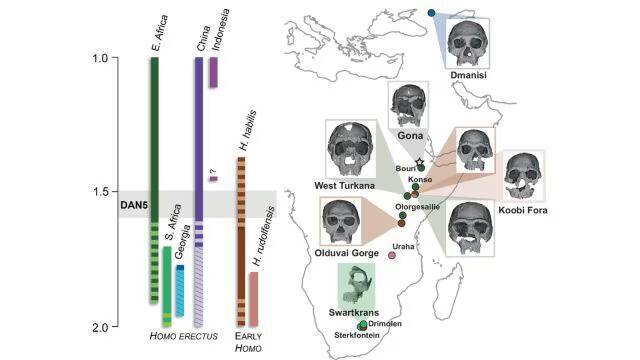
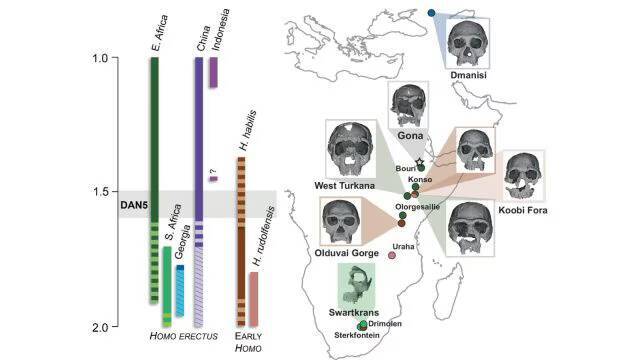
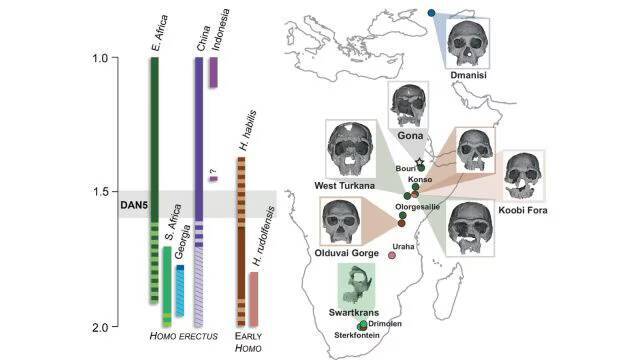
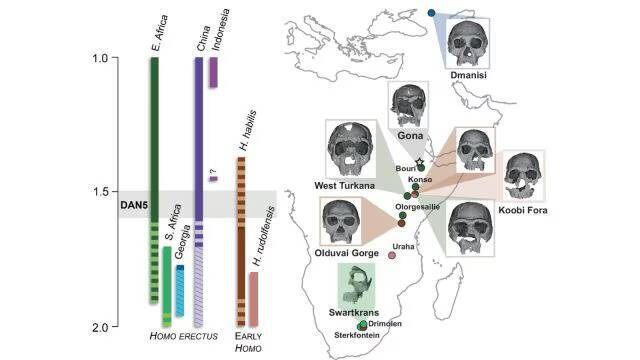
The discovery of ancient human fossils has always been a subject of fascination and intrigue, offering valuable insights into the evolution of our species. Recently, a study of a 1.5-1.6-million-year-old Homo erectus skull, known as DAN5, has shed new light on the facial features of our ancient ancestors. The findings, which were made possible through the use of micro-CT modelling, have revealed that some ancient humans had more ‘primitive’ faces than previously thought.
The DAN5 skull, which was discovered in Ethiopia, has been the subject of intense study and analysis. According to Dr. Baab, one of the researchers involved in the study, “The face is more archaic than we anticipated.” The use of micro-CT modelling, a technique that allows for the creation of highly detailed 3D models of fossils, has enabled scientists to examine the skull in unprecedented detail. The results have been surprising, with the skull exhibiting a number of primitive facial traits, including a flat nasal bridge and large molars.
One of the most significant aspects of the DAN5 skull is its braincase, which is smaller than expected. This has led researchers to re-evaluate their understanding of the evolution of the Homo erectus species. As Yousuke Kaifu, another researcher involved in the study, noted, “Seeing such a primitive face on a fossil this young was surprising.” The discovery of the DAN5 skull has significant implications for our understanding of human evolution, suggesting that the process of evolution may have been more complex and nuanced than previously thought.
The study of ancient human fossils is a complex and multifaceted field, requiring the expertise of a range of specialists, from paleontologists to anthropologists. The discovery of the DAN5 skull is a testament to the importance of continued research and exploration in this field. By examining the fossil record, scientists can gain a deeper understanding of the evolution of our species, and the various factors that have shaped our development over time.
The use of micro-CT modelling has been a key factor in the study of the DAN5 skull, allowing researchers to examine the fossil in exquisite detail. This technique, which involves the use of X-rays to create detailed 3D models of fossils, has revolutionized the field of paleontology, enabling scientists to study fossils in a way that was previously impossible. By using micro-CT modelling, researchers can create highly detailed models of fossils, which can be used to examine the structure and morphology of ancient organisms.
The discovery of the DAN5 skull has also highlighted the importance of preserving and protecting fossil sites. The fossil record is a finite resource, and the loss of fossil sites due to erosion, human activity, or other factors can result in the loss of valuable information about our evolutionary history. As such, it is essential that fossil sites are protected and preserved for future generations, allowing scientists to continue to study and learn from the fossil record.
In addition to its significance for our understanding of human evolution, the discovery of the DAN5 skull also has implications for our understanding of the evolution of other species. By examining the fossil record, scientists can gain insights into the evolution of a range of organisms, from plants and animals to microbes and other microorganisms. The study of evolution is a complex and multifaceted field, and the discovery of the DAN5 skull is a significant contribution to our understanding of this process.
In conclusion, the discovery of the DAN5 skull has shed new light on the evolution of our species, revealing that some ancient humans had more ‘primitive’ faces than previously thought. The use of micro-CT modelling has been a key factor in the study of this fossil, allowing researchers to examine the skull in exquisite detail. The discovery of the DAN5 skull is a significant contribution to our understanding of human evolution, and highlights the importance of continued research and exploration in this field. As scientists continue to study and learn from the fossil record, we can gain a deeper understanding of our evolutionary history, and the various factors that have shaped our development over time.
The study of ancient human fossils is an ongoing process, with new discoveries being made regularly. As our understanding of human evolution continues to evolve, we can expect to learn more about the complex and nuanced process that has shaped our species over time. The discovery of the DAN5 skull is a significant milestone in this process, and highlights the importance of continued research and exploration in the field of paleontology.
As we continue to learn more about our evolutionary history, we can gain a deeper appreciation for the complex and fascinating process that has shaped our species over time. The discovery of the DAN5 skull is a significant contribution to this process, and highlights the importance of preserving and protecting fossil sites for future generations. By studying the fossil record, we can gain insights into the evolution of our species, and the various factors that have shaped our development over time.
About the Author