Scientists discover fossils of ancient sea cow species near Qatar
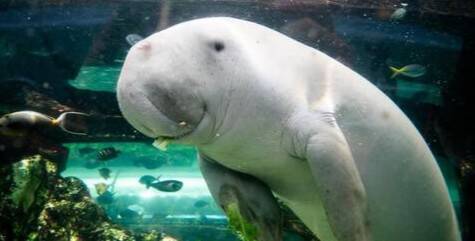
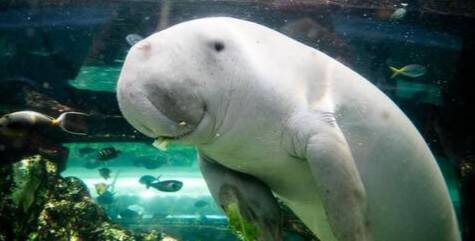
In a groundbreaking discovery, scientists have unearthed fossils of an unknown sea cow species near Qatar’s coastal waters. According to a recent report by Moneycontrol, the ancient animal lived millions of years ago in warm seas, and its body structure bears a striking resemblance to modern sea cows. This remarkable finding not only sheds light on the evolution of sea cows but also confirms the existence of seagrass ecosystems in the Arabian waters for millions of years, supporting large marine herbivores.
The discovery of the ancient sea cow species is a significant one, as it provides valuable insights into the history of these fascinating creatures. Sea cows, also known as dugongs or Steller’s sea cows, are large marine mammals that belong to the family Dugongidae. They are found in shallow, tropical waters and are known for their distinctive appearance, with a bulky body, flippers, and a flat tail. Despite their size, sea cows are herbivores, feeding on seagrass and other marine plants.
The fossils discovered near Qatar’s coastal waters are believed to be millions of years old, dating back to a time when the Arabian Peninsula was still forming. The discovery was made by a team of scientists who were conducting a survey of the area’s coastal waters. The team was led by a group of paleontologists, who specialize in the study of fossils and ancient life forms.
The fossils found near Qatar are significant not only because of their age but also because of their remarkable state of preservation. The fossils include several well-preserved bones, including a nearly complete skull, vertebrae, and limb bones. The fossils also show evidence of a unique body structure, with a combination of primitive and advanced features that are not seen in modern sea cows.
According to the Moneycontrol report, the ancient sea cow species discovered near Qatar is closely related to modern sea cows, but it also has some distinct differences. The fossils show that the ancient sea cow had a more primitive skull and dental structure, with a shorter snout and more robust teeth. The fossils also suggest that the ancient sea cow was larger than modern sea cows, with estimates suggesting that it could have reached lengths of up to 4 meters (13 feet).
The discovery of the ancient sea cow species near Qatar has significant implications for our understanding of the evolution of sea cows and the history of seagrass ecosystems in the Arabian waters. The finding confirms that sea cows lived across the Arabian waters for millions of years, and that seagrass ecosystems existed in the region for just as long. This is significant because seagrass ecosystems are crucial for supporting large marine herbivores, such as sea cows, and provide important habitat for a wide range of marine life.
The discovery of the ancient sea cow species also highlights the importance of preserving and protecting seagrass ecosystems in the Arabian waters. Seagrass beds are found in shallow, coastal waters and are home to a diverse range of marine life, including sea cows, turtles, and fish. However, seagrass ecosystems are under threat from human activities, such as coastal development, fishing, and pollution. The discovery of the ancient sea cow species serves as a reminder of the importance of preserving these ecosystems for future generations.
In conclusion, the discovery of the ancient sea cow species near Qatar is a significant one, providing valuable insights into the evolution of sea cows and the history of seagrass ecosystems in the Arabian waters. The finding confirms that sea cows lived across the Arabian waters for millions of years and that seagrass ecosystems existed in the region for just as long. The discovery also highlights the importance of preserving and protecting seagrass ecosystems, which are crucial for supporting large marine herbivores and providing habitat for a wide range of marine life.
As we continue to learn more about the ancient sea cow species and its place in the history of life on Earth, we are reminded of the importance of preserving and protecting our planet’s natural heritage. The discovery of the ancient sea cow species is a testament to the wonders of the natural world and the importance of continued exploration and discovery.
News Source: https://www.moneycontrol.com/science/lost-sea-cow-species-emerges-from-qatar-s-ancient-seas-article-13735607.html/amp
About the Author