Scientists discover fossils of ancient sea cow species near Qatar
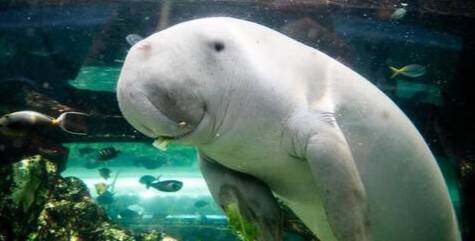
In a groundbreaking discovery, scientists have uncovered fossils of an unknown sea cow species near Qatar’s coastal waters. According to a report by Moneycontrol, the ancient animal lived millions of years ago in warm seas, and its body structure bears a striking resemblance to modern sea cows. This remarkable find sheds new light on the history of sea cows and the ecosystems that supported them, confirming that these marine herbivores thrived in Arabian waters for millions of years.
The discovery of the ancient sea cow species is a significant one, as it provides valuable insights into the evolution and distribution of these fascinating creatures. Sea cows, also known as dugongs or Steller’s sea cows, are large marine mammals that feed on seagrass and other aquatic plants. They are found in warm, shallow waters around the world, including the Arabian Gulf, where Qatar is located.
The fossils discovered near Qatar’s coastal waters are believed to be millions of years old, dating back to a time when the Arabian Peninsula was still forming. The animal’s body structure is remarkably similar to that of modern sea cows, with a streamlined body, flippers, and a pair of tusks. This suggests that the ancient sea cow species was well adapted to its aquatic environment, with a body plan that allowed it to feed and move efficiently in the warm, shallow waters of the Arabian Gulf.
The discovery of the ancient sea cow species is not only significant for our understanding of the evolution of these animals but also for the insights it provides into the ecosystems that supported them. The presence of sea cows in Arabian waters for millions of years suggests that seagrass ecosystems have been present in the region for just as long, providing a habitat for these large marine herbivores. Seagrass ecosystems are crucial for the health of marine ecosystems, providing food and shelter for a wide range of marine animals, from fish and crustaceans to turtles and dolphins.
The confirmation that sea cows lived across Arabian waters for millions of years also has important implications for conservation efforts. Sea cows are currently listed as vulnerable to extinction, due to habitat loss, pollution, and hunting. The discovery of the ancient sea cow species highlights the importance of protecting seagrass ecosystems and the marine animals that depend on them. By preserving these ecosystems, we can help to ensure the long-term survival of sea cows and other marine species that call them home.
The discovery of the ancient sea cow species is a testament to the importance of scientific research and exploration. The discovery was made possible by a team of scientists who were conducting research in the area, using a combination of fieldwork and laboratory analysis to uncover the fossils and study their characteristics. The discovery is a reminder that there is still much to be learned about the natural world, and that scientific research and exploration can lead to unexpected and exciting discoveries.
In conclusion, the discovery of the ancient sea cow species near Qatar’s coastal waters is a significant one, providing new insights into the evolution and distribution of these fascinating creatures. The discovery confirms that sea cows lived across Arabian waters for millions of years, and that seagrass ecosystems have been present in the region for just as long. The find has important implications for conservation efforts, highlighting the importance of protecting seagrass ecosystems and the marine animals that depend on them. As we continue to explore and learn more about the natural world, we may uncover even more secrets about the ancient sea cow species and the ecosystems that supported them.
News Source: https://www.moneycontrol.com/science/lost-sea-cow-species-emerges-from-qatar-s-ancient-seas-article-13735607.html/amp
About the Author