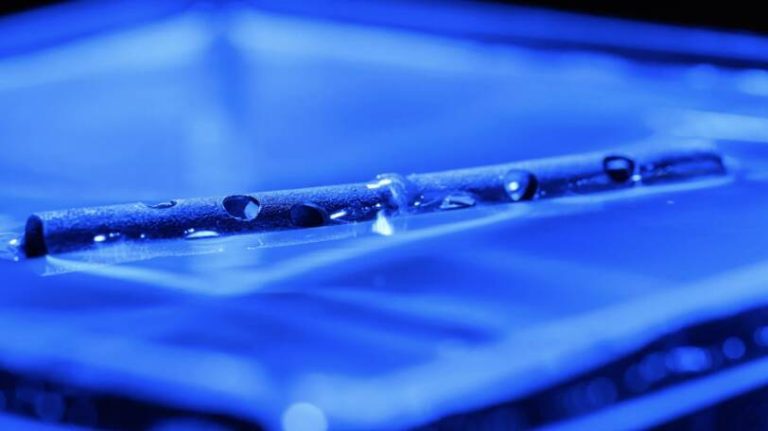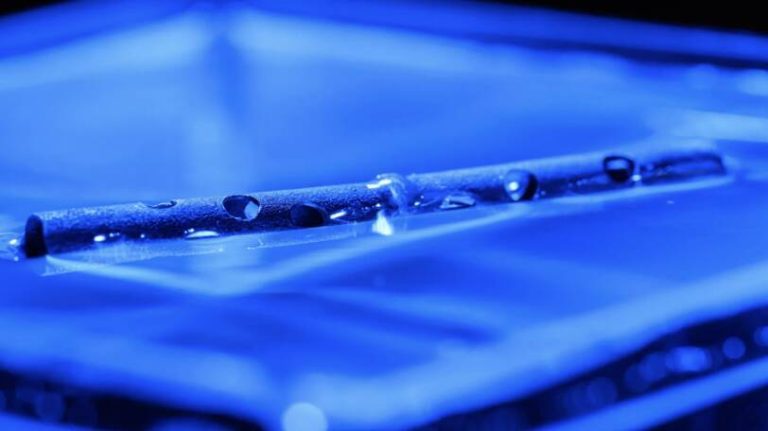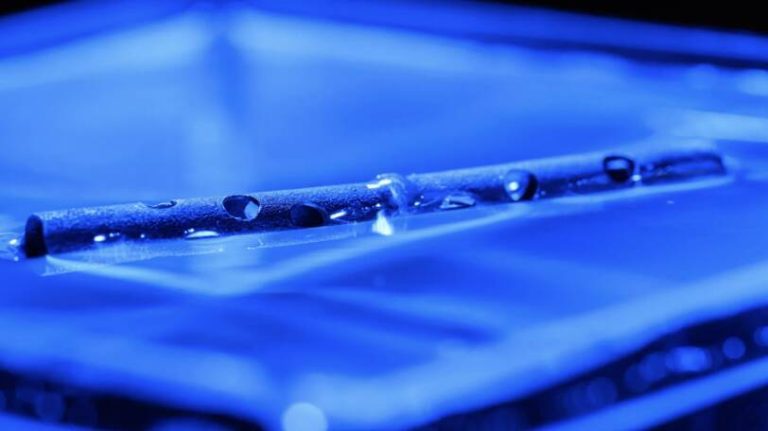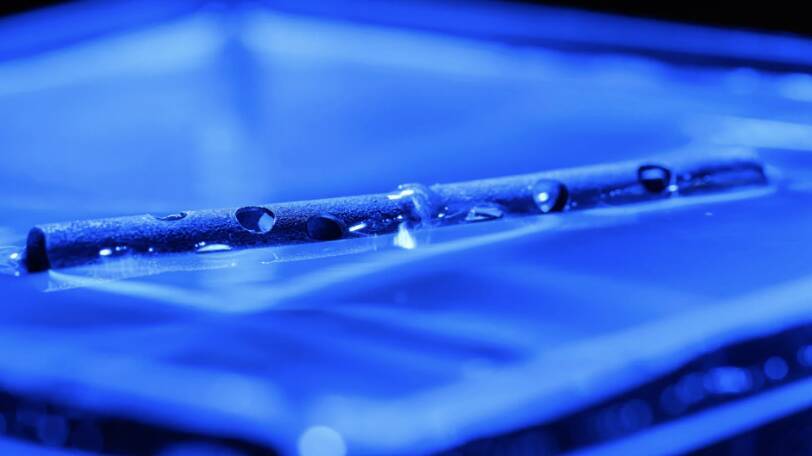
Scientists develop metal tubes that could enable unsinkable ships
The concept of unsinkable ships has long been a topic of interest and debate among scientists, engineers, and maritime enthusiasts. While various materials and technologies have been proposed to achieve this goal, a recent breakthrough by a team of researchers has brought us one step closer to making this idea a reality. By developing a highly buoyant metal tube structure, scientists have created a material that can float even when submerged for long periods or damaged with holes. This innovative technology has the potential to revolutionize the maritime industry and pave the way for the creation of unsinkable ships.
The key to this breakthrough lies in the processing of aluminium, a metal that is commonly used in various applications due to its lightweight and corrosion-resistant properties. However, aluminium is not typically known for its buoyancy, which is why the researchers had to think outside the box to create a material that could defy the conventions of traditional metal structures. By adding nanometer-scale grooves to aluminium tubes, the scientists were able to create a superhydrophobic surface that can stably maintain air bubbles on the inner surface of the tube. This unique property allows the metal tube to remain buoyant even when submerged in water, making it an ideal material for applications where flotation is critical.
The process of creating these superhydrophobic aluminium tubes involves a series of complex steps, including the use of advanced nanotechnology and surface engineering techniques. The researchers began by creating a template with nanometer-scale grooves, which was then used to imprint the pattern onto the aluminium tube. The resulting surface features a unique combination of micro- and nano-scale structures that work together to create the superhydrophobic effect. When water comes into contact with the surface, it forms a thin layer of air bubbles that are trapped within the grooves, preventing the water from penetrating the surface and causing the metal to sink.
One of the most significant advantages of this technology is its potential to enable the creation of unsinkable ships. By using these superhydrophobic aluminium tubes as the primary material for ship construction, it may be possible to build vessels that can withstand even the most extreme conditions at sea. Imagine a ship that can survive a catastrophic breach or collision, remaining afloat even when damaged or submerged. This could revolutionize the maritime industry, enabling the creation of safer, more efficient, and more sustainable vessels that can operate in a wide range of environments.
The potential applications of this technology extend far beyond the maritime industry, however. The superhydrophobic aluminium tubes could also be used in a variety of other fields, including aerospace, energy, and medicine. For example, they could be used to create lightweight, buoyant structures for offshore oil rigs or wind turbines, or to develop new types of medical implants that can interact with the body in unique and innovative ways. The possibilities are endless, and it will be exciting to see how this technology is developed and applied in the years to come.
In addition to its potential applications, this technology also has significant implications for our understanding of materials science and surface engineering. The creation of superhydrophobic surfaces has long been a topic of interest among researchers, and this breakthrough demonstrates the power of advanced nanotechnology and surface engineering techniques. By manipulating the surface properties of materials at the nanoscale, scientists can create unique and innovative materials with properties that were previously thought to be impossible.
In conclusion, the development of superhydrophobic aluminium tubes is a significant breakthrough that has the potential to revolutionize the maritime industry and beyond. By creating a material that can float even when submerged or damaged, scientists have taken a major step towards enabling the creation of unsinkable ships. As this technology continues to evolve and improve, it will be exciting to see the innovative applications that emerge and the impact that it has on our daily lives.
Source: https://www.sciencedaily.com/releases/2026/01/260130041105.htm
About the Author